Hezbollah Destroys Four Israeli Merkava Tanks After IED Explosion Near Deir Srian
Key Takeaways
- Hezbollah says it destroyed four Israeli Merkava tanks in southern Lebanon.
- Drone strikes targeted Merkava tanks near Al-Bayyada and Jall Al-Alam.
- The operation framed as retaliation for ceasefire violations by Israel.
Tanks, ceasefire, warnings
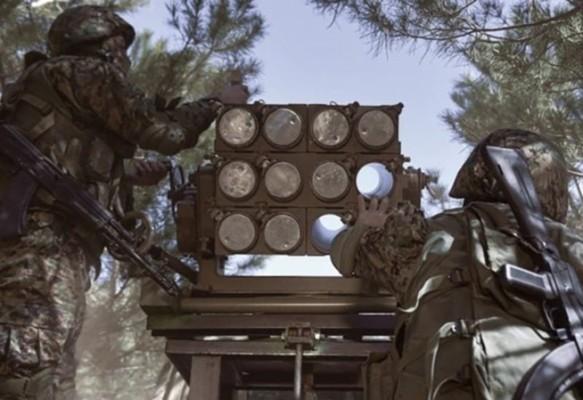
Hezbollah said it destroyed four Israeli tanks in southern Lebanon after an Israeli convoy of eight armored vehicles moved from the town of Al-Tayyiba toward the old Sal’a site in the town of Deir Srian, where it was subjected to an explosion caused by IEDs planted earlier by Hezbollah fighters.
The Anadolu Ajansı report said the explosion occurred in two waves and led to the destruction of four Merkava tanks, with flames seen engulfing them, before the enemy pulled them away from the scene.

In parallel, the Israeli army warned Lebanese residents not to return to about 80 villages and areas in the south despite a ceasefire that had been in effect for four days, and it stressed that its forces remain deployed due to ongoing Hezbollah activity.
The Israeli army’s Monday statement listed a prohibition on moving south of the line of villages including Mazraat Beit Siyad, Majdal Zoun, Zbaqin, Yater, Sarbin, Hadathah, Beit Yahoun, Shaqra, Majdal Salim, and Qubriha.
The same Anadolu Ajansı account said Israel has been waging an aggression on Lebanon since March 2, leaving 2,294 dead, 7,544 wounded, and more than a million displaced, according to the latest official figures.
Voices and competing frames
Hezbollah framed the tank destruction as a response to what it called Tel Aviv’s violations of the ceasefire announced since last Thursday, saying the 'Israeli occupation forces' had been committing on Sunday a new violation added to its 'series of flagrant and well-documented violations' of the ceasefire.
The Anadolu Ajansı report also quoted Israeli Defense Minister Yisrael Katz saying that Tel Aviv intends to continue to control all areas it has occupied in southern Lebanon during the latest aggression.
The Israeli army’s warnings were detailed in the الجزيرة نت account, which said residents were told they were prohibited from moving south of a line that included villages such as Mazraat Beit Siyad, Majdal Zoun, Zbaqin, and Yater, and it also warned against approaching the Litani River area and the Wadi al-Salhani and al-Salouqi.
In the same الجزيرة نت report, the Israeli army said it had published, for the first time, a map of its new deployment line inside Lebanon, and it said Katz stated the penetration line extends up to 10 kilometers inside Lebanon.
The Anadolu Ajansı report placed the exchange in a wider context of ceasefire dynamics, noting that last Thursday a temporary ceasefire for 10 days, renewable, began, but Israel repeatedly violated it through bombing raids that left dead and wounded, in addition to the demolition of houses.
What comes next
The Israeli army’s operational posture during the ceasefire was reinforced by its instruction to avoid returning to dozens of villages and areas in southern Lebanon, including a long list that the الجزيرة نت report said the army warned against crossing into and returning to.
“IEDs planted earlier in the town of al-Tayyiba in southern Lebanon, according to the party”
The same report said the army’s deployment line would extend its control over dozens of Lebanese villages, most of which are now largely depopulated, while the army did not specify the size of the area.
Hezbollah’s claims of continued attacks were paired with Israeli threats of escalation in the L'Orient-Le Jour account, which said Israeli Chief of Staff Eyal Zamir threatened from southern Lebanon to strike Hezbollah 'beyond the blue line.'
L'Orient-Le Jour also reported that Avichay Adraee, the Arabic-speaking spokesman for the Lebanese army, warned Hezbollah fighters that 'the ceasefire confers no immunity, because the Israeli army will pursue them as soon as the need to protect Israel arises.'
Across the accounts, the ceasefire’s fragility was underlined by the claim that Israel would continue operations during the ceasefire, including airstrikes and artillery shelling, even as the war had already killed about 2,300 people, wounded 7,544 others, and displaced more than a million, according to the latest official Lebanese data.
More on Lebanon
Israeli Attacks Kill 51 in Lebanon, Including Two Medical Workers
10 sources compared
Israeli Attacks Kill 51, Including Two Medical Workers, In Lebanon’s Qalawiya And Tibnin
18 sources compared
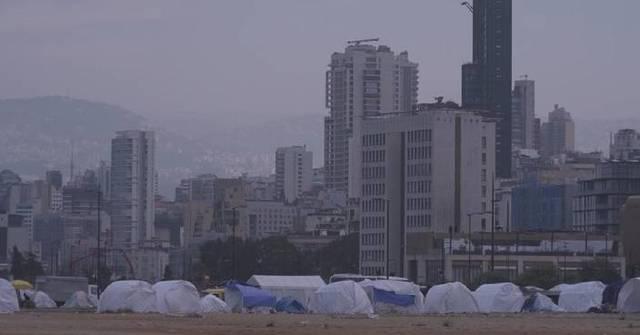
EU Crisis Chief Hadja Lahbib Says Israeli Activity Restricts Humanitarian Aid Access in Lebanon
12 sources compared
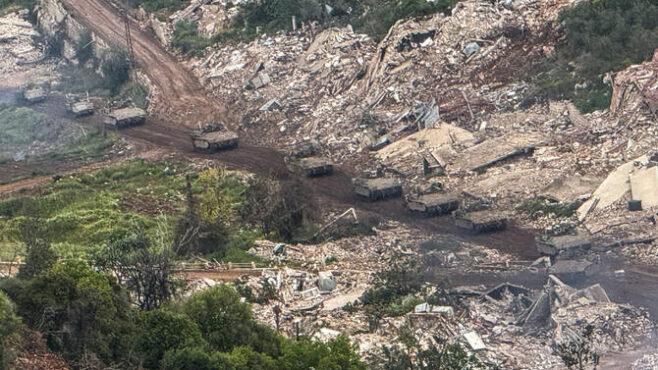
Israeli Attacks Across Lebanon Kill At Least 24, Lebanese Health Ministry Says
16 sources compared