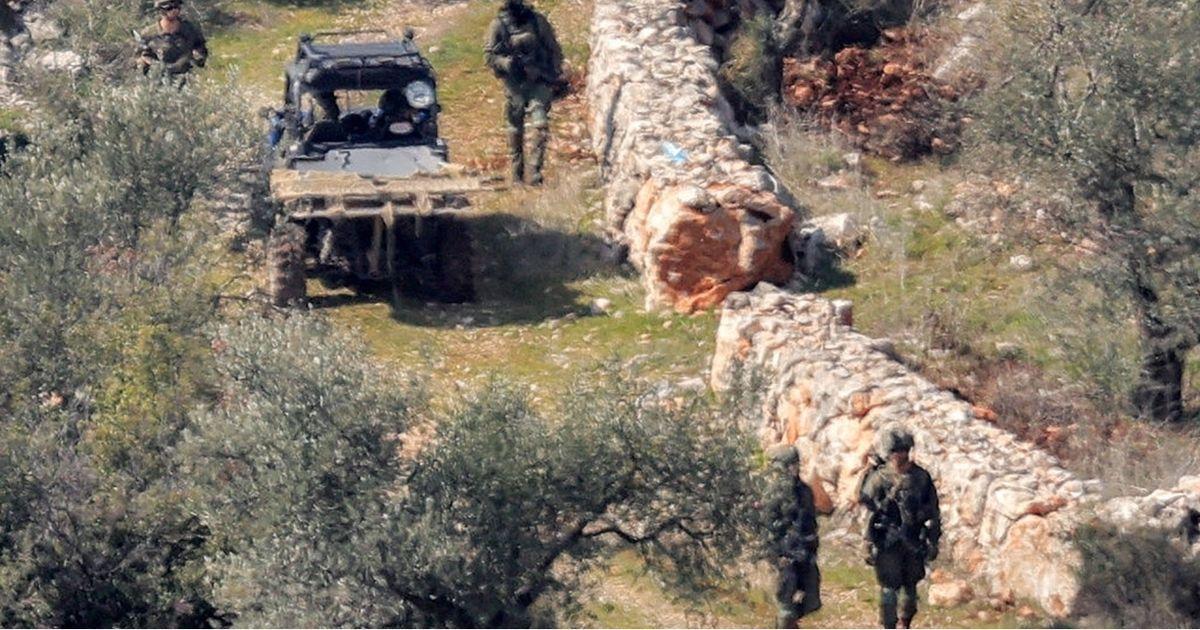
Hezbollah Drone Attack Injures Israeli Reservist as Israel Strikes Southern Lebanon
Key Takeaways
- Hezbollah drone attack injures Israeli reservist in southern Lebanon.
- Israeli strikes in south Lebanon kill at least five people, including journalist Amal Khalil.
- Ceasefire strained as cross-border assaults escalate ahead of U.S.-brokered talks.
Ceasefire Strained by Drones
Violence along the Israel-Lebanon border flared as a U.S.-mediated ceasefire approached its expiry, with multiple reports describing Hezbollah drone attacks and Israeli strikes in southern Lebanon.
“Israeli attacks have killed five people in southern Lebanon, including a journalist, Lebanon’s National News Agency (NNA) reported, further straining a fragile ceasefire”
Anadolu Ajansı reported that an Israeli reservist was wounded in a drone attack launched by Hezbollah targeting Israeli forces in southern Lebanon, citing Israel’s public broadcaster KAN.

The same Anadolu Ajansı account said Hezbollah, in a series of statements late Thursday, attacked a gathering of Israeli soldiers and vehicles near a school in the town of Bint Jbeil with artillery fire, struck an Israeli bulldozer carrying out demolition operations in the town of Rashaf using an attack drone, and fired a volley of rockets toward the settlement of Shtula.
It also said Israel’s Home Front Command reported sirens sounded in Shtula in the western sector along the Lebanese border, while Israeli media reported that three rockets were intercepted and two fell in open areas in the Upper Galilee.
Anadolu Ajansı further stated that Israeli warplanes carried out strikes in Lebanon following the rocket fire, and that the Israeli army claimed it struck two loaded rocket launchers and killed three Hezbollah fighters attempting to target its forces.
In parallel, Al-Manar TV Lebanon relayed an Israeli Army Radio report that "A soldier was injured by a Hezbollah drone explosion in southern Lebanon" in response to what it described as Israeli violations of the ceasefire and targeting of the town of Yater.
The Times of Israel also described Hezbollah taking responsibility for a drone attack, saying the group targeted an Israeli artillery site in the Ras al-Bayada headland south of Tyre in response to Israeli violations of the ceasefire, while the IDF said the drone was intercepted.
Journalists Hit as Talks Loom
As diplomats prepared for a new round of U.S.-mediated talks in Washington, strikes in southern Lebanon killed and injured journalists and raised fresh questions about access for rescue teams.
The Arab Weekly reported that Israeli strikes on southern Lebanon on Wednesday killed Lebanese journalist Amal Khalil and wounded a photographer accompanying her, citing a senior Lebanese military official and Khalil’s employer, the Al-Akhbar newspaper.

It said the death of Khalil, 43, brought the death toll on Wednesday to five people, and described the day as the deadliest since a 10-day ceasefire was announced on April 16 to halt hostilities between Israel and Hezbollah.
The Arab Weekly also said that on the eve of talks in Washington between the Lebanese and Israeli ambassadors, Lebanese President Joseph Aoun said Beirut would seek an extension of the 10-day, US-mediated ceasefire, set to expire on Sunday.
CBC and Al Jazeera both described the same sequence in at-Tiri, with CBC saying an Israeli strike hit a car in at-Tiri killing two people inside and that a later airstrike on Yohmor killed another two people, while leaving a journalist trapped under rubble.
Al Jazeera reported that Amal Khalil, who worked for Al Akhbar, was later found dead at the scene, and that Lebanon’s Ministry of Health said Israel "pursued" the journalists by "targeting" the building where they took shelter.
Al Jazeera also said the Israeli military statement claimed it "does not target journalists and acts to mitigate harm to them" while denying preventing rescue services from reaching the site of the attack in at-Tiri.
The Arab Weekly added a separate account that an Israeli drone dropped a grenade on rescuers trying to lift freelance photographer Zeinab Faraj from the rubble, and it said the Lebanese army asked the Israeli military through a US-led mechanism to allow rescuers to retrieve the wounded journalist.
Buffer Zone and Drone Warfare
The fighting described in multiple reports is occurring alongside Israel’s stated efforts to create a buffer zone and its focus on drone threats, including fiber-optic drones.
“Israeli army launches airstrikes in Lebanon as Hezbollah targets troops and machinery in south Tarek Chouiref 24 April 2026•Update: 24 April 2026 Archive ISTANBUL An Israeli reservist was wounded in a drone attack launched by Hezbollah targeting Israeli forces in southern Lebanon, Israel’s public broadcaster KAN reported early Friday, as cross-border exchanges intensified”
CBC said Israel has currently established a buffer zone stretching around 10 kilometres into southern Lebanon, describing it as a military-controlled zone meant to remove the threat of short-range rockets and anti-tank missiles toward northern Israel.
Haaretz framed the drone dimension as a challenge even with new measures, writing that "Israel's New Buffer Zone in Lebanon Won't Stop Hezbollah's Fiber Optic Drones" and describing fiber-optic drones developed in Ukraine as offering Hezbollah a cheap, precise weapon that can bypass Israel's electronic defenses.
The Times of Israel described Hezbollah’s claim that it targeted an Israeli artillery site in the Ras al-Bayada headland south of Tyre, while the IDF said the drone was intercepted, reflecting the contest over detection and interception.
In a separate report, VINnews said the IDF struck and killed three Hezbollah operatives who fired an anti-aircraft missile at an Israeli drone over southern Lebanon, adding that the attempt to shoot down the drone was unsuccessful.
VINnews also described a separate incident in which Hezbollah attacked IDF troops operating in southern Lebanon with an explosive-laden drone, lightly injuring one reservist soldier, and said the IDF responded by striking Hezbollah sites in the area.
Anadolu Ajansı similarly described sirens in Shtula and rocket interceptions in the Upper Galilee, while also reporting Israeli claims of striking two loaded rocket launchers and killing three Hezbollah fighters.
Competing Narratives and Numbers
While the core events—drone attacks, rocket fire, and Israeli strikes—are consistent across reports, the framing and casualty accounting differ, underscoring how narratives diverge around the same incidents.
The Arab Weekly described Wednesday’s strikes as killing Amal Khalil and wounding a photographer, and it said the death of Khalil, 43, brought the death toll on Wednesday to five people, calling it "the deadliest day since a 10-day ceasefire was announced on April 16".

CBC, in contrast, said Israeli strikes killed at least five people, including a journalist, and it specified that the strike in at-Tiri killed two people inside and that an airstrike in Yohmor killed another two people, with a journalist wounded and another trapped under rubble.
Al Jazeera reported that Israeli attacks killed five people in southern Lebanon, including a journalist, and it said Amal Khalil was later found dead at the scene while Zeinab Faraj was reportedly in "very serious condition and will be requiring surgery".
On the drone side, Anadolu Ajansı reported that Israeli media said three rockets were intercepted while two fell in open areas in the Upper Galilee, and it said Israel claimed it killed three Hezbollah fighters attempting to target its forces.
VINnews likewise said the IDF struck and killed three Hezbollah operatives after they fired an anti-aircraft missile at an Israeli drone, while also describing a separate incident in which Hezbollah’s explosive-laden drone lightly injured one reservist soldier.
Al-Manar TV Lebanon, meanwhile, presented an Israeli Army Radio report of a soldier injured by a Hezbollah drone explosion in southern Lebanon and then described Hezbollah responses to alleged Israeli ceasefire violations, including targeting the Shtoula settlement with a rocket barrage.
Even the broader context is presented differently: the Arab Weekly said more than 2,400 people have been killed in Lebanon since Israel launched an offensive in response to Hezbollah’s March 2 attack, while عربي21 asserted that the war in Lebanon has left 2,055 dead, 6,588 wounded, and more than one million displaced, according to Lebanese authorities.
Talks, Deaths, and Next Steps
The immediate stakes described by the sources center on whether the ceasefire can be extended and whether violence will continue as U.S.-mediated talks proceed.
“Israel's New Buffer Zone in Lebanon Won't Stop Hezbollah's Fiber Optic Drones Gift this articleShare to FacebookPrint article Article printing is available to subscribers only Print in a simple, ad-free format Subscribe Comments: SaveZen Reading Zen reading is available to subscribers only Ad-free and in a comfortable reading format Subscribe”
The Arab Weekly said Lebanese President Joseph Aoun told reporters that Beirut would seek an extension of the 10-day, US-mediated ceasefire set to expire on Sunday, and it said hostilities reignited on March 2 when Hezbollah opened fire in support of Iran.

CBC and Al Jazeera both said the ceasefire was set to expire on Sunday and that U.S. Secretary of State Marco Rubio was set to attend Thursday’s meeting, with Lebanon represented by its ambassador to Washington, Nada Moawad, and Israel represented by its ambassador, Yechiel Leiter.
CBC also quoted Aoun’s comments released by his office, saying the aim of future talks is to "fully" stop Israeli attacks, the withdrawal of Israeli troops from Lebanon, the release of Lebanese prisoners in Israel, the deployment of Lebanese troops along the border and beginning the reconstruction process.
In the same reporting, CBC said Aoun cited support to Lebanon promised by U.S. President Donald Trump and other countries as an opportunity "provided us with an opportunity that we must not miss, as it may not come again."
On the Israeli side, CBC quoted Foreign Minister Gideon Sa'ar calling on Lebanon to work with Israel to disarm Hezbollah, saying "The obstacle to peace and normalization between the countries is one: Hezbollah," and adding that Lebanon could have "a future of sovereignty, independence and freedom from the Iranian occupation."
Beyond diplomatic aims, the sources also describe ongoing casualties and injuries: Al Jazeera reported that a second French soldier died after an attack on UN peacekeepers in Lebanon last week, identifying him as Chief Corporal Anicet Girardin, who was severely wounded on April 18 and died after being evacuated to France on Tuesday.
عربي21 added that Israeli forces reported the deaths of 12 soldiers and dozens injured in southern Lebanon since March 2, while also claiming that eight Israeli soldiers were wounded after being targeted by a booby-trapped drone.
More on Lebanon
Trump Says Israel and Lebanon Agree to Extend Ceasefire by Three Weeks
24 sources compared
Trump Announces Three-Week Israel-Lebanon Ceasefire Extension After Hezbollah Dismisses It As Meaningless
11 sources compared

Trump Says Israel And Lebanon Extend Israel-Hezbollah Ceasefire By Three Weeks
18 sources compared
Hezbollah Drone Attack Wounds Israeli Reservist as Rockets Strike Upper Galilee
12 sources compared