
Hezbollah Drone Attack Wounds Israeli Reservist as Rockets Strike Upper Galilee
Key Takeaways
- Hezbollah drone attack wounded an Israeli reservist in southern Lebanon.
- Rocket barrages targeted Yater and Shtoula in southern Lebanon.
- Israel launched airstrikes in Lebanon as cross-border clashes intensified.
Drone, rockets, and strikes
Cross-border exchanges intensified in Lebanon as Hezbollah launched a drone attack that wounded an Israeli reservist while rockets struck the Upper Galilee, Anadolu Ajansı reported.
The Israeli public broadcaster KAN said the drone was launched by Hezbollah targeting Israeli forces in southern Lebanon, and Anadolu Ajansı placed the report in early Friday coverage.
Anadolu Ajansı said Hezbollah, in statements late Thursday, attacked a gathering of Israeli soldiers and vehicles near a school in the town of Bint Jbeil with artillery fire, struck an Israeli bulldozer carrying out demolition operations in the town of Rashaf using an attack drone, and fired a volley of rockets toward the settlement of Shtula.
Israel’s Home Front Command said sirens sounded in Shtula in the western sector along the Lebanese border, and Israeli media reported that three rockets were intercepted while two fell in open areas in the Upper Galilee.
Anadolu Ajansı also reported that Israeli warplanes carried out strikes in Lebanon following the rocket fire, and it cited an Israeli claim that it struck two loaded rocket launchers and killed three Hezbollah fighters attempting to target its forces in southern Lebanon.
The report added that Israel claimed it targeted what it described as Hezbollah infrastructure after an explosive drone was launched toward Israeli troops.
In parallel, Al-Manar TV Lebanon described Islamic Resistance fighters targeting an Israeli enemy army bulldozer while it was demolishing houses in the town of Rashaf with a loitering glider, describing “achieving a direct hit,” and it also said a soldier was injured by a Hezbollah drone explosion in southern Lebanon.
Truce violations and escalation
Multiple outlets framed the Lebanon fighting as occurring alongside a fragile ceasefire that was described as already being violated.
Anadolu Ajansı reported that Hezbollah’s statements came “late Thursday” and described cross-border exchanges intensifying, while Tehran Times said Hezbollah responded to “ongoing Israeli violations of the ceasefire with Lebanon.”

Tehran Times stated that “more than 200 violations have occurred since the ceasefire came into effect,” and it tied Hezbollah’s latest attacks to “blatant and documented violations” by the Zionist regime.
It also said the ceasefire “went into effect at midnight between Thursday and Friday” and “is expected to last 10 days,” while adding that the regime continued to violate the agreement through explosions in towns including Khiam, Bint Jbeil, Aitaroun, Rashaf, and Shamaa.
Tehran Times further described an earlier ambush in which resistance fighters targeted “a convoy of eight IOF armored vehicles,” with an explosive device detonating as the convoy moved from the town of Taybeh toward Deir Seryan.
The Palestine Chronicle, citing Al Mayadeen, described a timeline of Hezbollah operations after an Israeli strike on the southern town of Al-Tiri on Wednesday, and it said the operations came “in response to ongoing ceasefire violations and attacks on civilians.”
It reported that the first operation took place at “6:00 AM” when Hezbollah fighters targeted a gathering of Israeli soldiers in Taybeh, that a second operation followed at “10:00 AM” using a “one-way attack drone,” and that at “10:30 AM” Hezbollah announced a third operation after it said it shot down an Israeli reconnaissance drone over Majdal Zoun.
Voices: Hezbollah, ministers, and hospitals
The conflict narrative in the sources is driven by competing statements from Hezbollah-linked media, Israeli military claims, and Lebanese political figures, with each side describing its own actions and the other’s.
“Israeli Army Radio: A soldier was injured by a Hezbollah drone explosion in southern Lebanon In response to the Israeli enemy’s violation of the ceasefire and its targeting of the town of Yater in southern Lebanon, the Islamic Resistance fighters targeted the Shtoula settlement with a rocket barrage: statement 6 Islamic Resistance fighters targeted a gathering of Israeli enemy soldiers and vehicles in the vicinity of Jamil Bazzi School in the city of Bint Jbeil with artillery shells: statement 5 Israeli Army Radio: A soldier was injured by a Hezbollah drone explosion in southern Lebanon In response to the Israeli enemy’s violation of the ceasefire and its targeting of the town of Yater in southern Lebanon, the Islamic Resistance fighters targeted the Shtoula settlement with a rocket barrage: statement 6 Islamic Resistance fighters targeted a gathering of Israeli enemy soldiers and vehicles in the vicinity of Jamil Bazzi School in the city of Bint Jbeil with artillery shells: statement 5”
Tehran Times quoted Hezbollah’s stated rationale, saying the resistance movement announced it targeted “a military artillery position belonging to the Israeli Occupation Forces (IOF) in the settlement of Kfar Giladi,” and it described Hezbollah’s rockets and “a swarm of attack drones” as launched at the IOF site identified as the source of shelling toward Yahmar al-Shaqif.
It also said Hezbollah emphasized its strike was carried out in response to “blatant and documented violations” and that its retaliatory operations were based on “its right to resist occupation and push it back.”
In a different register, Al Jazeera’s Heidi Pett is quoted in the Palestine Chronicle’s account of the killing of journalist Amal Khalil, where it says she received threats from an Israeli WhatsApp number during the last war warning her to stop reporting or leave Lebanon “if she wanted her head to remain on her shoulders,” before being killed in an Israeli attack.
The Palestine Chronicle also reported that Hezbollah said its operations were “in defense of Lebanon and its people” and in direct response to an Israeli strike on Al-Tiri on Wednesday, and it described the strike as killing three civilians including journalist Amal Khalil and wounding others including journalist Zeinab Faraj.
Anadolu Ajansı, meanwhile, reported Israeli claims that it struck two loaded rocket launchers and killed three Hezbollah fighters, and it said Israel claimed it targeted Hezbollah infrastructure after an explosive drone was launched toward Israeli troops.
Across the sources, Lebanese institutions and hospitals appear as the place where casualties are counted, with the Palestine Chronicle saying the Lebanese Red Cross transported the wounded and search operations continued for Amal Khalil, whose body was recovered hours later.
Different accounts of the same day
While the sources agree on the broad pattern of rocket and drone exchanges and Israeli strikes in Lebanon, they diverge on casualty figures, the depth of bombardment, and the specific operational details emphasized.
Al-Sharq (الشرق) reported that Israel’s military said two soldiers were killed in an attack carried out by Hezbollah in southern Lebanon in the early hours of Sunday, and it described an investigation in which a Puma armored personnel carrier became stuck and another Puma and two D9 armored bulldozers were sent to pull it out.
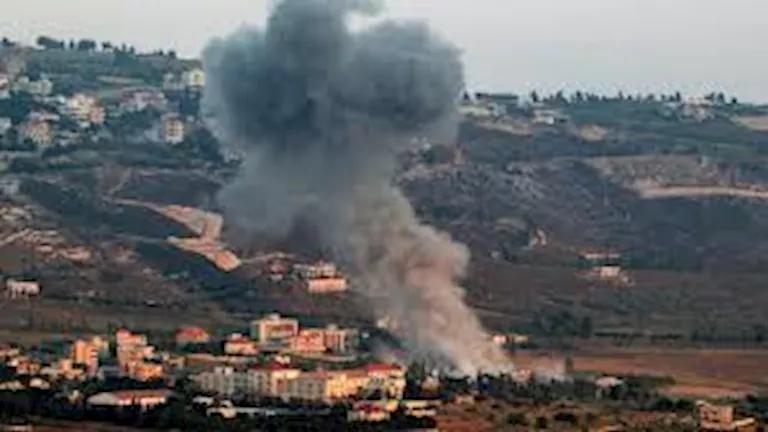
It said one of the two D9s was hit by a projectile believed to be an anti-tank missile or a mortar shell, causing a fire that killed the two soldiers, and it added that a third officer was lightly wounded.
Al Jazeera’s Arabic outlet (الجزيرة نت) reported a different Israeli loss framing alongside a different casualty picture, saying “Twenty-three Lebanese were killed today, Sunday” as a result of an Israeli strike on a hotel in central Beirut and a residential building in a town in the south, while also saying the Israeli army announced the death of two of its soldiers after targeting a D9 bulldozer in southern Lebanon.
The الجزيرة نت account specified that an Israeli airstrike targeted an apartment in the Ramada hotel in the Rouche area of central Beirut, killing four people and injuring 10 others, and it said 19 Lebanese were killed in an Israeli airstrike that hit a three-story residential building in Sir al-Gharbiyah in the Nabatieh District.
Masrawy, in contrast, focused on a map of towns targeted by Israeli airstrikes and artillery shelling, naming Sahmar, Yater, Kafra, Kafr Ramman, Mashraf Farm, Zubdine, and Seir al-Gharbiyah, and it described Hezbollah repelling an Israeli incursion into Bint Jbeil for the fifth day.
Anadolu Ajansı emphasized the Upper Galilee and border sirens, saying three rockets were intercepted and two fell in open areas, and it centered Israeli claims about rocket launchers and Hezbollah fighters.
Displacement, deaths, and what comes next
The sources describe mounting humanitarian and strategic stakes, with displacement figures, reported deaths, and warnings about further attacks.
Al-Sharq (الشرق) said Israel is conducting intensive airstrikes on areas in southern and eastern Lebanon and around Beirut, and it cited the Lebanese Health Ministry saying Israeli strikes on Lebanon killed 394 people, including 83 children.

It also reported that at least four people were killed by an Israeli strike that hit an apartment in a hotel in central Beirut on Sunday, after Israel claimed it targeted Iranian leaders, and it said a rare airstrike deep into Lebanese territory in the Rouche area killed 41 people.
The الجزيرة نت account added that “454,000 Lebanese registered as displaced,” citing Lebanon’s Minister of Social Affairs and Development Hanin Al-Sayyid, and it said “about 100,000 people are in government shelters.”
It also stated that since last Monday, the escalating Israeli attack on Lebanon has killed more than 300 people, displaced hundreds of thousands, and destroyed residential, religious buildings and infrastructure.
In the same الجزيرة نت report, the Israeli army renewed its warning to Lebanese residents south of the Litani River to evacuate their homes and move immediately to the north of the river, citing a post by Israeli army spokesperson Avichai Adraei on X.
Tehran Times added a political timeline by saying the ceasefire was expected to last 10 days, while also stating that Hezbollah’s Secretary-General Sheikh Naim Qassem vowed to respond to any breach of the ceasefire.
More on Lebanon

Trump Says Israel And Lebanon Extend Israel-Hezbollah Ceasefire By Three Weeks
46 sources compared
Israel Kills Lebanese Journalist Amal Khalil in Al-Tayri Airstrikes
87 sources compared
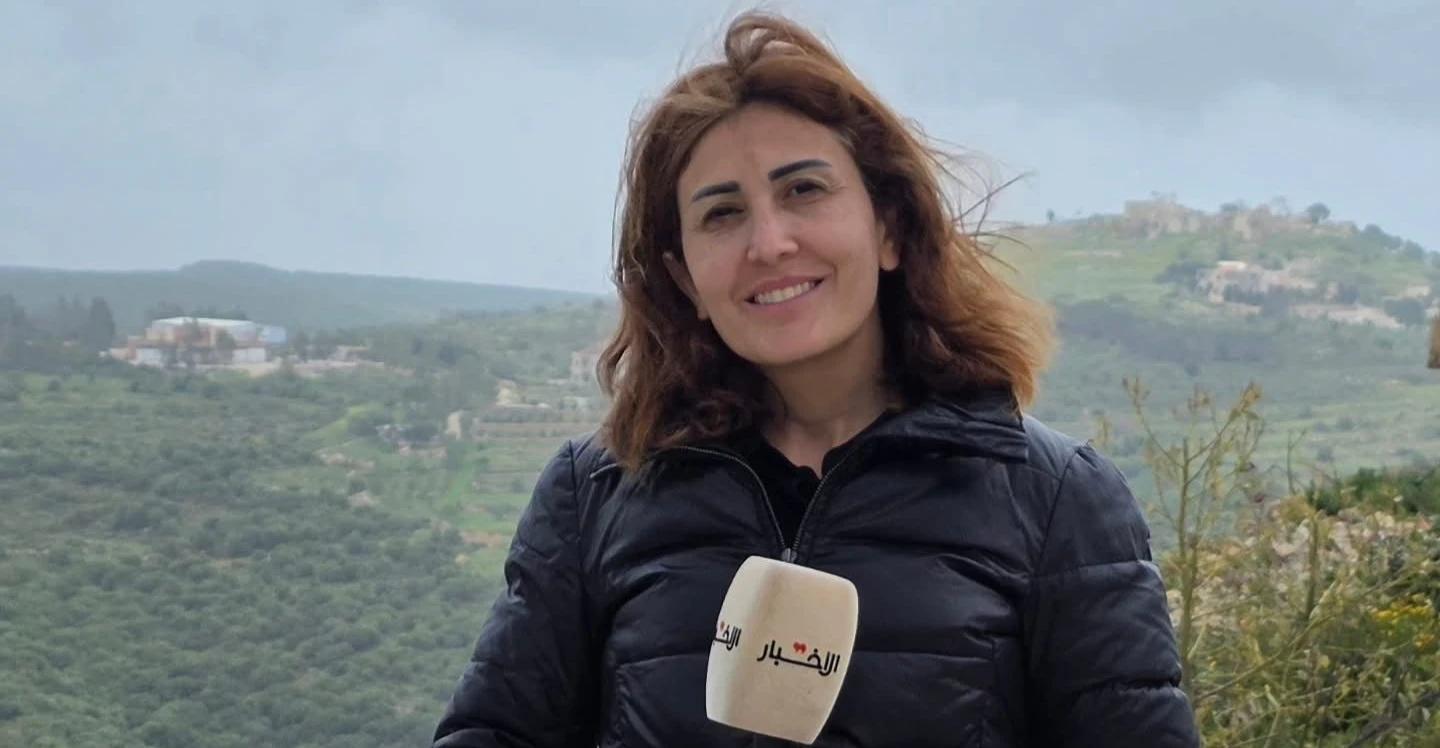
Israeli Strikes Kill At Least Four In At-Tiri, Lebanon, Leaving Journalist Amal Khalil Trapped
17 sources compared
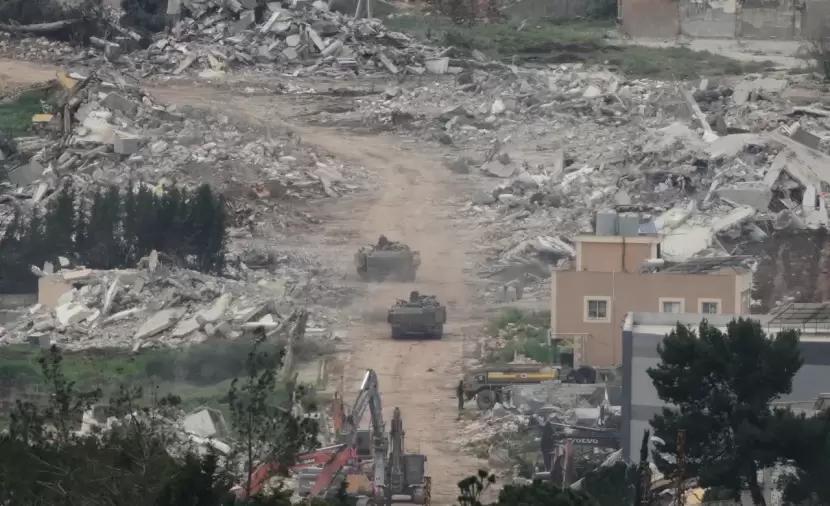
Israeli Forces Launch New Demolition Operations in Shamaa After April 17 Cease-Fire
10 sources compared