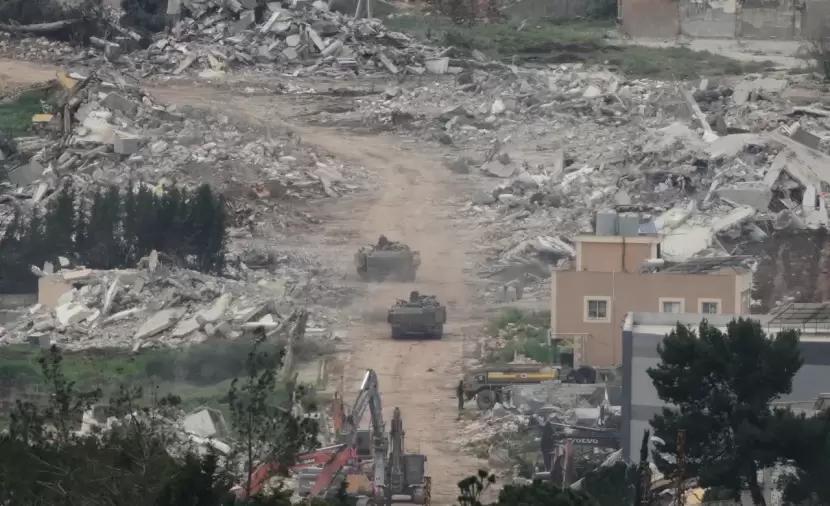
Israeli Forces Launch New Demolition Operations in Shamaa After April 17 Cease-Fire
Key Takeaways
- Israeli forces launched new demolition operations in Shamaa after the April 17 ceasefire.
- Destruction expanded to several southern Lebanese villages, including Beit Lif, Bayada, Chamaa, Naqoura.
- The operations continued despite the ceasefire, described as a breach of the truce.
Ceasefire, then demolitions
In southern Lebanon, Israeli forces launched new demolition operations in the village of Shamaa after a cease-fire came into effect on April 17, according to L'Orient Today.
“Beirut: for the first time since the ceasefire agreement went into effect a month and four days ago, a joint patrol by the Lebanese Army and UNIFIL entered the town of Chamaa, in the western sector, following the withdrawal of Israeli forces”
The village of Shamaa is described as being in the Sour district and “located five kilometers from the Israeli border,” and the article says it has been bombed multiple times by Israel during wars following the Israeli withdrawal from South Lebanon in 2000.
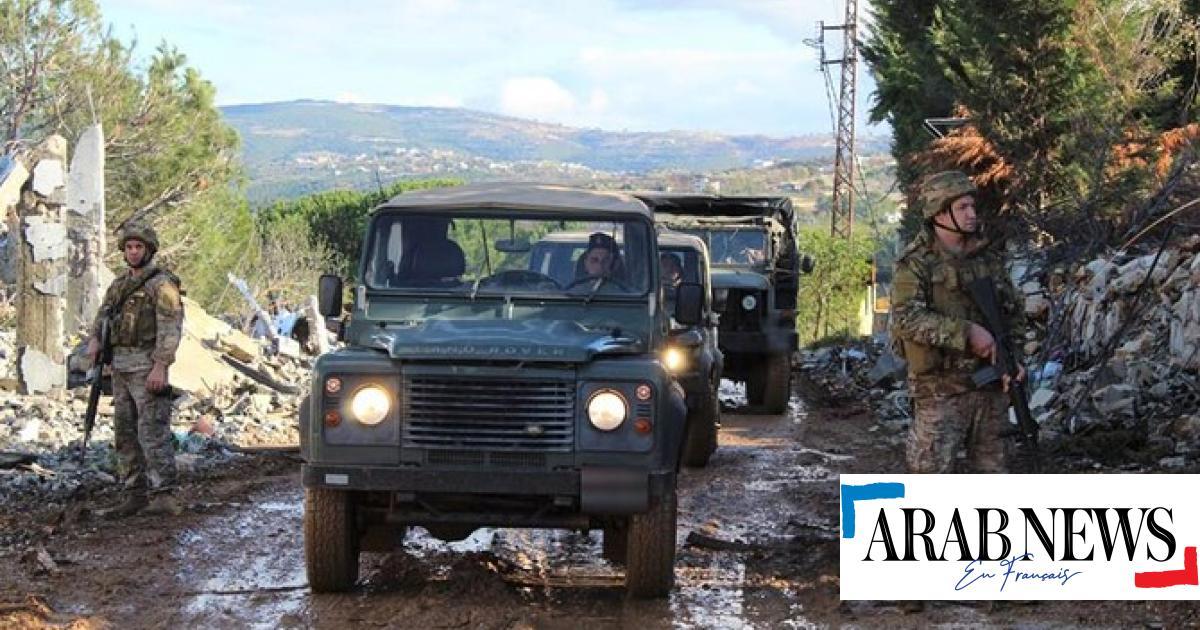
L'Orient Today links those earlier bombings to the 2006 conflict and to a war in 2024, when it says the Israeli army even occupied the citadel and caused heavy damage to a medieval fortress.
The piece says the citadel was among “the 34 cultural sites at the time enjoying ‘a high level of immunity from attacks and from being used for military purposes’ by UNESCO.”
It adds that since the war resumed on March 2, Hezbollah has been driven out of the area but the area is “regularly bombed by the Israeli army,” while Hezbollah continues to fire “sporadically.”
L'Orient Today also says the citadel was hit again, “as was, on April 12, the Shiite shrine attributed to the prophet Shmoun as-Safa.”
In a parallel repost, Today frames the same Shamaa story and repeats that the Israeli army launched “new demolition operations” after the cease-fire began on April 17.
What the truce did not stop
Multiple outlets describe the ceasefire as failing to halt Israeli actions on the ground, including demolitions and attacks on infrastructure.
Mehr News Agency says the Israeli army destroyed a public school building in the southern Lebanese town of Khiam “despite the 10-day ceasefire,” adding that the state-run Lebanese National News Agency (NNA) reported Israeli forces rigged the building with explosives and detonated it overnight, “completely leveling the structure.”
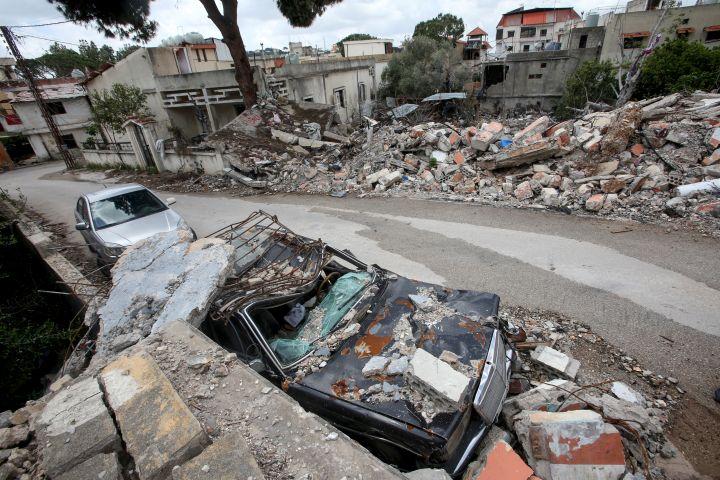
The same Mehr report says Israeli forces also fired artillery near the town of Kunin in the Bint Jbeil district and that a series of Israeli demolitions occurred across the south targeting homes, buildings and other infrastructure.
It further states that Israeli forces “booby-trapped” numerous homes in the villages of Beit Lif, Shamaa, Biyyada, and Naqoura, leveling them.
Middle East Eye repeats the NNA account that Israeli forces fired artillery near Kunin “despite an ongoing ceasefire,” and it similarly says homes in Beit Lif, Shamaa, Biyyada, and Naqoura were “booby-trapped” and “levelling them.”
Qatar news agency QNA says the Israeli entity continued its aggression on Monday in violation of the truce that began on April 16, reporting an Israeli drone targeted the vicinity of the Litani River in the town of Qaaqaaital-Jisr.
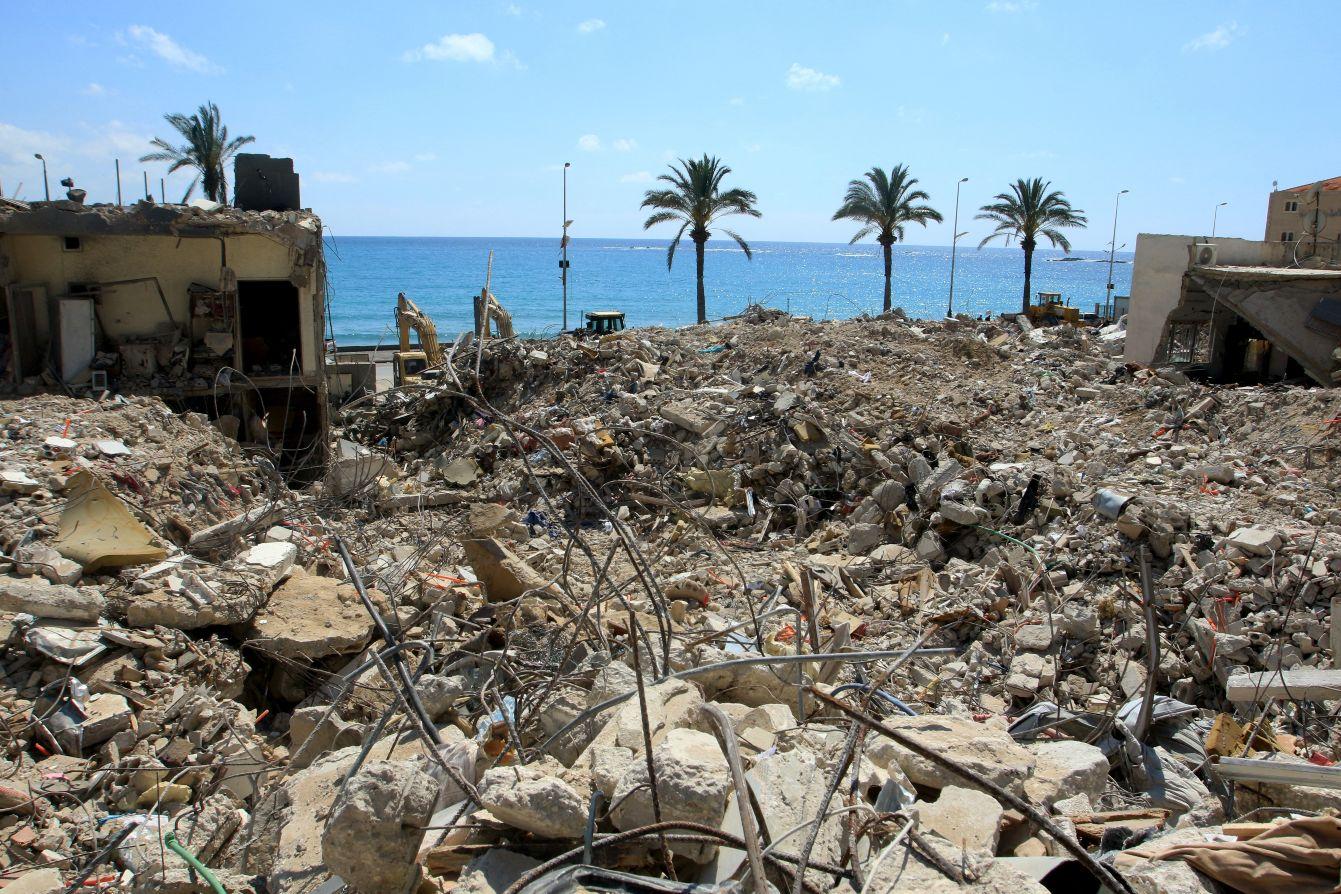
QNA also says occupation forces carried out several demolition in Shamaa between Al-Qusayr and Al-Qantara and in Taybeh, while the city of Meiss el-Jabal and other border towns were “subjected to systematic destruction targeting homes, buildings, and infrastructure.”
Naharnet adds that Israel was destroying houses in border villages including Qantara, al-Bayyada, Shamaa, Naqoura and Mais al-Jabal “amid shelling on Houla and airstrikes on al-Tiri and Burj Qalaway.”
Voices: warnings, denials, and fear
As demolitions continued, the sources also record warnings and statements from officials and political figures.
“WHAT SOUTH LEBANON'S DESTROYED VILLAGES MEAN TO THEIR PEOPLE 'I hope the Israelis don’t destroy my parents’ graves' in Shamaa The Israeli army has launched new demolition operations in this Lebanese village near the Israeli border, after the cease-fire came into effect on April 17”
In the Naharnet account, Israel said its military had been instructed to use “full force” against threats in Lebanon despite a truce, and it vowed to level homes allegedly used by Hezbollah, with state media reporting demolitions were underway on Sunday.
Naharnet quotes Israeli Defense Minister Israel Katz saying he and Prime Minister Benjamin Netanyahu had instructed the army “to act with full force, both on the ground and from the air, including during the ceasefire, in order to protect our soldiers in Lebanon from any threat.”
The same report says Katz also ordered the military to demolish any structure or road that was “booby-trapped,” and to “remove the houses in the contact villages near the border that served in every respect as Hezbollah terror outposts.”
In Arab News FR, Israeli military spokesman Avichay Adraee reiterated on social media a warning to “South Lebanon residents not to return home or move south of a line extending from Mansouri in the west to the town of Shebaa in the east, at a depth of between three and nine kilometers, until further notice.”
Adraee is quoted as saying that Israel “does not intend to target civilians at this stage, but anyone who decides to return to the villages and areas south of this line exposes themselves to great risks.”
L'Orient Today centers the fear of residents in Shamaa, quoting the headline sentiment: “I hope the Israelis don’t destroy my parents’ graves” in Shamaa.
Different frames of the same destruction
The reporting diverges in how it frames the same pattern of demolitions and shelling, even when the underlying locations overlap.
Naharnet describes a truce that “halting weeks of fighting between Israel and Hezbollah,” while still saying Israel was destroying houses in border villages and that some displaced residents “have rushed back to their homes in the south but others are hesitant.”
It also includes a diplomatic timeline, saying Turkish Foreign Minister Hakan Fidan denounced what he called “Israeli expansionism” in Lebanon and that French President Emmanuel Macron will meet Lebanese Prime Minister Nawaf Salam in Paris on Tuesday to demonstrate France’s support for Lebanon’s “territorial integrity.”
By contrast, Quds News Network frames the demolition engineering as a repeat of Gaza experience, saying “Israeli contracting firms that operated in Gaza” are leading demolition operations in southern Lebanon and that they follow “a strategy based on the comprehensive destruction of vital facilities and life-supporting infrastructure.”
Quds News Network also claims the buffer-zone plan aims to prevent the return of “more than one million displaced Lebanese to their villages,” and it says the Israeli occupation army seeks to impose a “Yellow Line” covering about “55 border villages.”
The New Arab similarly describes continued demolitions “as the two countries prepare for a second round of talks this week amid a10-day ceasefire,” and it says Israel shared a map of a “security zone” along the entire Lebanon-Israel border stretching “five to 10 kilometres deep.”
Meanwhile, Ici Beyrouth reports destruction in multiple villages and rural areas, including Beit Lif, Bayada, Chamaa, and Naqoura, and it adds that a vocational school at the southern entrance of Khiam was destroyed, while low-altitude drone overflights were observed around Tyre and as far as Marjayoun.
Stakes: displacement, infrastructure, and next steps
The sources portray the stakes of the ongoing demolitions and shelling as extending beyond immediate damage, with displacement, infrastructure loss, and diplomatic deadlines all intertwined.
“Israeli forces fired artillery near the town of Kunin in the Bint Jbeil district in the south of Lebanon, despite an ongoing ceasefire, Lebanon’s National News Agency reported”
Mehr News Agency says Trump announced a 10-day ceasefire in Lebanon after calls with Lebanese President Joseph Aoun and Israeli prime minister Benjamin Netanyahu, but it adds that Israeli forces continued attacking Lebanese civilian infrastructure and residential areas, “disregarding the ceasefire agreement.”

It also reports that Israel has planned to “systematically flatten civilian buildings in southern Lebanon,” and it says engineering tools, including excavators, were brought into the area and operated by paid Israeli contractors.
Naharnet similarly says the truce took effect days after the first high-level meeting between Lebanon and Israel in decades and that the war has killed nearly 2,300 people in Lebanon and displaced more than a million since erupting on March 2.
It also says Macron will urge Lebanese authorities to prosecute those responsible for an attack on U.N. peacekeepers in south Lebanon on Saturday that killed a French soldier and wounded three others, and it identifies the French peacekeeper as Florian Montorio.
In the Ici Beyrouth account, the stakes are described through continuing destruction of public facilities, including a vocational school in Khiam and damage to a sports complex in Mais el-Jabal, while drone overflights are observed around Tyre and as far as Marjayoun.
Quds News Network adds a broader infrastructure tally, saying “56 schools completely destroyed and 120 others damaged,” and that “44 border schools” were permanently closed, while it also claims “15 hospitals were hit” and that eight were out of service.
It further says UNICEF estimates more than one million Lebanese have been displaced, including about “370,000 children,” and it argues that destroying infrastructure and basic services could make return extremely difficult even if military operations stop.
More on Lebanon
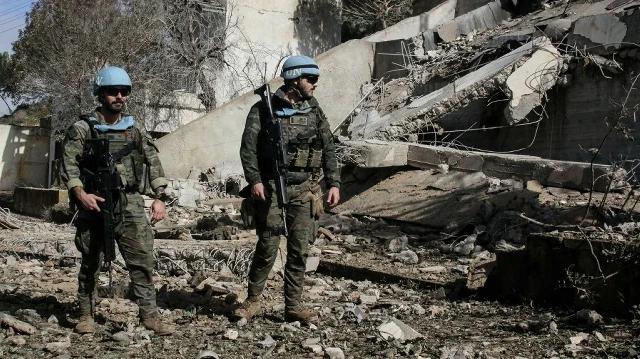
Israeli Drone Strike Kills One, Wounds Two in Lebanon’s Bekaa During Ceasefire
13 sources compared
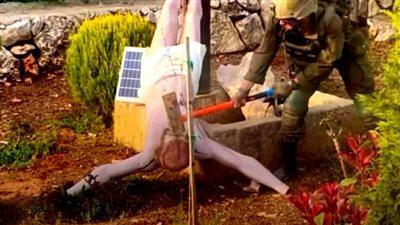
Israel Jails Soldiers After Sledgehammer Vandalism of Jesus Statue in Debl, Lebanon
29 sources compared

Macron Meets Nawaf Salam at Élysée Palace to Push Lebanon Ceasefire and Territorial Integrity
36 sources compared
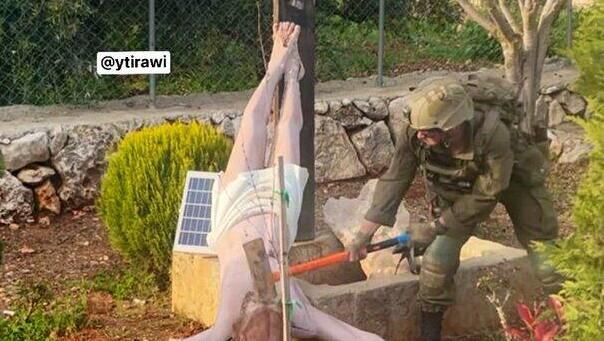
IDF Punishes Israeli Soldiers After Sledgehammer Vandalism of Jesus Statue in Debel, Lebanon
38 sources compared