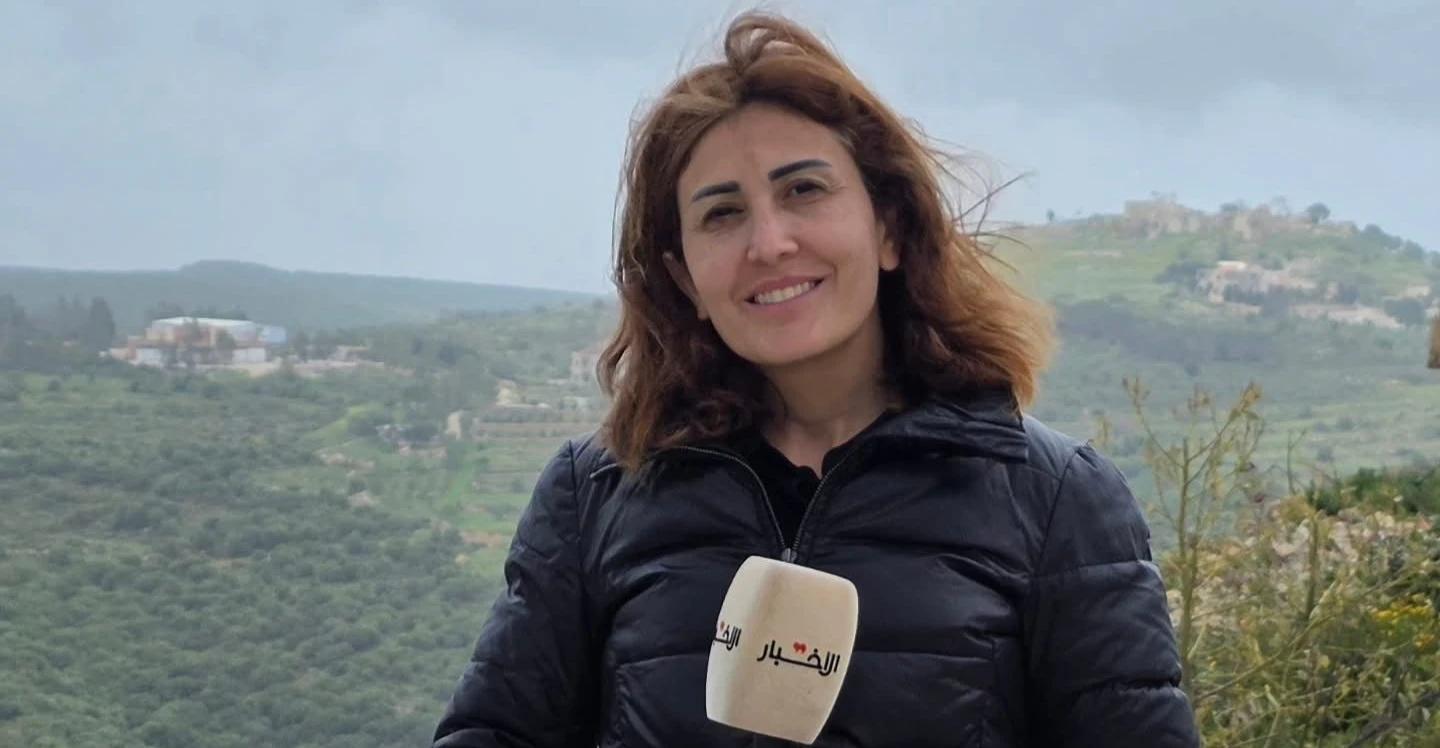
Israeli Strikes Kill At Least Four In At-Tiri, Lebanon, Leaving Journalist Amal Khalil Trapped
Key Takeaways
- Israeli airstrikes hit a car in al-Tiri, Lebanon, killing multiple people.
- Lebanese journalist Amal Khalil remained missing after the strike.
- The attack strained a fragile ceasefire and raised regional escalation fears.
Al-Tiri strikes and casualties
Israeli strikes on Lebanon on Wednesday killed at least four people in southern Lebanon and wounded several others, including journalists, Lebanon’s National News Agency (NNA) reported, further straining the fragile ceasefire.
“Israeli strikes have killed four people in southern Lebanon and wounded several others, including journalists, Lebanon’s National News Agency (NNA) reported, further straining the fragile ceasefire”
Al Jazeera reported that an Israeli strike hit a car in at-Tiri, a village in south Lebanon, killing two people inside, and that NNA later said several people, including journalists, were wounded in the same village.

Al Jazeera’s Heidi Pett, reporting from Tyre, said two journalists from local media outlet Al Akhbar—Amal Khalil and Zeinab Faraj—had travelled to the site of an earlier Israeli drone strike on a car that reportedly killed two civilians in at-Tiri.
Pett said, “For several hours … the Red Cross and rescue workers [tried] to reach those two journalists. They were unable to do that for a long time due to continued Israeli attacks in the area.”
Shafaq News said the Israeli airstrike targeted the town of al-Tiri in southern Lebanon’s Bint Jbeil district, and that Red Cross teams recovered two bodies and evacuated wounded freelance journalist Zeinab Faraj, while journalist Amal Khalil remained trapped.
Naharnet likewise said Khalil was missing after an Israeli strike on the southern town of al-Tiri, calling on the international community to pressure the Israeli army into allowing the rescue of Amal Khalil, who works for the daily Al-Akhbar.
Across the reporting, the same focal point recurred: the car targeted in al-Tiri/at-Tiri, the subsequent strikes in the same area, and the difficulty reaching journalists and casualties as attacks continued.
Siege of journalists and rescue barriers
Multiple outlets described the same incident as a prolonged standoff between rescue efforts and continued Israeli attacks, with journalists trapped in al-Tiri/at-Tiri.
Al Jazeera reported that NNA said “Israeli occupation forces are besieging journalists Amal Khalil and Zeinab Faraj, and preventing the Red Cross and the Lebanese army from reaching them,” and that NNA said an Israeli strike targeted the main road linking the town with Haddatha “to prevent ambulance teams from reaching the two journalists.”

Shafaq News said the evacuation vehicle came under fire while the Lebanese army contacted the Mechanism Committee to facilitate entry, but “no positive response has been received from Israel,” and that the army decided to escort Red Cross teams into Al-Tiri attempting to rescue Khalil despite the risks.
Naharnet added that “Israel fired a stun grenade at the Red Cross team, forcing it to withdraw from al-Tiri,” and said the team was expected to return later to continue the search for Amal Khalil.
The New Arab described the same sequence in different terms, saying ambulance crews evacuated Faraj while Khalil remained trapped for hours as search efforts could not be completed, and that the occupation dropped a sonic bomb in the area, forcing the teams to retreat.
The Arabic-language reporting also said talks were ongoing with the Mechanism Committee for Ceasefire Monitoring to secure renewed access to the site and resume the search for Khalil.
In parallel, the Lebanese Information Minister Paul Morcos told Al Jazeera that the government had been in contact with the UN peacekeeping mission in southern Lebanon and the Lebanese army regarding reports that Israel was “besieging journalists and photographers” in at-Tiri, and he said, “We strongly condemn this assault, holding Israel fully responsible for their safety, and affirming the necessity of immediately ensuring their protection and guaranteeing freedom of media work,” on X.
Al Jazeera also reported that the Israeli military statement said it “does not target journalists and acts to mitigate harm to them” while denying preventing rescue services from reaching the site of an attack in at-Tiri.
Ceasefire strain and political talks
The al-Tiri/at-Tiri incident unfolded against a wider backdrop of ceasefire strain and scheduled diplomatic talks between Lebanon and Israel.
“Wednesday, 22/04/2026 ArEnFrEs [](http://almanar”
Al Jazeera said the strikes killed four people and wounded others “further straining the fragile ceasefire,” and it described an Israeli strike hitting a car in at-Tiri and a second air strike in the same village.
The same report said Israel’s military stated it struck two vehicles in southern Lebanon that departed from a military structure used by Hezbollah, and it also said it intercepted “a hostile aircraft” launched by Hezbollah toward Israeli soldiers in southern Lebanon.
Hezbollah, in turn, said it attacked an Israeli artillery position in southern Lebanon with a drone, in response to what it said was an Israeli violation of the ceasefire.
Al Jazeera’s timeline placed the renewed hostilities on March 2 after Israel killed Iran’s Supreme Leader Ali Khamenei, and it said that up until then Hezbollah had not attacked Israel since a November 2024 ceasefire despite near-daily breaches by Israel.
Al Jazeera also said more than 2,400 people have been killed in Lebanon since Israel launched its offensive and subsequent invasion of southern Lebanon, and that Israel has seized a belt of territory at the border where its troops remain.
The report said the latest attacks came on the eve of planned talks in Washington between Lebanese and Israeli ambassadors, as Lebanese President Joseph Aoun said Beirut would seek an extension of the 10-day, US-mediated ceasefire set to expire on Sunday.
CBC likewise said the 10-day, U.S.-mediated ceasefire went into effect on Friday and was set to expire on Sunday, and it reported that Aoun said the aim of future talks is to “fully” stop Israeli attacks, withdraw Israeli troops, release Lebanese prisoners in Israel, deploy Lebanese troops along the border, and begin reconstruction.
CBC also reported that Aoun said preparations are ongoing for negotiations between Lebanon and Israel in a second meeting between their respective ambassadors in Washington on Thursday, and it added that U.S. Secretary of State Marco Rubio is set to attend Thursday’s meeting with Lebanon represented by its ambassador to Washington, Nada Moawad, and Israel represented by its ambassador, Yechiel Leiter.
Competing narratives and framing
Different outlets and languages framed the same al-Tiri/at-Tiri episode with distinct emphasis, producing a clear divergence between accounts of what prevented rescue and what the Israeli side claimed.
Al Jazeera foregrounded NNA’s claim that “Israeli occupation forces are besieging journalists Amal Khalil and Zeinab Faraj, and preventing the Red Cross and the Lebanese army from reaching them,” while also quoting the Israeli military statement that it “does not target journalists and acts to mitigate harm to them” and denying preventing rescue services from reaching the site.

Naharnet, citing LBCI television, added a specific allegation that “Israel fired a stun grenade at the Red Cross team, forcing it to withdraw from al-Tiri,” and it said the Red Cross was expected to return later.
The New Arab described the rescue interruption as a result of the occupation dropping a sonic bomb in the area, forcing teams to retreat, and it said talks were ongoing with the Mechanism Committee for Ceasefire Monitoring to secure renewed access.
In contrast, Al Jazeera reported that the Israeli military said it struck the main road linking the town with Haddatha “to prevent ambulance teams from reaching the two journalists,” as NNA said, while the Israeli military denied preventing rescue services.
The Arabic-language reporting in Al-Quds Al-Arabi also emphasized that the Lebanese Red Cross managed to rescue photojournalist Zeinab Faraj from Bint Jbeil and transport her to a safer location, while Amal Khalil remained missing and the Red Cross was unable to reach her after being barred from entering the area targeted.
Al-Quds Al-Arabi further said a senior Lebanese military official told Reuters that an Israeli drone dropped a bomb on rescue teams trying to retrieve an injured journalist from beneath the rubble in al-Tiri, and it described Lebanese Information Minister Paul Morcos blaming Israel for full responsibility for the safety of journalists and photographers.
Meanwhile, Al-Manar TV Lebanon’s correspondent framed the episode as an apparent attempt to prevent paramedics from reaching casualties, stating that “Israeli enemy targets vehicle in Al-Tiri anew, in an apparent bid to prevent paramedics from reaching casualties.”
Taken together, the coverage divergence is not only about casualty counts, but about the mechanism of obstruction—besiegement, stun grenades, sonic bombs, barred access, and road targeting—each described with different specificity by different outlets.
Human toll and next steps
The stakes of the al-Tiri/at-Tiri episode were reflected in the continued focus on journalists’ safety and the broader human toll described across the reporting.
“Four killed in Israeli strikes on Lebanon - Breaking The News Home Markets Economy Business Politics World War/Terrorism Technology Crypto Sports Insights [](https://breakingthenews”
Shafaq News said President Joseph Aoun stressed the need to protect media workers operating in conflict zones, calling for coordination between the Red Cross, the army, and international forces to secure the evacuation of those at the site.

Naharnet said President Joseph Aoun called on the Lebanese Red Cross to work on the rescue of Khalil and requested the Lebanese Red Cross to coordinate with the Lebanese army and U.N. peacekeepers “to carry out the rescue operation in the shortest possible time.”
RSF said, “Her life is in danger right now! Continued Israeli airstrikes are preventing rescuers from reaching her,” and it urged immediate pressure on the Israeli army to allow rescue.
Al Jazeera reported that Morcos said the government was in contact with the UN peacekeeping mission in southern Lebanon and the Lebanese army regarding reports that Israel was “besieging journalists and photographers” in at-Tiri, and he said the government “strongly condemn this assault, holding Israel fully responsible for their safety.”
Beyond the immediate rescue, Shafaq News provided a broader casualty accounting, saying that since March 2 Israeli strikes have killed 2,294 people and injured 7,544 others as of April 17, including 177 children and 274 women among the dead, and 704 children and 1,223 women among the injured, according to Lebanon’s Health Ministry.
CBC added that preparations are ongoing for negotiations in Washington and that Aoun said the aim is to “fully” stop Israeli attacks, withdraw Israeli troops, release Lebanese prisoners in Israel, deploy Lebanese troops along the border and begin reconstruction.
Al Jazeera also said the latest attacks came on the eve of planned talks in Washington and that Aoun would seek an extension of the 10-day, US-mediated ceasefire set to expire on Sunday.
In a separate but related development, Al Jazeera reported that President Emmanuel Macron said a second French soldier died after an attack on UN peacekeepers in Lebanon last week, naming Chief Corporal Anicet Girardin, and it said UNIFIL said initial assessments indicated the fire came from non-state actors, allegedly Hezbollah, while the Iran-aligned group denied involvement.
More on Lebanon
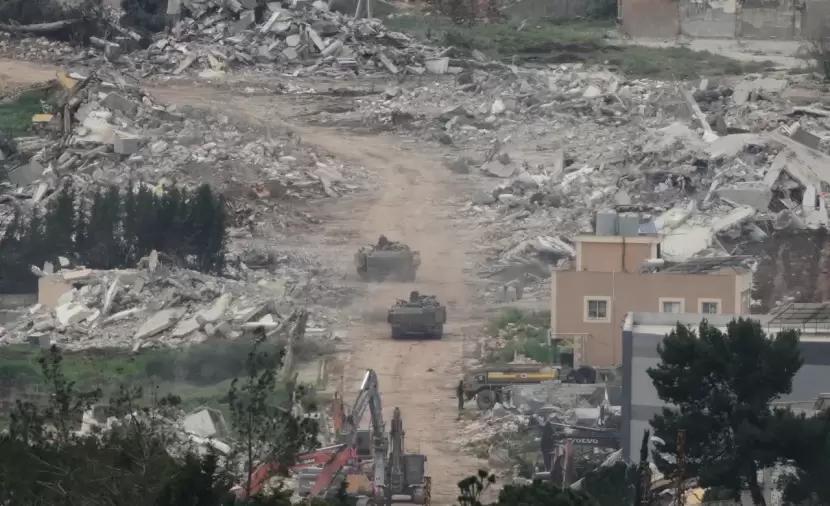
Israeli Forces Launch New Demolition Operations in Shamaa After April 17 Cease-Fire
10 sources compared
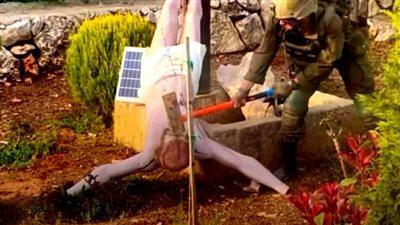
Israel Jails Soldiers After Sledgehammer Vandalism of Jesus Statue in Debl, Lebanon
29 sources compared
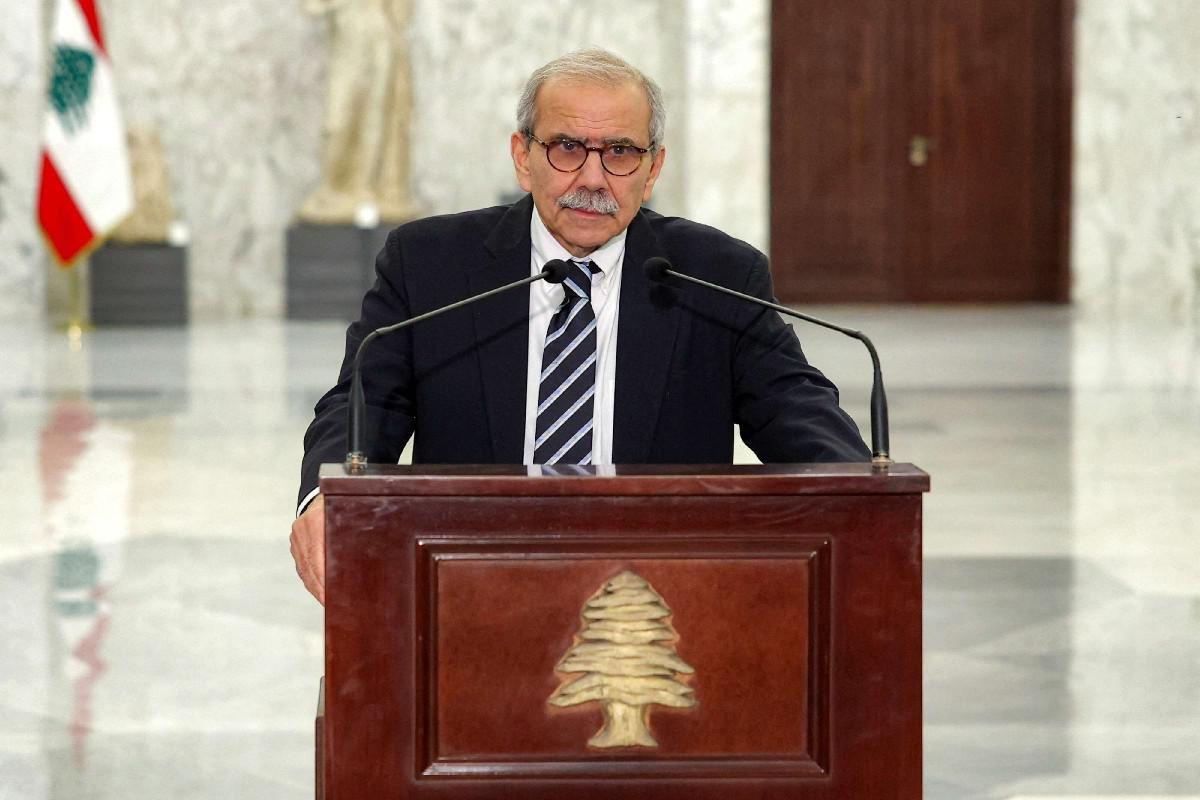
Macron Meets Nawaf Salam at Élysée Palace to Push Lebanon Ceasefire and Territorial Integrity
36 sources compared
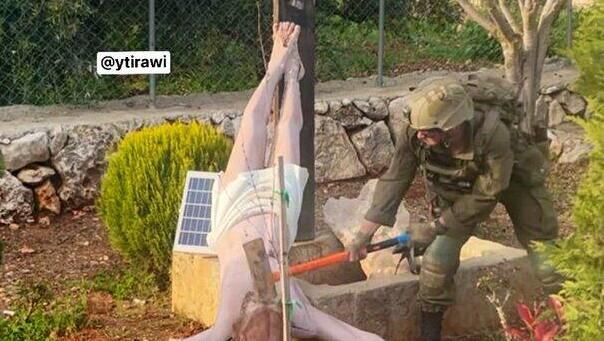
IDF Punishes Israeli Soldiers After Sledgehammer Vandalism of Jesus Statue in Debel, Lebanon
38 sources compared