
Hezbollah Drone Kills Israeli Contractor Near Aitaroun, Wounds His Son
Key Takeaways
- Drones targeted Merkava tanks in southern Lebanon near Qantara.
- FPV drones pose a growing threat to Israeli armored vehicles in Lebanon.
- Hezbollah claims direct hits on Israeli targets using drones or missiles.
Drone strikes in southern Lebanon
Hezbollah carried out a drone strike that hit an “Israeli” contractor demolishing South Lebanon homes near Aitaroun, according to اسلام تايمز, which said the strike occurred “around 11:00 am” and that a drone hit a backhoe used by “Israeli” occupation forces and contractors, killing a contractor and wounding his son who was also employed by the same company.
“Lebanon-based war media affiliated with Hezbollah broadcast footage documenting an operation targeting an Israeli Army Merkava tank in the town of al-Qantara, south Lebanon, using a dive-bombing drone”
The same report said the wounded son was taken to hospital, and it linked the incident to Hezbollah’s broader claims of attacks on “Israeli” military equipment in southern Lebanon.
اسلام تايمز also reported that earlier on Tuesday, the Islamic Resistance in Lebanon announced its fighters targeted an "Israeli" military bulldozer demolishing civilian homes in Bint Jbeil, struck a troop gathering at al-Qantara square, and hit a Merkava tank in the same area, all with attack drones.
In parallel, Hezbollah’s claims of tank targeting were echoed in other reporting: Anadolu Ajansı said Hezbollah claimed it clashed with Israeli forces near Qantara and “hit an Israeli Merkava tank with a guided missile,” while Al-Jazeera Net described Hezbollah broadcasting footage of a dive-bombing drone operation targeting an Israeli Army Merkava tank in al-Qantara.
The Lebanese war media affiliated with Hezbollah said the operation occurred on “April 27” and that the clip was released “a week before” it was published, emphasizing documentation of the aftermath after the drone collided with the Israeli vehicle.
Across these accounts, Hezbollah framed the attacks as “in defense of Lebanon and its people” and as a response to “Israeli” attacks on southern Lebanese villages and “the destruction of civilian infrastructure,” as stated in iranpress.
Escalation and claimed triggers
The drone and tank claims described by multiple outlets were presented as part of a wider escalation in southern Lebanon that began with Hezbollah’s cross-border attack on March 2 and continued through a ground offensive and airstrikes, according to Anadolu Ajansı.
That report said “Israel has been conducting airstrikes in Lebanon and a ground offensive in the south of the country since Hezbollah's cross-border attack on March 2,” and it added that “at least 1,094 people have been killed and 3,119 wounded since then in the Israeli attacks,” citing Lebanese authorities.

Anadolu Ajansı also tied the escalation to “a joint United States–Israel operation against Iran,” stating that it “has killed more than 1,340 since February 28,” and it said Iran retaliated with drone and missile strikes targeting Israel as well as Jordan, Iraq, and Gulf countries.
Hezbollah’s own framing of the immediate triggers for its operations was described in islam تايمز and iranpress, with islam تايمز saying Hezbollah maintained the operations came “in direct response to continued "Israeli" attacks on southern Lebanon and ongoing ceasefire violations that have resulted in civilian casualties.”
iranpress similarly said Hezbollah’s operations targeted Israeli military sites and were “a response to Israeli attacks on southern Lebanese villages, the destruction of civilian infrastructure, and the casualties inflicted upon civilians in the region.”
In addition to the claimed ceasefire violations, islam تايمز described the tactical environment around the Lebanese front, saying a senior “Israeli” security official told “i24News” that Hezbollah's deployment of explosive drones along the Lebanese front came as “a major and genuine surprise.”
Reactions and operational claims
Hezbollah’s operations were accompanied by detailed claims about tactics and documentation, while Israeli and third-party reporting emphasized the operational challenge posed by drones.
“A near miss from Hezbollah one-way attack drones reflects a new threat to helicopter casualty evacuation missions”
In اسلام تايمز, a senior “Israeli” security official told “i24News” that Hezbollah's deployment of explosive drones along the Lebanese front came as “a major and genuine surprise,” and the same report said troops were “insufficiently prepared for the threat.”
The Washington Examiner described Hezbollah’s FPV drone campaign as creating a new danger for the Israeli military, saying Hezbollah “scored its first confirmed Merkava tank kill with a first-person view drone” and that the strike included follow-up footage from a nearby recon drone showing “the tank’s ammunition detonating and blowing up the vehicle.”
That outlet also quoted a senior Israeli military officer who recently returned from Lebanon as saying Israel faces “a threat without a clear solution,” and it included another quote from the same officer: “What’s been shown in the video seems more like an experimental concept rather than something that is already operational in the field.”
The Inside Unmanned Systems report focused on the implications for helicopter CASEVAC, describing “Two Hezbollah kamikaze quadcopter drones narrowly missed an an Israeli casualty evacuation (CASEVAC) helicopter preparing for liftoff from Lebanon” and stating that the incident was recorded “on Sunday, April 26.”
In Al-Jazeera Net’s account, Hezbollah’s war media said the dive-bombing drone operation used “two drones” with a reconnaissance and documentation role for the first and a strike role for the second, and it described the tank’s “metal mesh designed to protect its turret from drone attacks” as being breached by the dive-bombing drone.
How outlets frame the same threat
While multiple outlets described Hezbollah’s drone and tank operations in southern Lebanon, they differed in emphasis, including whether they foregrounded specific incidents, broader tactical implications, or the mechanics of drone guidance.
اسلام تايمز centered on a specific strike near Aitaroun and on Hezbollah’s claimed targeting of a bulldozer in Bint Jbeil, a troop gathering at al-Qantara square, and a Merkava tank in the same area, while it also reported an “Israeli” security official’s assessment to “i24News” that Hezbollah’s explosive drone deployment was “a major and genuine surprise.”
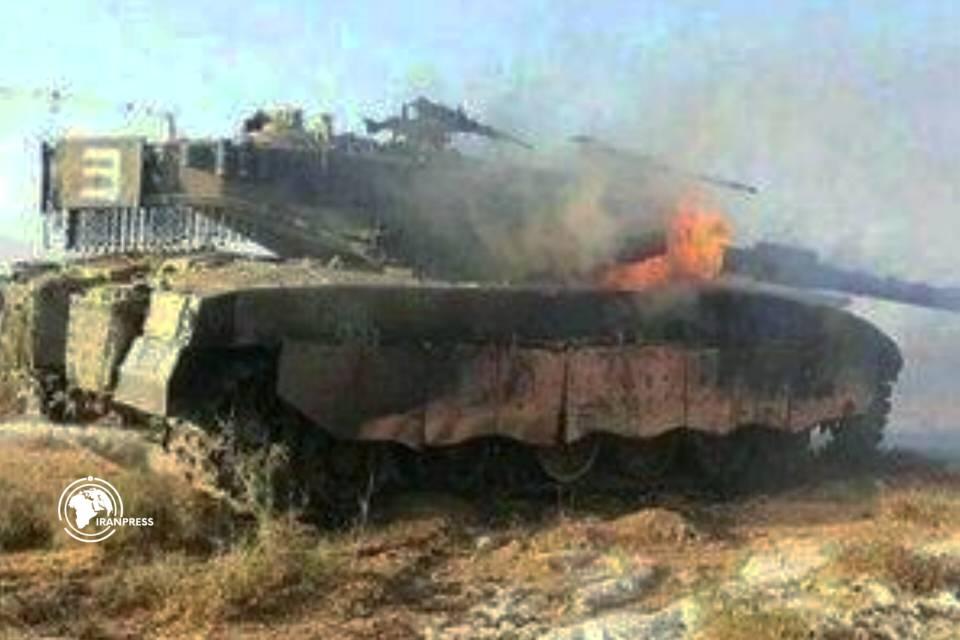
In contrast, the Washington Examiner foregrounded the FPV drone as a weapon system, describing Hezbollah’s “first confirmed” Merkava tank kill and highlighting that the FPV drone feed showed it hitting the “anti-drone protective cage on top of the turret,” which it said underscored “a major vulnerability.”
Inside Unmanned Systems shifted the focus from tanks to helicopters, using the “CASEVAC” near miss as a lens on how “inexpensive quadcopters” threaten helicopter casualty evacuation missions, and it anchored the narrative to “Sunday, April 26” and to the earlier strike that “killed a sergeant and wounded six more personnel.”
Al-Jazeera Net, meanwhile, emphasized documentation and tactics, describing a “double tactic” with two drones and stating that the dive-bombing drone “successfully breached the firewall and struck the vehicle,” causing it to ignite “due to burning ammunition on board.”
Anadolu Ajansı framed the same general battlefield dynamic through Hezbollah’s claims of guided missile and clashes near Qantara, while also providing a broader casualty and escalation context by citing Lebanese authorities’ figures of “at least 1,094 people have been killed and 3,119 wounded.”
What comes next for the front
The reporting suggests that the drone threat is reshaping operational planning for Israeli forces and influencing how Hezbollah presents its battlefield activity.
“Robert Inlakesh, March 28, 2026”
Washington Examiner said the FPV drone tank strike “cementing the danger the new weapon poses to the Israeli military,” and it described Israeli commanders warning that “point defense is no longer adequate to counter the threat,” while senior Israeli military officers told Ynet News that the new threat necessitated an expansion of the war with “a concentration of strikes north of the Litani River to hit drone supply chain centers in the north.”
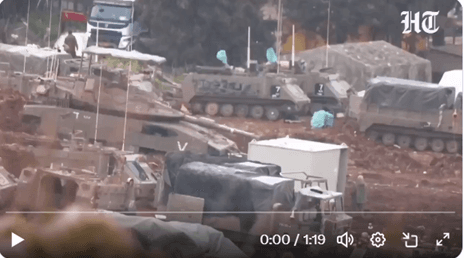
It also quoted a senior Israeli military official returning from Lebanon saying Israel faces “a threat without a clear solution,” and it included the official’s description of improvised solutions such as “fishing nets, camouflage nets, even soccer nets,” alongside drills involving “small-arms fire at drones.”
Inside Unmanned Systems similarly framed the drone threat as a new hazard for helicopter extraction, noting that the near miss occurred as a CASEVAC helicopter prepared for liftoff and that the incident “highlights the growing threat inexpensive quadcopters are posing to helicopters.”
It also described the earlier strike that killed “a sergeant and wounded six more personnel” and the subsequent attempt to evacuate wounded personnel into a “UH-60A/L Blackhawk, or Yanshuf (“Owl”)” before another FPV quadcopter “smacks into the ground and explodes well short of the helicopter’s tail.”
Meanwhile, islam تايمز reported that “Dozens of attack drones are reportedly being deployed weekly across multiple fronts,” and it described the guidance and jamming resistance as part of why the threat is difficult to counter, including “fiber-optic guidance systems” that render drones “largely immune to electronic jamming.”
More on Lebanon

Gold Slips as Oil Prices Rise, Keeping Interest Rates Elevated in Lebanon-Linked Tensions
17 sources compared

US Pushes Joseph Aoun To Meet Benjamin Netanyahu As Hezbollah Rejects Israel Talks
18 sources compared
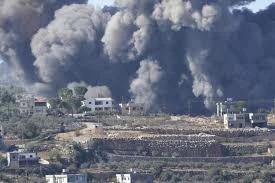
Israeli Strikes Kill At Least 13 In Southern Lebanon, Health Ministry Says
34 sources compared
RFI Traces Gaza War History From UN Partition Vote on November 29, 1947
10 sources compared