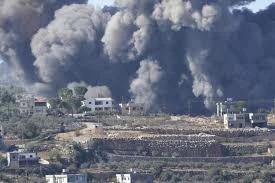
Israeli Strikes Kill At Least 13 In Southern Lebanon, Health Ministry Says
Key Takeaways
- Lebanese civilians, including women and a child, were among the dead.
- US-mediated ceasefire remains in place while Israeli strikes continue in southern Lebanon.
- Haboush in Nabatieh district reported fatalities and evacuation orders were issued.
Southern strikes and casualties
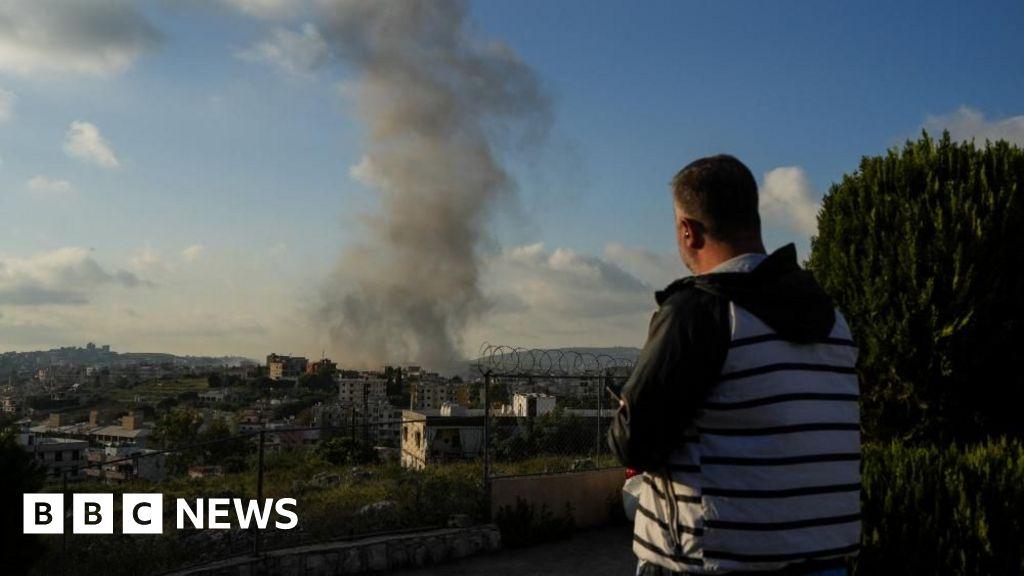
Israeli air strikes on southern Lebanon killed at least 13 people, the Lebanese health ministry said, with the BBC reporting that the dead included “four women and a child.”
The BBC said two women and a child were among eight killed in Haboush in the Nabatieh district, where the Israel Defense Forces (IDF) had issued an evacuation order.
The BBC also reported four people, including two women, were killed in Zrarieh in the Sidon district, and another person was killed in Ain Baal in the Tyre district, while “In total, 32 people were injured on Friday.”
The Killeen Daily Herald, citing the Health Ministry, described an airstrike on Habboush that occurred around the time of the warning that killed six people, including a woman and a child, and wounded eight.
CBC similarly said an airstrike on Habboush killed six people, including “a woman and a child,” and wounded eight, and it said the state-run National News Agency reported four killed in strikes on three other southern villages.
In contrast, Inquirer reported that Israel carried out several airstrikes on southern Lebanon on Friday, killing at least four people, while Hezbollah said it fired rockets and drones and wounded two Israeli soldiers.
TRT World reported a different casualty count for Friday’s strike, saying “Two people were killed and 10 others injured” in a fresh Israeli air strike in southern Lebanon, and it also referenced a day earlier death toll of “at least 29 people” killed and “42 injured.”
Across these accounts, the common thread is that the attacks continued despite a ceasefire framework, with CBC saying attacks continued “despite a ceasefire in place since April 17.”
Ceasefire violations and escalation
The BBC said fighting between Israel and Hezbollah “has continued despite an ongoing three-week ceasefire extension,” and it placed the broader timeline in motion with an initial 10-day pause announced on 16 April after ambassador talks in Washington between Israel and Lebanon.
The BBC reported that “A three-week extension to the ceasefire was announced by US President Donald Trump on 23 April,” and it quoted Trump saying the second meeting “went very well” and that the US would work with Lebanon “to help it protect itself from Hezbollah.”

The BBC also described how the truce “largely halted strikes on the capital city Beirut and its southern suburbs,” while “fighting has persisted elsewhere in the south, with continued air raids and repeated evacuation orders.”
On Saturday morning, the BBC said the IDF stated it had undertaken “around 50 strikes in the last day” on southern Lebanon, with targets including “headquarters from where Hezbollah operated” and “buildings used for military purposes.”
Al Jazeera framed the same period as continuing attacks “despite a temporary United States-mediated ‘ceasefire’,” and it quoted Lebanese President Joseph Aoun denouncing “the continuing Israeli violations” in southern Lebanon “despite the ceasefire, as do demolitions of homes and places of worship, while the number of killed and wounded rises day after day.”
Al Jazeera also said Parliament Speaker Nabih Berri called for “the swift formation of an international fact-finding committee on the crimes of the Israeli occupation.”
TRT World similarly said Israel “continues to violate it daily through air strikes and the demolition of homes in southern Lebanon,” even as it described the ceasefire as extended until May 17.
In the background of this escalation, the BBC said Israel and Hezbollah agreed to a ceasefire ending a previous conflict in November 2024, after which Israel carried out “near-daily attacks” on targets and people it said were linked to Hezbollah.
The BBC further tied the current cycle to earlier strikes, saying “After the US and Israel attacked Iran on 28 February and killed Iran's supreme leader, Hezbollah launched rockets and drones into Israel in retaliation on 2 March,” followed by “Israel bombarded Lebanon with air strikes.”
Hezbollah drone strikes and tank loss
Beyond air strikes, the conflict’s battlefield dynamics included Hezbollah’s use of fiber-optic first-person view (FPV) drones, with Türkiye Today reporting that “Hezbollah published footage Friday showing a fiber-optic first-person view (FPV) drone striking a Merkava Mk. 4 Barak main battle tank (MBT) in the southern Lebanese town of Qantara.”
Türkiye Today said the shaped charge penetrated the turret roof's cope cage and triggered an ammunition cookoff, describing it as “the first confirmed loss of the tank model to an FPV drone.”
The report added that an Institute for National Security Studies (INSS) researcher told AFP that the Israeli army “does not have any response” to the threat nowadays, and it quoted INSS senior researcher Orna Mizrahi saying the devices were like “children's toys” and that the military “does not have any response for that nowadays, because they didn't prepare themselves for such low-tech explosives.”
Türkiye Today also quoted INSS expert Arie Aviram explaining that because the drone “does not transmit the image via radio broadcast and does not receive guidance commands via a radio receiver,” it “cannot be detected by electronic intelligence means or blocked through electronic warfare.”
The report described the fiber-optic cable as leaving “no electronic trace,” and it said the cable can stretch up to “15 kilometers,” while components for the drones can cost “$300-$4,000” and are purchasable on AliExpress.
It also said operators use FPV goggles requiring minimal training, and it reported that Israeli Chief of Staff Lt. Gen. Eyal Zamir has reportedly instructed Northern Command and the Israeli Air Force (IAF) to strike the production and supply chain of FPV drones, including deep inside Lebanon.
Türkiye Today further said the Israeli army deployed mobile Iron Dome radars inside Lebanese territory to detect incoming drones earlier and equipped some vehicles with anti-drone netting, while analysts noted netting offered “minimal protection against warhead detonation at close range inside open-top vehicles.”
In parallel, the BBC said on Saturday Hezbollah targeted “Israeli soldiers and military vehicles in Lebanon,” and it reported that the Israeli military said one of its soldiers was killed during combat in southern Lebanon on Thursday, bringing Israeli troop deaths since early March to 17.
Al Jazeera’s account of the same broader period included that “The Times of Israel, citing the Israeli military, said the soldier was killed when Hezbollah launched several explosive-laden rockets at Israeli troop positions in the village of Qantara,” tying Qantara to both drone and rocket claims.
Red Cross targeting and hospital strain
As the fighting continued, multiple outlets described attacks and risks affecting humanitarian workers and medical operations in Lebanon.
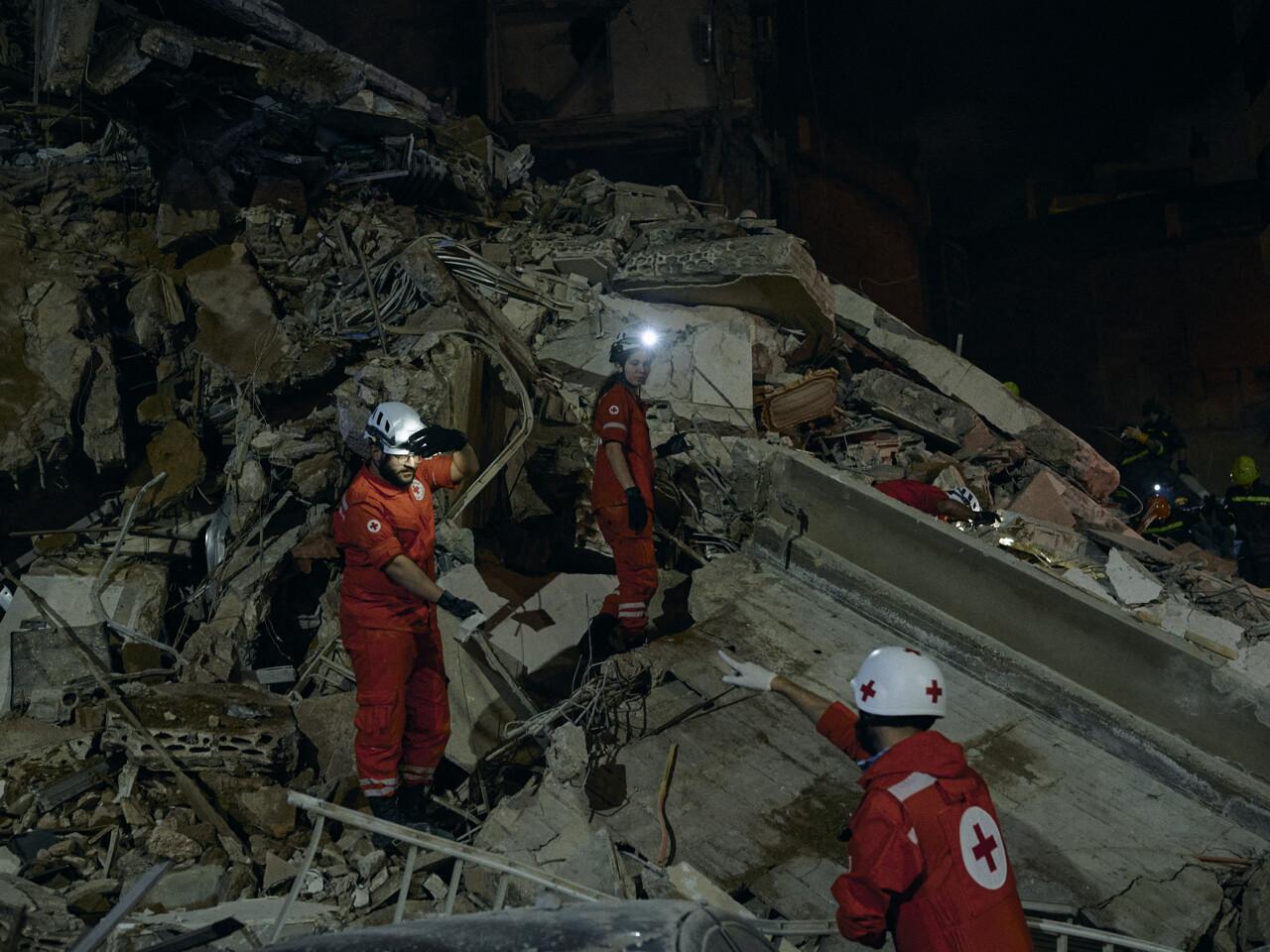
The Killeen Daily Herald reported that a senior official with the International Federation of Red Cross and Red Crescent Societies condemned the targeting of Red Cross volunteers during the Israel-Hezbollah war, quoting IFRC Under Secretary General for National Society Development and Coordination Xavier Castellanos Mosquera as saying that “two Lebanese Red Cross volunteers have been killed and 18 others wounded by Israeli strikes.”

CBC similarly said Mosquera “condemned the targeting of Red Cross volunteers,” and it quoted him saying Red Cross volunteers described hugging each other before departing on a call “because they don’t know if they will return.”
Both outlets also described the impact on medical services, with Killeen Daily Herald saying that at Jabal Aamel hospital in Tyre, director Wael Mroueh said many wounded patients were people who “initially fled but decided to return and take their chances in areas facing periodic bombardment.”
Killeen Daily Herald added that the hospital has enough food and supplies to last for a month and is relying on international organizations to maintain its supply chain, while CBC said many staff are displaced and the medical facility is hosting them and their families to ensure it can continue to operate.
The Killeen Daily Herald also included a specific account of journalist Amal Khalil, saying Mosquera told the Associated Press that he had seen video showing “ambulances that were hit by bullets” while trying to rescue her, and it said her body was pulled from rubble hours later when rescuers were able to reach the scene.
CBC echoed the same incident, quoting Mosquera about “ambulances that were hit by bullets” and describing Khalil as “buried in rubble when an Israeli strike hit a building where she was sheltering in southern Lebanon last month.”
In addition to Red Cross concerns, Killeen Daily Herald and CBC both said Israel has denied that it deliberately targets health facilities and emergency workers.
The BBC provided a broader casualty context, saying “Since early March, 2,586 people have been killed in Lebanon, including 103 health care workers and emergency responders,” and it noted that the ministry “does not distinguish between combatants and civilians.”
Türkiye Today also said Lebanon’s Health Ministry confirmed Friday that “2,618 people had been killed and 8,094 wounded since March 2,” reinforcing the scale of injuries and deaths cited across outlets.
Local stories and displacement
Accounts from Tyre and surrounding southern areas described residents returning to damaged homes while air raids and evacuation warnings continued.
“Thirteen killed in Israeli strikes on southern Lebanon, health ministry says At least 13 people, including four women and a child, have been killed in Israeli air strikes on southern Lebanon, the Lebanese health ministry said”
Killeen Daily Herald reported that despite the war, residents “have continued to return to homes in southern Lebanon after being displaced for weeks because of the hostilities,” and it quoted Umm Ali Khodor, whose apartment in the southern port city of Tyre was damaged during the previous Israel-Hezbollah war in 2024 and again in the current conflict.
Khodor told the outlet, “We were displaced, we rented a house, but as you know the situation is very difficult,” and she added, “We could not continue so we returned to our home.”
At Jabal Aamel hospital in Tyre, director Wael Mroueh said the dynamic was “different from all the previous wars,” and he described how many wounded were people who “initially fled but decided to return and take their chances in areas facing periodic bombardment.”
CBC echoed the same return-to-home pattern, quoting Khodor’s explanation that “We could not continue, so we returned to our home.”
CBC also described the hospital’s staffing strain, saying “Many of the hospital’s staff are also displaced, and the medical facility is hosting them and their families to ensure that it can continue to operate.”
In the same reporting stream, Killeen Daily Herald said Israel’s military urged residents of the Lebanese village of Habboush near the southern city of Nabatiyeh to evacuate, warning that those close to Hezbollah’s facilities would be in danger.
It also described the recovery of bodies from rubble in Kfar Rumman near Nabatiyeh, where paramedics recovered “the bodies of five people, including a man and his three sons,” after an airstrike late Thursday, and it identified those recovered as Malek Hamza and his sons, Ali, Fadel and Hamza.
CBC likewise said the paramedics recovered the bodies of five people from under rubble in Kfar Rumman and that the Lebanese army confirmed that a soldier, Ali Jaber, was killed in the strike.
Al Jazeera’s account added that Israel issued “forced displacement threats for 15 southern Lebanese towns and villages,” naming Jebchit, Toul, al-Samanieh, Sahel al-Hnieh, Qlailah, Wadi Jilo, al-Kanisa, Kafr Jouz, Majdal Zoun, and Seddiqine.
Diverging frames of the same day
Different outlets described the same Friday exchanges with varying casualty totals and emphasis, reflecting how each chose to foreground particular locations and claims.
The BBC centered on the Lebanese health ministry’s figures, saying “At least 13 people, including four women and a child,” were killed, and it broke down deaths across Haboush, Zrarieh, and Ain Baal while reporting “In total, 32 people were injured on Friday.”
The Killeen Daily Herald, also citing the Health Ministry, reported that an airstrike on Habboush killed six people and wounded eight, and it said the National News Agency reported four killed in strikes on three other southern villages.
CBC similarly said the Habboush airstrike killed six and wounded eight, but it framed the overall day as “at least 10 people” killed in its opening line and described “Crumbling ceasefires” in its broader context.
Inquirer, by contrast, reported that Israel carried out airstrikes on Friday “killing at least four people,” while Hezbollah said it fired rockets and drones and wounded two soldiers.
TRT World reported “Two people were killed and 10 others injured” in Friday’s fresh strike, and it tied that to a separate day’s toll of “at least 29 people” killed and “42 injured” in earlier strikes.
Al Jazeera’s framing was also different: it said “Israeli attacks on southern Lebanon have killed at least 28 people,” and it attributed the figure to the National News Agency, while also listing multiple municipalities and deaths in places such as Jebchit, Toul, Harouf, Qana, and Zebdine.
Al Jazeera also included political responses, quoting Joseph Aoun’s denunciation of “continuing Israeli violations” and Nabih Berri’s call for “the swift formation of an international fact-finding committee.”
Meanwhile, Türkiye Today shifted the lens to the drone threat and reported Hezbollah’s FPV strike on a Merkava tank in Qantara, embedding detailed technical claims about fiber-optic guidance and costs.
Together, these accounts show that even when they refer to the same ceasefire period and the same southern theatre, the reported numbers and the narrative focus can diverge sharply across outlets.
More on Lebanon

Gold Slips as Oil Prices Rise, Keeping Interest Rates Elevated in Lebanon-Linked Tensions
17 sources compared
US Pushes Joseph Aoun To Meet Benjamin Netanyahu As Hezbollah Rejects Israel Talks
18 sources compared

Hezbollah Drone Kills Israeli Contractor Near Aitaroun, Wounds His Son
11 sources compared
RFI Traces Gaza War History From UN Partition Vote on November 29, 1947
10 sources compared