Global Politics · 11 August, 2026 · 2 min read
ICE Plans to Buy G.L.O.V.E. Electric-Shock Gloves for Officers and Agents
ICE plans to buy thousands of conductive gloves to deliver electric shocks. Up to $20 million budget for conductive distraction and de-escalation devices.
15 outlets told this the same way.
3 of 5 outlets skipped it: syria says Colombia’s Golan recognition violates UN resolutions.
15outlets compared
ICE electric-shock gloves
Immigration and Customs Enforcement plans to spend up to $20 million to purchase thousands of “conductive distraction and de-escalation devices” for officers and agents by March, according to a notice published Monday by the Department of Homeland Security. The devices are known as the G.L.O.V.E., which stands for Generated Low Output Voltage Emitter, and are manufactured by Compliant Technologies LLC of Lexington, Kentucky, the SRN News report says.
Civil rights advocates expressed alarm at the plan, with American Civil Liberties Union deputy project director on policing Jenn Rolnick Borchetta saying, “Introducing gloves that can so easily be used to deliver terrible pain in encounters is a recipe for harm to the public.” SRN News also quotes John Peters, president of the Institute for the Prevention of In-Custody Deaths, saying, “If the officer is getting any type of resistance from the person, this is certainly an effective tool.”

Israel-Venezuela consular ties
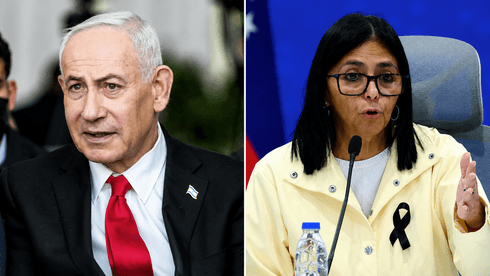
Israel and Venezuela announced on Tuesday that they had renewed consular relations 17 years after diplomatic ties were severed between the two countries in 2009, with Foreign Minister Gideon Sa’ar and Venezuelan counterpart Félix Plasencia agreeing to restore a coordination mechanism. The Times of Israel reported that the talks “resulted in an agreement to establish a coordination mechanism that will enable the provision of consular services to citizens of both countries,” quoting Sa’ar’s office.
The Media Line described the arrangement as a formal channel to provide essential consular services and to continue technical cooperation in emergency response, engineering and recovery efforts after Venezuela’s deadly June earthquakes. In the same reporting, Netanyahu welcomed the decision Tuesday evening in a video, presenting it as a significant diplomatic achievement, and said, “You remember the expression ‘the people are with the Golan,’ right?”
Golan recognition backlash
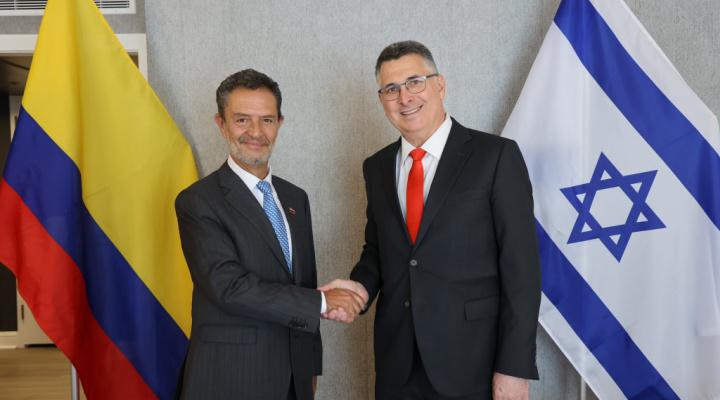
Colombia’s recognition of Israeli sovereignty over the occupied Syrian Golan Heights drew condemnation from Syria, which said the decision violated international law and UN resolutions, according to France 24. France 24 quoted the Syrian Foreign Ministry saying, “Syria expresses its categorical rejection and condemnation of this position and reiterates that the Golan Heights are an inseparable part of its territory,” and linked the dispute to Israel’s seizure of the territory in 1967 and subsequent annexation.
The EL PAÍS report said the Arab League rejected the Colombian shift, quoting Secretary-General Nabil Fahmy that, “This declaration has no legal effect and has no value whatsoever in determining the status of the Golan or sovereignty over it,” and it also cited Egypt and Saudi Arabia joining the rejection. In parallel, TRT World tied the Venezuela-Israel consular renewal to a broader regional realignment, noting that it came after the United States’ abduction of Venezuela’s former leader Nicolas Maduro in a January military attack and with interim President Delcy Rodriguez now running the country.