اکوایران
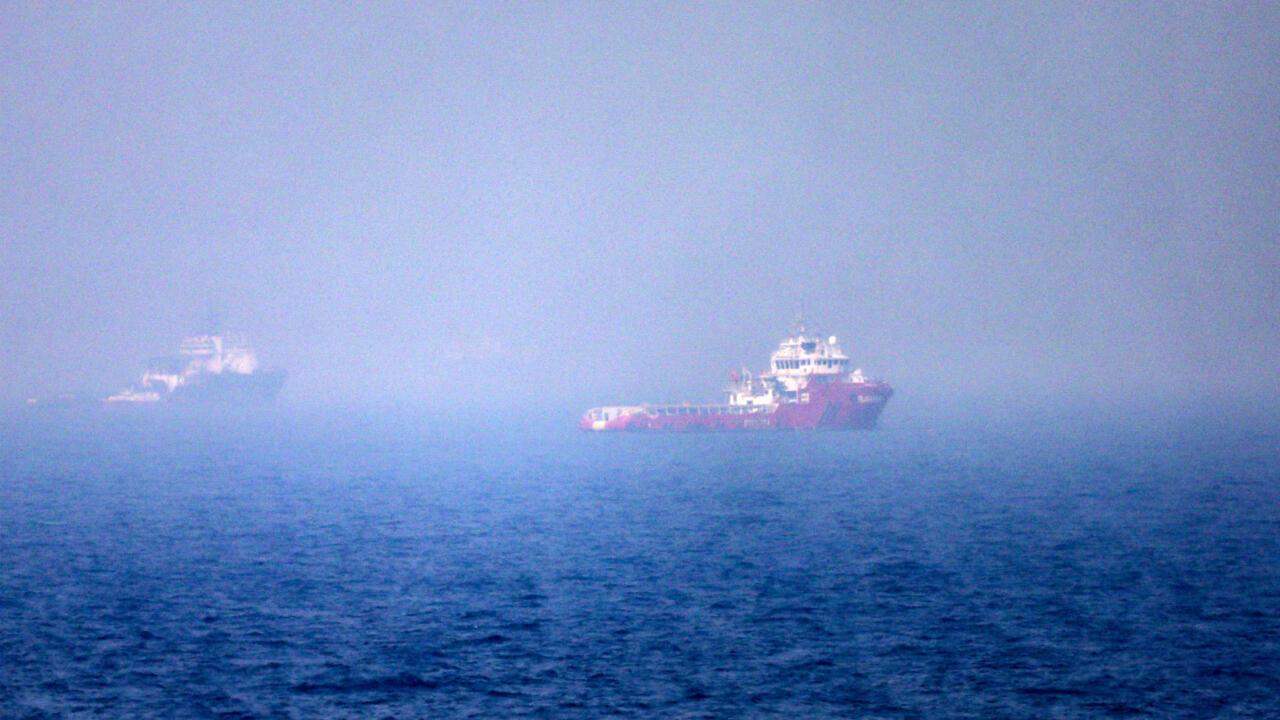
12:00 | According to Al Jazeera, Mohammad Al-Masri, a professor at the Doha Institute for Advanced Studies, said that whether Iran would include its ally Lebanon in a potential agreement to end the war with the United States remains “one of the big questions.” Al-Masri told Al Jazeera that his sense is Iran would seek some form of non-aggression pact that should also include its American ally, Israel. He stressed that Israel’s pursuit of expansionist plans for a “Greater Israel” would involve seizing parts of Lebanon’s territory south of the Litani River. “I don’t think Iran will accept this. If they did, it would be seen as abandoning a larger dream and a very important ally, Hezbollah, which had stood with them.” The analyst added that Israel has sabotaged peace efforts; it is no accident that we achieved our greatest progress... and that Israel then decided to attack Beirut in a major violation. Iran’s conditions for starting negotiations with the United States 11:00 | The spokesperson for the National Security and Foreign Policy Committee of the Parliament announced Iran’s conditions for starting talks with the United States. Quoting the Young Journalists Club, Ibrahim Rezaei, spokesperson for the committee, said Iran is prepared to pursue talks through Pakistan, but only if the other side accepts Iran’s preconditions and framework. South Lebanon still under fire 10:00 | South Lebanon remains an active war zone and there is essentially no ceasefire. Airstrikes continue relentlessly; yesterday alone more than 30 airstrikes in under 24 hours. According to Al Jazeera, civilians are paying a heavy price. The UN says civilian casualties are rising daily and the humanitarian crisis is becoming more unstable as Israel continues issuing mass evacuation orders and effectively depopulating more villages. Despite the declared ceasefire, airstrikes continue and dozens have been killed in these attacks. Hezbollah continues to target Israeli forces in southern Lebanon. The Israeli army also confirmed yesterday that another of its soldiers was seriously wounded. Meeting of American senators with the Chinese foreign minister on the eve of Trump’s trip 09:45 | American senators, as Donald Trump prepares to travel to Beijing, called for “stability” in relations with China. Following Abbas Araqchi’s trip to China, a bipartisan delegation from the U.S. Senate met Wang Yi in Beijing. According to Al Jazeera, the meeting, which took place on Thursday, focused on topics such as trade relations and regional stability. Wang Yi, in his meeting with Araqchi, urged an end to the U.S.–Israel war against Iran and described that war as “unlawful.” Analysts believe Trump is eager to reach an agreement with Tehran before his meeting next week with Xi Jinping, the Chinese president. Steve Daines, who led the American delegation, also stressed the need for “stability and mutual respect” in the Beijing–Washington relationship. Mohsen Rezaei: Control of the Strait of Hormuz must remain in Iran’s hands 09:30 | Mohsen Rezaei, a member of the Expediency Discernment Council, said that Iran “will not negotiate on nuclear issues with anyone” and emphasized that control of the Strait of Hormuz must stay in Iran’s hands. He added that the Iranian model asserts that regional countries must ensure their own security and foreign forces—whether American or European—must leave the region. Trump’s “Operation Freedom” angers Saudi leadership 09:20 | The Select News outlet, citing Anbasi, wrote that two American officials said Trump announced “Operation Freedom” on social media on Sunday afternoon, catching Gulf allies off guard and angering Saudi leadership. In response, Riyadh informed Washington that it would not allow the U.S. military to fly from Prince Sultan Air Base in southeast Riyadh or use its airspace to support the operation. A phone call between Trump and Mohammed bin Salman could not resolve the crisis and forced Trump to suspend the “Freedom” project. A Saudi source said: Saudi Arabia strongly supports Pakistan’s diplomatic efforts to mediate a deal between Iran and the United States to end the war. Iran denies claims of attacking a South Korean ship 08:30 | Tehran rejected any involvement in the explosion and fire on a South Korean-flagged vessel in the Strait of Hormuz “categorically.” According to Al Jazeera, Iran said it had no role in the incident that occurred earlier this week to a South Korean vessel in the Strait of Hormuz. The Iranian embassy in Seoul stated: “Iran denies any involvement by the Islamic Republic’s armed forces in the incident that damaged a South Korean vessel in the Strait of Hormuz.” Meanwhile, South Korea’s foreign ministry said on Tuesday that the exact cause of the explosion and fire on the vessel managed by South Korea would be determined only after it is moved to port. Earlier, Trump claimed on his social media that Iran had fired at a South Korean cargo ship in the Strait of Hormuz. The Iranian embassy also stressed that, due to the aggressive actions of the United States and Israel, Tehran now regards the Strait of Hormuz as a vital part of its “defensive geography.” The statement adds that security protocols in this strategic waterway have changed due to rising tensions and the activity of “hostile forces and their allies.” New York Times’ account of the U.S. war with Iran 02:00 | The New York Times, in its account of the war with Iran, wrote that the U.S. president deployed about 50,000 troops to fight Iran and stationed them on aircraft carriers, destroyers, Marine expeditionary units, and warplanes. These forces, with parachutes in their packs and survival kits at their sides, were part of a mission that Mr. Trump described as: “the destruction of Iran’s missiles and leveling the country’s missile industry.” Now, the U.S. military in the region is on high alert; the White House is sending mixed signals about the status of this military operation. Yesterday, Marco Rubio, the United States Secretary of State, announced that the operation “Epic Rage”—the name chosen for the campaign—had ended. Pete Hegseth also said the main aim of this operation was to aid ships in passing through the Strait of Hormuz, though Trump later said that this effort had also been halted. The U.S. president then wrote on social media that if Iran “agrees to what has been agreed,” the war will end without further explanation, and safe passage of ships through the Strait of Hormuz would be guaranteed. He also warned: “If they do not agree, bombing will begin.” Nevertheless, the U.S. Navy continues to enforce a naval blockade on all ships entering or leaving Iranian ports; the blockade that was imposed after Iran closed the Strait of Hormuz. A U.S. Navy fighter jet also disabled an Iranian-flagged tanker attempting to pass through the blockade. Before the war began in February, roughly 40,000 U.S. troops were based in bases and ships in the Middle East, including in Saudi Arabia, Bahrain, Iraq, Syria, Jordan, Qatar, the United Arab Emirates, and Kuwait; but, according to a U.S. military official, with the escalation of clashes under Trump, this number rose to more than 50,000. The exact number of American forces is unknown due to Iran’s attacks on U.S. bases and the constant redeployment of forces to other bases and areas, including the Middle East, Europe, and even U.S. soil. Details of the new U.S. demands on Iran 01:00 | The Wall Street Journal, in a report on a list of new U.S. demands from the Islamic Republic of Iran, citing a senior U.S. official, said that Trump abruptly halted the “Freedom in the Strait of Hormuz” project on Tuesday night, citing progress in negotiations with Iran. Now the Iranians are reviewing the proposed framework; if accepted, it would lead to 30 days of negotiations to reach a comprehensive and precise agreement. According to WSJ’s conversations with senior U.S. officials, the U.S. red lines in these negotiations are as follows: The United States says that to advance the agreement, Iran must commit to not pursuing nuclear weapons, dismantle the Fordow, Natanz, and Isfahan facilities, prohibit any underground nuclear activity, and accept inspections as requested—with penalties for violations. The United States also seeks to set a legal 20-year deadline to halt Iran’s nuclear enrichment and to hand over all enriched nuclear materials. A murky image of the region’s future In sum, these developments indicate that the region is entering a phase of “suspension of tension”—a period in which war has not fully stopped, nor has diplomacy yielded a definitive result. From Lebanon to the Strait of Hormuz and from Washington to Beijing, all players are redefining their positions in the face of an unstable security order. It remains to be seen how Iran will respond in the coming days to the conditions announced by the United States. A response that could influence the entire political, security, and economic calculus of the Middle East.
15 July, 2026
Read the original →