Iran22 March, 20265 min read
Iran Attacks Near Israeli Nuclear Site, Fires Long Range Missiles for First Time
This article is an automated aggregation of coverage from news outlets. Our editorials offer in-depth analysis curated by the NewsCord team.
Iran fired long-range missiles at southern Israel near Dimona, targeting the Dimona nuclear facility. Dozens wounded; at least 59 hospitalized, including a seriously injured child.
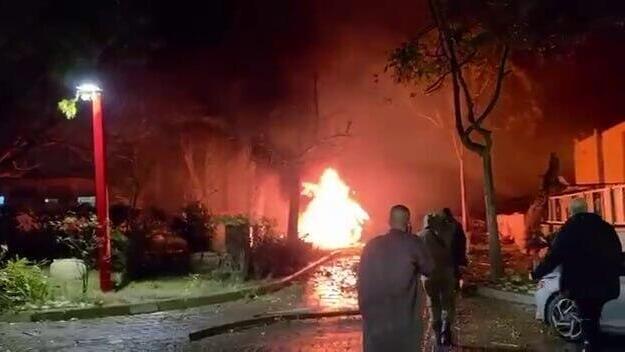
Nuclear Site Targeting
Iran escalated its military campaign against Israel on March 21, 2026, by launching missiles near Israel's main nuclear research center in Dimona and targeting the city of Arad. The attacks marked the first direct Iranian strikes against Israeli nuclear facilities since the US-Israel war against Iran began on February 28. Iran framed the strikes as retaliation for earlier attacks on its own nuclear facility at Natanz.
“Iranian state television framed Saturday's strikes as a 'response' to what it said was an attack on Iran's Natanz nuclear enrichment complex earlier in the day, marking a stark new phase of tit-for-tat targeting in the conflict, now in its fourth week.”
The targeting of Dimona, which houses the Shimon Peres Negev Nuclear Research Center, demonstrated Iran's determination to strike at what it perceived as Israeli nuclear capabilities. Israeli military officials acknowledged that their air defense systems failed to intercept some of the missiles, despite being deployed in what should have been a heavily protected area around the nuclear site.

Attack Casualties
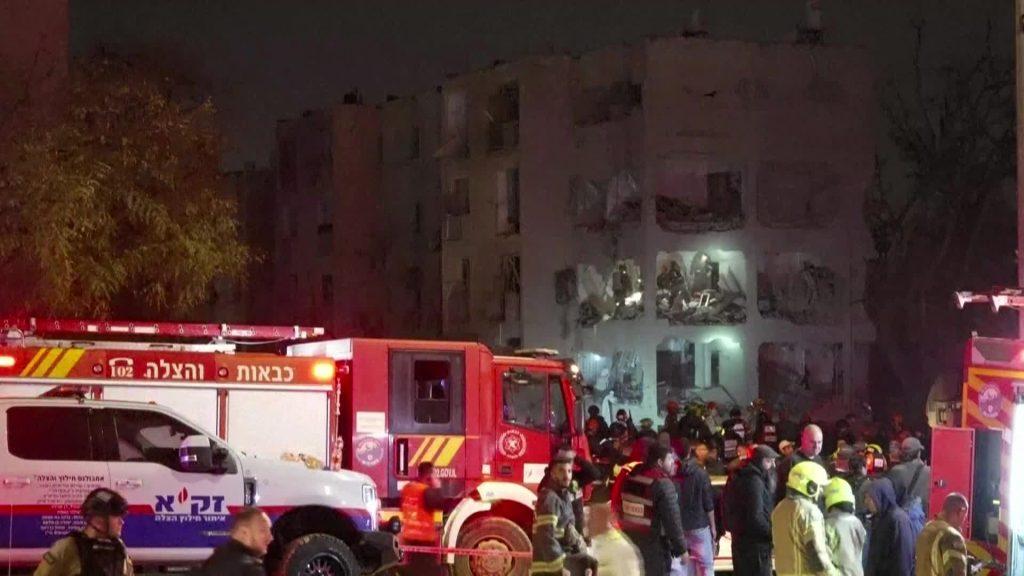
The Iranian missile attacks on Dimona and Arad caused extensive damage and significant civilian casualties, with rescue services reporting dozens of injuries including serious wounds to children. In Arad, emergency workers responded to widespread destruction across at least 10 apartment buildings, with three structures completely destroyed and in danger of collapsing. Rescue teams treated at least 84 people in Arad alone, with 10 in serious condition, including a 10-year-old boy with multiple shrapnel wounds.
In nearby Dimona, 39 people were injured, including another child in critical condition. The strikes penetrated Israel's air defense systems, which had been specifically deployed to protect the nuclear research area, raising serious concerns about Israeli defense capabilities. Israeli Prime Minister Benjamin Netanyahu responded by calling it "a very difficult evening" and vowing to continue military operations against Iran, while emergency services continued searching through rubble for potential additional victims.

Long-Range Missile Strike
In a dramatic escalation of the conflict, Iran for the first time fired long-range ballistic missiles beyond the Middle East, targeting the joint U.S.-UK military base at Diego Garcia in the Indian Ocean approximately 4,000 kilometers away. Israeli military chief Eyal Zamir confirmed that this marked the "first time" Iran had used long-range missiles in the conflict, representing a significant expansion of Tehran's strike capabilities beyond regional targets. The missiles, described as two-stage intercontinental ballistic missiles with ranges capable of reaching European capitals including Berlin, Paris, and Rome, demonstrated Iran's growing strategic reach and technological advancements.
“Iran launched two 4,000-kilometer-range ballistic missiles at the U.S.-UK military base Diego Garcia in the Indian Ocean, Israeli military chief Eyal Zamir said. The Israeli military said it was the ‘first time’ Iran had used long-range missiles in the conflict, marking its first expansion beyond the Middle East since the United States and Israel began attacking Iran on February 28.”
British officials confirmed the attack occurred before their government had given specific authorization for U.S. forces to use the base, highlighting the coordination challenges and tensions among Western allies. Military experts suggested Iran may have used its space program technology for an improvised launch, as the attack revealed capabilities that went beyond what Tehran had previously acknowledged about its missile range limitations.
Global Reactions
The international community reacted with alarm to Iran's nuclear proximity attacks and long-range missile capabilities, with the United Nations nuclear watchdog urgently calling for "maximum military restraint to avoid any risk of nuclear accident."
International Atomic Energy Agency Director General Rafael Grossi specifically warned about the dangers of military operations near nuclear facilities, stating that "the possibility of radiological release cannot be ruled out" and urging all parties to exercise caution.

The Russian Foreign Ministry condemned the attack on Natanz as a "blatant violation of international law" that posed a "real risk of catastrophic disaster throughout the Middle East."
Meanwhile, U.S. President Donald Trump escalated tensions further by issuing a stark ultimatum to Iran, threatening to "obliterate" Iranian power plants within 48 hours unless it fully reopened the Strait of Hormuz to international shipping.
Trump's threat came as oil prices soared above $105 per barrel due to the closure of the vital waterway, which handles a fifth of global crude trade.
Strategic Escalation
The attacks near Israeli nuclear facilities and Iran's demonstration of long-range missile capabilities represent a dangerous new phase in the escalating conflict between Iran and the US-Israel alliance. Iranian officials framed their actions as a necessary response to Israeli aggression, with senior fellow Abas Aslani at the Centre for Middle East Strategic Studies in Tehran telling Al Jazeera that Iran was pursuing an "eye-for-an-eye approach designed to re-establish deterrence." The attacks came amid growing evidence that Iran's military capabilities have proven more resilient than expected despite three weeks of intense US-Israeli bombardment that has targeted over 8,000 Iranian sites.
“Abas Aslani, a senior fellow at the Centre for Middle East Strategic Studies in Tehran, told Al Jazeera that Iran has been pursuing an eye-for-an-eye approach designed to re-establish deterrence. ‘Tehran wants to reduce the gap between words and actions,’ he said, adding that Iran's goal was to make its threats credible enough to underpin a new long-term security arrangement, not to simply force a ceasefire, but establish deterrence.”
Meanwhile, Israel's Defense Minister Israel Katz signaled that military operations against Iran would intensify, stating that "the intensity of the strikes that the IDF and the U.S. military will carry out against the Iranian terror regime and the infrastructure it relies upon will significantly escalate." The conflict's expansion beyond regional boundaries, with missiles reaching toward Europe and threats against global energy infrastructure, has significantly raised the stakes for international security and economic stability.
Human and Economic Costs
The broader conflict continues to inflict heavy human costs and economic disruption across the region and beyond. Iranian state media reported that the death toll from the war had surpassed 1,500 people, while Lebanon's Health Ministry reported over 1,000 deaths in Israeli strikes, with more than one million people displaced. The economic impact has been severe, with the closure of the Strait of Hormuz disrupting global oil supplies and sending fuel prices soaring worldwide.
Airlines have been forced to cut flights due to rising fuel costs, and food and fuel prices have risen far beyond the Middle East. The conflict has also caused significant diplomatic fallout, with Saudi Arabia ordering Iranian diplomats to leave the country, and Iran warning the United Arab Emirates against allowing attacks from its territory. As the war enters its fourth week with no clear endgame in sight, the international community faces increasing pressure to find a resolution to a conflict that has expanded beyond regional boundaries and now threatens global economic stability and security.