
Iran threatens to irreversibly destroy Gulf energy infrastructure after Trump's ultimatum
Key Takeaways
- Trump threatens to obliterate Iran's power plants if Hormuz remains closed within 48 hours.
- Iran vows to completely close Hormuz and retaliate against Gulf energy and water infrastructure.
- Oil prices surged globally amid the Hormuz crisis and threats to energy infrastructure.
Trump's Ultimatum
President Donald Trump issued a dramatic 48-hour ultimatum to Iran on Saturday, March 21, 2026, threatening to 'obliterate' the country's power plants if Tehran did not fully reopen the strategic Strait of Hormuz.
“With bitcoin still about 40% below its October high, this may represent a typical consolidation range before further upside”
Trump posted on Truth Social that 'If Iran doesn't FULLY OPEN, WITHOUT THREAT, the Strait of Hormuz, within 48 HOURS from this exact point in time, the United States of America will hit and obliterate their various POWER PLANTS, STARTING WITH THE BIGGEST ONE FIRST!'
In response, Iran's military swiftly retaliated, with the Khatam Al-Anbiya operational command warning that if Iran's fuel and energy infrastructure was violated, 'all energy, information technology and desalination infrastructure belonging to the U.S. and the [Zionist] regime in the region will be targeted.'
Iranian parliament speaker Mohammad Bagher Qalibaf further escalated tensions by posting on X that vital infrastructure across the region would be considered legitimate targets and 'irreversibly destroyed' if Iranian power plants and infrastructure were attacked.
Hormuz Strategic Value
The Strait of Hormuz, a narrow waterway connecting the Persian Gulf to the open ocean, has become the focal point of global energy security concerns as Iran has effectively closed the critical passage since February 28, when the U.S. and Israel launched their war.
The strait normally handles about 20% of the world's seaborne oil trade and one-fifth of global oil and gas supplies, with any disruption causing significant price spikes.

Following Trump's threat, Iranian officials maintained they would keep providing safe passage through the strait to vessels from countries other than their enemies, with Iran's representative to the International Maritime Organization claiming the waterway 'remains open, with only shipping vessels linked to Iran's enemies being barred.'
However, shipping traffic has virtually ground to a halt, with tanker traffic through the Strait dropping to near zero, forcing major Persian Gulf oil producers to reduce output sharply.
Military Escalation
The conflict has entered a dangerous new phase with escalating military actions on multiple fronts.
Iran launched long-range ballistic missiles with a range of 4,000 km at the U.S.-British military base at Diego Garcia in the Indian Ocean, marking the first time Iran has used such missiles since the conflict began.
Separately, Iranian missiles struck two cities near Israel's main nuclear research center in Dimona and Arad, injuring at least 175 people according to Soroka Medical Center in southern Israel.
Iran claimed these strikes were retaliation for an earlier attack on its main nuclear enrichment site at Natanz, while Iranian Parliament Speaker Mohammad Bagher Ghalibaf stated that Israel's inability to intercept missiles in the heavily protected Dimona area 'is operationally, a sign of entering a new phase of the battle.'
Meanwhile, Israel expanded its operations against Hezbollah in Lebanon, striking bridges over the Litani River and accelerating destruction of Lebanese homes near the border.
Human Cost
The human cost of the escalating conflict has been substantial, with both sides reporting significant civilian casualties.
Iran's Health Ministry reported that the death toll in the war surpassed 1,500 on March 21, while Israel confirmed that 15 people have been killed by Iranian strikes.

More than a dozen civilians in the occupied West Bank and Gulf Arab states have also been killed in the strikes.
In a tragic incident, an Israeli civilian was killed in his car in the northern town of Misgav Am in what Israel's military originally said appeared to be a rocket attack, though it later admitted investigating whether the death was caused by Israeli soldiers' fire.
The war has also seen non-combat related accidents, including a Qatari military helicopter crash on Saturday blamed on a technical malfunction that killed all seven aboard and a U.S. refueling plane crash in Iraq that killed six U.S. service members earlier in the conflict.
International Response
International reactions to the escalating tensions have been mixed, with key allies expressing concerns about the global economic impact while others have taken more direct stances.
“Israel had a “very difficult evening in the battle for our future”, said Prime Minister Benjamin Netanyahu after Iranian strikes hit the towns of Arad and Dimona”
The G7 foreign ministers issued a statement condemning Iran's 'reckless attacks against civilians and civilian infrastructure, including energy infrastructure' and reaffirmed their commitment to safeguarding maritime routes.

Treasury Secretary Scott Bessent defended the administration's decision to temporarily lift sanctions on Iranian oil at sea, claiming it would bring approximately 140 million barrels to global markets, though analysts questioned why the U.S. would boost Iran economically amid the war.
Meanwhile, Turkish Foreign Minister Hakan Fidan, speaking from Saudi Arabia where leaders from Arab and Muslim countries are meeting, warned that the Gulf may be forced to retaliate against Iran.
Saudi Arabia responded by expelling Iranian diplomats, declaring them 'persona non grata' and giving them 24 hours to depart the kingdom.
Economic Impact
The global economic consequences of the conflict and Hormuz crisis have been severe, with oil prices surging to over $100 per barrel for Brent crude, representing an increase of nearly 70% since the war began.
The effective closure of the Strait of Hormuz has created what some analysts call the worst oil crisis since the 1970s, with European gas prices surging as much as 35% in recent weeks.
Energy traders and geopolitical analysts are closely watching whether Iran's response will ease or intensify one of 2026's most significant international crises.
The Trump administration has attempted to mitigate the economic impact by tapping the U.S. strategic petroleum reserve and lifting sanctions on some Russian oil, though these measures have had limited effect so far.
As the 48-hour deadline approaches, markets remain volatile, with analysts warning that mutual targeting of energy assets could spark a broader regional crisis, potentially disrupting desalination plants vital for Gulf water supplies and sending oil prices even higher.
More on Iran

President Donald Trump threatens to obliterate Iran's power plants over Strait of Hormuz.
19 sources compared

Trump threatens to obliterate Iran's power plants; Iran vows retaliation
12 sources compared
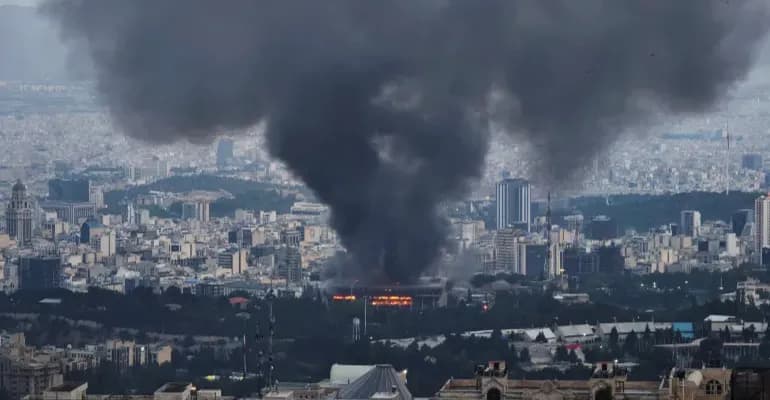
Iranian Missiles Strike Israel as US Threatens Wider War
37 sources compared

Trump Threatens to Obliterate Iran's Power Plants if Hormuz Is Opened Within 48 Hours
12 sources compared