
Trump threatens to obliterate Iran's power plants; Iran vows retaliation
Key Takeaways
- Trump threatens to obliterate Iran's power plants unless Hormuz Strait is reopened within 48 hours.
- Iran's military vows retaliation against U.S. targets, promising strikes on regional infrastructure.
- Situation centers on Hormuz energy security, with escalating threats and potential wider regional conflict.
Trump's Hormultimatum
President Donald Trump issued a dramatic ultimatum to Iran on March 21, threatening to "obliterate" the country's power plants if Tehran did not fully reopen the Strait of Hormuz within 48 hours.
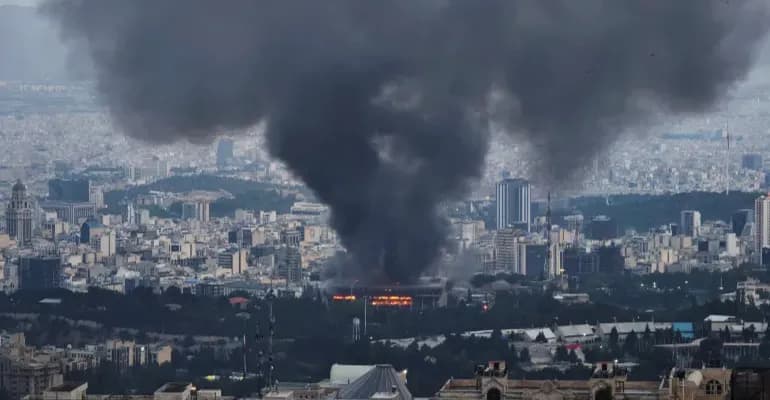
“Tehran, Iran – Military and political authorities in Iran are projecting a message that “victory” is near as war with the United States and Israel continues to escalate, and air strikes and assassination attempts are reported across the country”
The threat, posted on Trump's Truth Social platform, warned that the United States would "hit and obliterate their various POWER PLANTS, STARTING WITH THE BIGGEST ONE FIRST" if Iran failed to comply.

This escalation came just days after Trump had suggested the U.S. was "getting very close to meeting our objectives" and considering winding down military operations.
The about-face in rhetoric represents a significant hardening of the administration's position, with U.S. Marines and heavy landing craft continuing to deploy to the region amid preparations for potential strikes.
The ultimatum landed against a backdrop of the Pentagon announcing three additional warships and approximately 2,500 Marines to bolster the war effort, despite Trump's repeated insistence that ground forces would not be deployed.
Iran's Retaliation Threat
Iran responded swiftly to Trump's threat, with Iranian parliament speaker Mohammad Bagher Qalibaf vowing that if Iranian power plants and infrastructure are targeted, then vital infrastructure across the region would be considered legitimate targets and "irreversibly destroyed."
The Islamic Republic has maintained its strategic position regarding the Strait of Hormuz, with Tehran's representative to the International Maritime Organisation Ali Mousavi stating that passage through the narrow waterway remains possible by coordinating security arrangements.

Iran's military posture has expanded significantly, with Iranian forces launching two 4,000-kilometer-range ballistic missiles at the U.S.-UK military base Diego Garcia in the Indian Ocean - the first time Iran had used long-range missiles since the U.S.-Israeli attacks began on February 28.
Israeli military chief Eyal Zamir emphasized that these missiles "are not intended to strike Israel" and that "their range reaches European capitals - Berlin, Paris, and Rome are all within direct threat range," indicating a deliberate strategy to expand the conflict's geographic scope beyond the immediate Middle East theater.
Conflict Escalation
The conflict has escalated dramatically with Iran launching missile strikes on southern Israeli cities of Dimona and Arad, injuring more than 100 people including children, after Israel's military reportedly failed to intercept the incoming projectiles.
“What to know about the Iran war: - President Trump threatened to "obliterate" Iran's power plants, starting with its largest one, if the is not reopened within 48 hours”
The Iranian Revolutionary Guards claimed the strikes targeted "military installations" and security centers in southern Israel, with both cities located near several military sites including Nevatim Air Base.
The Dimona area is particularly sensitive as it houses Israel's secretive nuclear reactor, located about 13 kilometers southeast of Dimona.
Iran justified these attacks as retaliation for an earlier Israeli strike on Natanz, Iran's main nuclear enrichment facility, which was also hit in the first week of the ongoing war and in the 12-day conflict last June.
Meanwhile, Hezbollah, an ally of Iran, has continued launching strikes on Israel, prompting Israeli Defense Minister Israel Katz to expand the list of targets to include all bridges over the Litani River in Lebanon, which Israel claims Hezbollah is using to move fighters and weapons into southern Lebanon.
Israel has also intensified its ground operations in Lebanon, with Lebanese authorities reporting that Israeli strikes have killed more than 1,000 people and displaced over 1 million in recent weeks.
Economic Impacts
The ongoing war has created severe economic consequences globally, driven primarily by the disruption of the Strait of Hormuz through which approximately 20 percent of global oil and liquefied natural gas supplies pass.
Iran's de facto blockade of this critical waterway has caused international oil prices to surge, with Brent crude soaring to over $100 per barrel, reaching around $106 on Saturday.
European gas prices have jumped as much as 35% in recent weeks due to the near-closure of the strait, creating what analysts describe as "the worst oil crisis since the 1970s."
The market volatility has intensified with Trump's 48-hour ultimatum, placing what financial analysts term a "ticking time bomb of elevated uncertainty over markets."
IG market analyst Tony Sycamore warned that "if the ultimatum is not walked back, we will likely see a Black Monday reopening of global equity markets in free fall and oil prices spiking significantly higher."
Iran's potential response to any U.S. attack on its power plants would likely include targeting Gulf energy facilities in Saudi Arabia, the United Arab Emirates and Qatar, which Sycamore noted "would deepen and prolong the pain of higher energy prices and drag the conflict into a broader regional crisis."
The administration has attempted to mitigate the economic fallout by temporarily lifting sanctions on Iranian oil already at sea and tapping the U.S. strategic petroleum reserve, though these measures have had limited effect given the scale of the disruption.
Diplomatic Efforts
International diplomatic efforts have intensified amid the escalating conflict, with Turkish Foreign Minister Hakan Fidan engaging in high-level meetings to explore pathways toward de-escalation.
“allies struggling to respond”
Fidan held talks with Iranian and Egyptian foreign ministers, as well as the European Union's foreign policy chief Kaja Kallas and unspecified U.S. officials, focusing on "the steps that can be taken to end the war in the Middle East" according to Turkey's Ministry of Foreign Affairs.

Meanwhile, Lebanese President Joseph Aoun has condemned Israel's strikes on bridges over the Litani River as "unjustified" and "prelude to a ground invasion," while simultaneously offering direct negotiations with Israel to end the ongoing war.
Aoun emphasized that Lebanon has raised concerns through diplomatic channels and vowed to disarm Hezbollah as part of a potential peace settlement.
The United Nations nuclear watchdog reported that it had not received reports of damage to Israeli nuclear facilities or abnormal radiation levels following Iranian strikes in the Dimona area, providing some reassurance about the absence of radiological contamination.
However, the International Atomic Energy Agency noted that the bulk of Iran's estimated 972 pounds (441 kilograms) of enriched uranium is elsewhere, beneath the rubble at its Isfahan facility, raising ongoing concerns about nuclear safety and potential environmental contamination from the conflict.
More on Iran

Trump Threatens to Obliterate Iran's Power Plants If Hormuz Is Not Open
12 sources compared

Iran threatens to irreversibly destroy Gulf energy infrastructure after Trump's ultimatum
126 sources compared
Iran missile strikes near Israel's main nuclear research center, injuring dozens
27 sources compared

Trump Threatens to Obliterate Iran's Power Plants if Hormuz Is Opened Within 48 Hours
12 sources compared