Iran22 March, 20265 min read
Trump Threatens to Obliterate Iran's Power Plants if Hormuz Is Opened Within 48 Hours
Trump threatened to obliterate Iran's power plants if Hormuz isn't fully opened within 48 hours. Iranian missiles hit two southern Israeli towns near the main nuclear research center, injuring dozens.

Trump's Ultimatum
President Donald Trump escalated the Middle East conflict dramatically on Saturday by threatening to 'obliterate' Iran's power plants if the Strait of Hormuz remains closed within 48 hours. The president issued the ultimatum in a Truth Social post, declaring that if Iran doesn't 'FULLY OPEN, WITHOUT THREAT, the Strait of Hormuz, within 48 HOURS from this exact point in time, the United States of America will hit and obliterate their various POWER PLANTS, STARTING WITH THE BIGGEST ONE FIRST!'
“President Donald Trump threatened Iran in a Truth Social post Saturday evening, warning that the U.S. would target the nation's power plants if the Strait of Hormuz remained closed. 'If Iran doesn't FULLY OPEN, WITHOUT THREAT, the Strait of Hormuz, within 48 HOURS from this exact point in time, the United States of America will hit and obliterate their various POWER PLANTS, STARTING WITH THE BIGGEST ONE FIRST!' Trump wrote in the post.”
Trump's threat came as the war entered its fourth week, with oil prices soaring due to the strait's closure through which approximately 20% of the world's oil passes. The president also claimed the US is 'weeks ahead of schedule' in its war on Iran, stating that 'their leadership is gone, their navy and air force are dead, they have absolutely no defense,' though Iranian leaders have consistently denied such assertions.
Iran's Retaliation Threats
Iran responded to Trump's threat with warnings of its own, stating that it would retaliate by targeting critical infrastructure across the region if its power plants are attacked. Iran's Parliament Speaker Mohammad Bagher Ghalibaf issued a stark warning on Sunday, saying that 'immediately after the power plants and infrastructure in our country are targeted, the critical infrastructure, energy infrastructure, and oil facilities throughout the region will be considered legitimate targets and will be destroyed in an irreversible manner, and the price of oil will remain high for a long time.'
Iran's military reinforced this position, stating that 'following previous warnings, if Iran's fuel and energy infrastructure is violated by the enemy, all energy, information technology and desalination infrastructure belonging to the US and the regime in the region will be targeted.' Iranian officials have consistently maintained that their actions in the Strait of Hormuz are defensive, with Iran's representative to the UN's International Maritime Agency Ali Mousavi stating that 'Israeli and US attacks against Iran were at the root of the current situation in the Strait of Hormuz.'

Regional Escalation
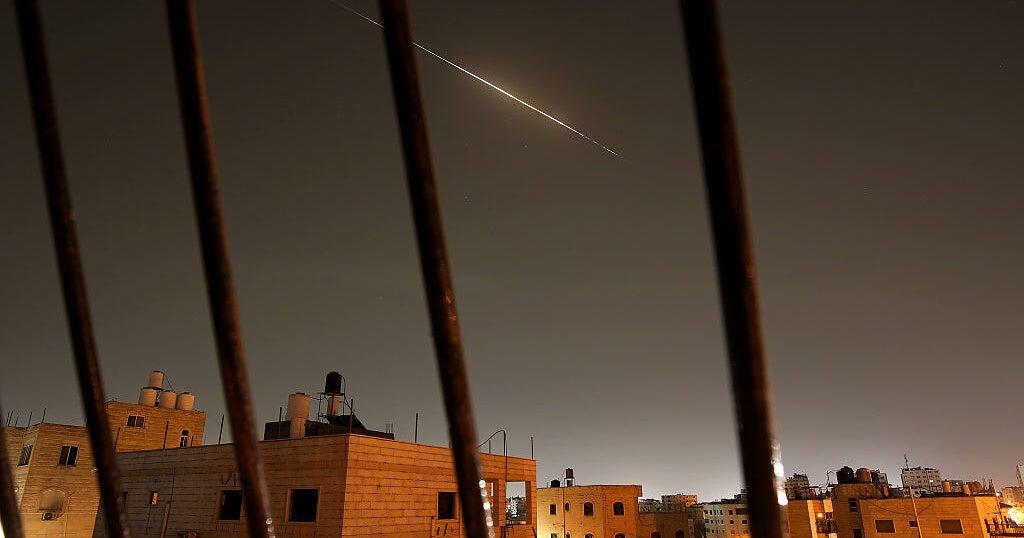
The confrontation has already led to significant escalation in the region, with Iranian missiles successfully penetrating Israel's sophisticated air defense systems and striking communities near its nuclear research center.
“The Iranian missiles managed to get past Israel's sophisticated air defense systems and footage from the sites of the strikes showed large craters and destroyed buildings. Israel's Ministry of Health said in the city of Arad around 116 people were injured, while in Dimona 64 were injured.”
Iran's missiles hit cities of Dimona and Arad in southern Israel, causing widespread damage and injuring at least 100 people.
Iranian Parliament Speaker Mohammad Bagher Ghalibaf declared this development a 'sign of entering a new phase of the battle,' stating that 'if the Israeli regime is unable to intercept missiles in the heavily protected Dimona area, it is, operationally, a sign of entering a new phase of the battle.'
In response, Israel's Prime Minister Benjamin Netanyahu vowed that Israel would 'continue to strike our enemies on all fronts,' describing the Iranian attacks as attempting to use civilian areas as 'mass murder weapons.'
Meanwhile, the United States has continued military operations against Iran, with Admiral Brad Cooper of U.S. Central Command confirming that the US military has dropped multiple 5,000-pound bombs on an underground facility along Iran's coast that it used to store anti-ship cruise missiles and mobile missile launchers.
Economic Impact
The crisis has had severe economic consequences globally, with the closure of the Strait of Hormuz causing oil prices to skyrocket.
The critical waterway through which approximately 20% of the world's oil flows has been effectively closed to most ship traffic due to Iranian attacks on commercial vessels and threats of further strikes.

This has led to cuts in output from some of the world's largest oil producers, as their crude has nowhere to go.
In response to the rising energy prices, the Trump administration lifted some sanctions to allow the sale of oil produced in Iran and temporarily suspended the Jones Act to allow some shipping regulations on oil to be removed.
Retail gas prices have risen 93 cents per gallon, and the price of U.S. crude oil has gone up more than 70% since the start of the year.
Meanwhile, Trump has repeatedly pressured U.S. allies to assist in clearing the Strait of Hormuz, telling reporters that 'Europe, needs it. Korea, Japan, China, a lot of other people, so they'll have to get involved,' though other countries have been unwilling to participate in military operations in the region.
Gulf Nations Respond
Gulf nations are responding to the escalating tensions by both diplomatic and defensive measures, as the conflict threatens to expand beyond the immediate US-Iran confrontation. Saudi Arabia has intercepted Iranian missiles targeting its capital, Riyadh, while the United Arab Emirates has reported responding to Iranian drones and missiles. Saudi Arabia declared the Iranian military attaché and several embassy staff 'persona non grata,' ordering them to leave the country within 24 hours, stating that 'in light of Iran's continuing flagrant attacks against Saudi Arabia, the kingdom has informed the military attache, his deputy and 3 other members of Iran's embassy in Riyadh that they are considered persona non grata and should depart the kingdom within 24 hours.'
“Saudi Arabia ordered Iran's military attaché, the assistant military attaché and three embassy staff to leave the country within 24 hours, its foreign ministry said early today, as Tehran continued strikes on its Gulf neighbors. The Saudi foreign ministry said Iran's ongoing attacks amounted to 'flagrant violation' of international conventions and contradicted 'the principles of Islamic brotherhood.' It also warned against further escalation. 'The Kingdom of Saudi Arabia has notified the military attaché of the Embassy of the Islamic Republic of Iran to the Kingdom, the assistant military attaché, and three members of the mission staff to leave the Kingdom,' it said, adding that it has declared them 'personae non gratae,' which means they are no longer welcome by the host country.”
Other Gulf states have also taken defensive positions, with Kuwaiti air defense systems striking down nine ballistic missiles in a 24-hour period and Bahrain reporting it has shot down multiple drones. Meanwhile, Qatar's Ministry of Interior announced that a military helicopter had crashed in territorial waters, with six of the seven on board found dead, though the cause of the crash was not specified. These developments indicate that the conflict is creating ripple effects throughout the Middle East, with regional powers being forced to take sides and implement defensive measures against potential Iranian attacks.