
Iran Attacks Tel Aviv with Missiles in Retaliation for Esmail Khatib Killing
Key Takeaways
- Israel targeted Iran's Intelligence Minister Esmaeil Khatib in Tehran.
- Iran launched retaliatory strikes toward Tel Aviv area after Khatib's killing.
- Strikes affected Israel and broader region, including the Gulf and Lebanon.
Israeli Targeting of Khatib
Israel launched airstrikes targeting Iran's Intelligence Minister Esmaeil Khatib in Tehran on March 18, escalating regional tensions amid ongoing hostilities.
“Iranian President Pezeshkian has confirmed the killing of intelligence minister Esmail Khatib calling it a "cowardly assassination", following reports that Israel carried out an overnight strike”
Israeli Defence Minister Israel Katz confirmed that Khatib was 'eliminated' in the strike, though Iranian authorities have not verified his reported death.

Katz stated that he and Prime Minister Benjamin Netanyahu had authorized the military to kill targeted senior Iranian officials without requiring additional approval.
The Israeli broadcaster Channel 12 reported that Khatib was among the intended targets, with the outcome remaining unclear as authorities assessed the operation's impact.
Iranian Missile Retaliation
Iran retaliated with extensive missile and drone strikes targeting central Israel, including Tel Aviv and Jerusalem, confirming the escalation of hostilities.
Iranian state television confirmed fresh missile launches, while the Israeli military reported detecting incoming projectiles across multiple cities.
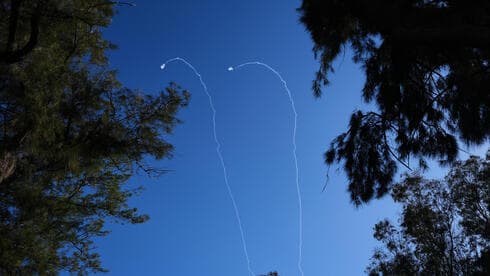
Air raid sirens were activated across major Israeli urban centers, with media reporting loud explosions near Jerusalem as air defense systems intercepted several incoming missiles.
The attacks represent Iran's response to previous Israeli and US military actions that began on February 28, 2026, when joint strikes killed Iranian Supreme Leader Ali Khamenei and other high-ranking officials.
Regional Defense Responses
Multiple Middle Eastern countries intercepted Iranian missiles and drones, demonstrating widespread regional defense coordination against the attacks.
“Israel has claimed it targeted Iran’s Intelligence Minister Esmaeil Khatib in overnight airstrikes in Tehran on Wednesday, March 18, amid escalating hostilities”
Qatar's Ministry of Defence announced intercepting nine ballistic missiles and multiple kamikaze drones launched from Iran, with all threats successfully neutralized.
Bahrain reported intercepting and destroying 130 missiles and 234 drones targeting the kingdom since the attacks began, while Kuwait's National Guard confirmed intercepting seven drones within its operational areas.
Saudi Arabia's air defenses intercepted multiple drones, including near the diplomatic quarter in Riyadh and in the Eastern Province, showing the comprehensive nature of Iran's regional attack strategy.
Casualties and Damage
The attacks caused significant damage and casualties across the region, with Israeli authorities reporting substantial civilian impacts.
Israeli civil defense authorities confirmed that buildings and vehicles were damaged in Holon near Tel Aviv following missile impacts and falling debris.
The Israeli Health Ministry reported 192 people injured in the past 24 hours, bringing the total number of wounded since the start of the war to 3,727.
In Lebanon, at least six people were killed and 24 others injured in Israeli strikes on central Beirut, with the Health Ministry noting these figures are preliminary.
Bahrain condemned the attacks as 'a flagrant violation of international humanitarian law and the UN Charter,' highlighting legal concerns about targeting civilian infrastructure.
International Reactions
International diplomatic responses emerged amid the escalating conflict, with China offering to mediate ceasefire efforts while France criticized Israeli demands for Hezbollah disarmament.
“Iranian President Pezeshkian has confirmed the killing of intelligence minister Esmail Khatib calling it a "cowardly assassination", following reports that Israel carried out an overnight strike”
Chinese Foreign Minister Wang Yi announced that China would continue mediating to push for a ceasefire and an end to fighting in the Middle East, stating 'the war should never have happened and had no reason to continue.'
During a meeting with the UAE presidential special envoy to China, Khaldoon Al Mubarak, Wang also voiced support for the UAE in safeguarding its sovereignty and security.
France's special envoy for Lebanon, Jean-Yves Le Drian, criticized Israeli demands for Hezbollah disarmament as unreasonable, noting that Israel's own 18-year occupation failed to eradicate Hezbollah's capacity.
Iranian officials warned of a 'decisive' response to recent attacks, indicating further escalation may be imminent.
More on Lebanon
Israel begins its long-planned ground invasion of Lebanon
13 sources compared

Hezbollah Fires 200 Rockets at Israel From Lebanon
17 sources compared
Israel Attacks Hezbollah Infrastructure in Beirut, Forcing Over 1 Million Lebanese to Flee
12 sources compared
Israel Launches Ground Operation in Southern Lebanon to Target Hezbollah
10 sources compared