
Full story
Strikes, markets, and talks
Oil prices gained more than 1% on Monday after attacks by the U.S. and Iran underscored the fragility of their interim peace deal, while cautious hopes of a continued recovery in energy shipping through the Strait of Hormuz limited gains.
“Oil prices gained more than 1% on Monday after attacks by the U.S. and Iran”
Brent crude futures were up 90 cents, or 1.25%, at $72.89 a barrel by 11:36 a.m. EDT (1537 GMT), and U.S. West Texas Intermediate crude gained $1.20, or 1.73%, to $70.43.

A source told Reuters that Iranian and U.S. technical teams working on the implementation of an interim peace deal are expected to meet in Doha in the coming days after tit-for-tat weekend strikes threatened to derail the accord.
Reuters also reported that outbound Persian Gulf crude exports are quickly rebounding to at least 75% of pre-war levels, even as analysts cautioned that traffic through the strait is far from being fully recovered.
Bob Yawger, director of energy futures at Mizuho, said, "As long as the situation is risky, anyone owning a boat runs the risk of having that boat attacked as it heads through the strait."
Vance and the escalation
U.S. Vice President J.D. Vance said, "violence will be met with violence" after the United States carried out airstrikes on Iran in the wake of an attack on a commercial ship in the Strait of Hormuz.
Vance added, "If they have disagreements about how to implement the memorandum of understanding, they can communicate by phone."
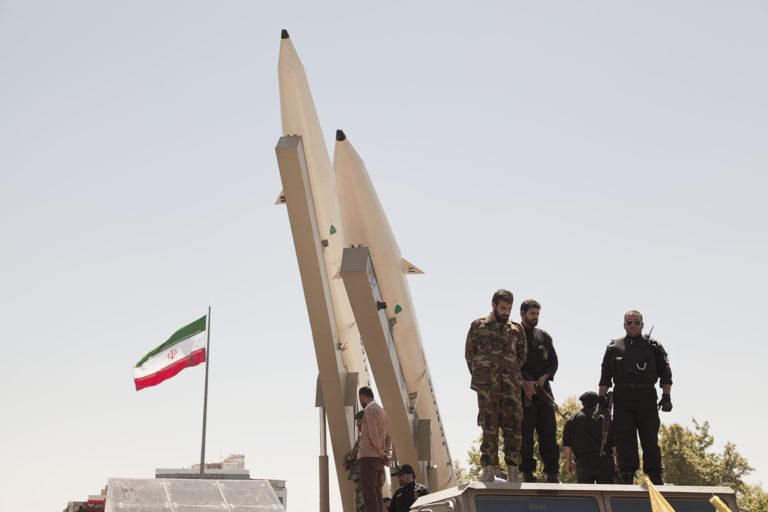
The Gulf-focused reporting tied the U.S. strike to a drone attack the day before that targeted a merchant ship in the Strait of Hormuz, and it said President Donald Trump described the drone attack as a violation of the ceasefire.
CENTCOM said the U.S. military struck missile and drone sites and coastal radar sites in Iran, while Iranian media reported that a projectile fell near a maritime dock area in the city of Sirik in southern Iran on Friday.
The New York Times quoted an American official saying the strikes targeting Iranian sites "are aimed at responding to the attack on merchant ships and are not a resumption of large-scale hostilities."
Rebuilding and disputed narratives
A report by The Wall Street Journal, cited by Al-Manar TV Lebanon, said newly released satellite imagery paints a more complicated picture than early claims by U.S. and Israeli leaders that their campaign delivered a decisive blow.
“The newspaper says Iran has rapidly begun rebuilding facilities ranging from fortified underground missile bases to bridges, ports, and industrial sites”
The Wall Street Journal said Iran has rapidly begun rebuilding facilities ranging from fortified underground missile bases to bridges, ports, and industrial sites, and it cited Israeli and Western officials raising concerns about the pace of reconstruction.
In one example, the report described Planet Labs imagery from March near Kangavar in western Iran showing damage to two tunnel entrances and the access road leading to an underground missile facility, followed by newer Airbus satellite imagery showing a newly paved road leading to freshly excavated tunnel entrances.
Former Israeli air and missile defense commander Ran Kochav told The Wall Street Journal that the speed of reconstruction reflects Iran’s ability to rebuild infrastructure and replenish its missile stockpiles, saying the country has significant manufacturing and reconstruction capabilities.
The White House spokesperson defended the operation as a “resounding victory,” while The Wall Street Journal also highlighted developments that complicate that narrative, including that Iran continued to strike ships with precision and launched missile attacks against U.S. regional partners including Kuwait, Bahrain, and Jordan.