Iran · 05 May, 2026 · 6 min read
Iran Rejects Arab League Resolution Sent to UN Security Council by Bahrain
Iran rejects Arab League resolution sent to the UN Security Council by Bahrain. Iran seeks reparations from five Arab states for enabling US-Israeli aggression.
8 of 9 outlets skipped it: bahrain’s UN Security Council draft on the Strait of Hormuz would authorize “all necessary defensive means” for at least six months (reported as upcoming vote)..
21outlets compared
Same story, two versions
tap a side to read it in full
Pars Today
““Any attempt to distort realities or to shield the perpetrators of aggression from accountability will neither change legal realities nor absolve the responsible parties of their commitments and international consequences.””Read the original ↗
ججريدة الراية
““The Secretary-General reiterated that attacks on sovereign states cannot be justified under any pretext or excuse, stressing that Arab states reject using their lands or resources as a battleground to settle scores.””Read the original ↗
These quotes show a direct narrative split: Iran insists it is the victim and that accountability must not be blocked, while the Arab League frames attacks as unjustifiable and condemns them as aggressions against sovereign Arab states.
Arab League resolution rejected
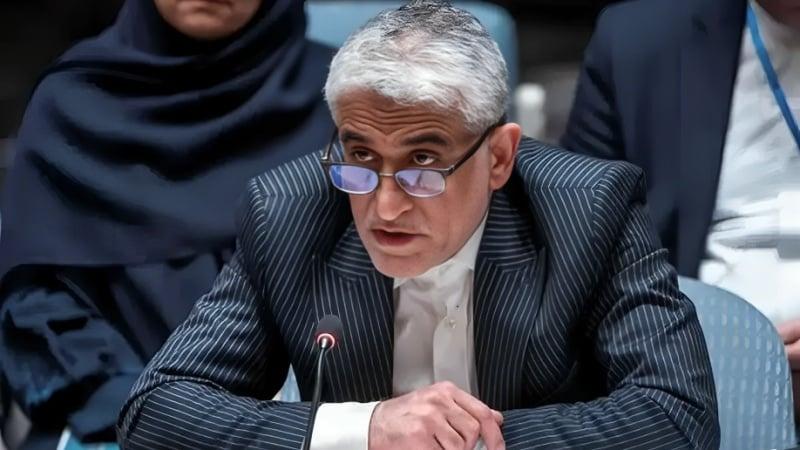
Iran rejected an Arab League resolution that was transmitted to the United Nations Security Council by Bahrain, with Iran’s Permanent Representative Amir Saeid Iravani saying “Shielding aggressors from accountability will not change legal realities.”
“Shielding aggressors from accountability will not change legal realities”
In a letter sent to UN Secretary-General António Guterres and the current president of the Security Council, Iravani said: “Any attempt to distort realities or to shield the perpetrators of aggression from accountability will neither change legal realities nor absolve the responsible parties of their commitments and international consequences.”
Iravani also wrote that the Islamic Republic of Iran “categorically and unequivocally rejects the mentioned resolution, along with the unfounded, misleading, and politically motivated accusations contained therein.”
The rejection was framed as a dispute over what the resolution omitted, with Iravani asserting that “the United States and the Israeli regime, in gross violation of international law and the UN Charter, have committed acts of aggression and carried out unlawful and unprovoked armed attacks against the sovereignty and territorial integrity of the Islamic Republic of Iran.”
In the same vein, another report said Iravani dismissed Resolution 9245 and described it as “overtly biased, devoid of any real or legal basis.”
Iravani further argued that the resolution falsely attributed responsibility to Iran, describing Iran as “the victim of this unlawful war of aggression.”
Timeline and legal framing
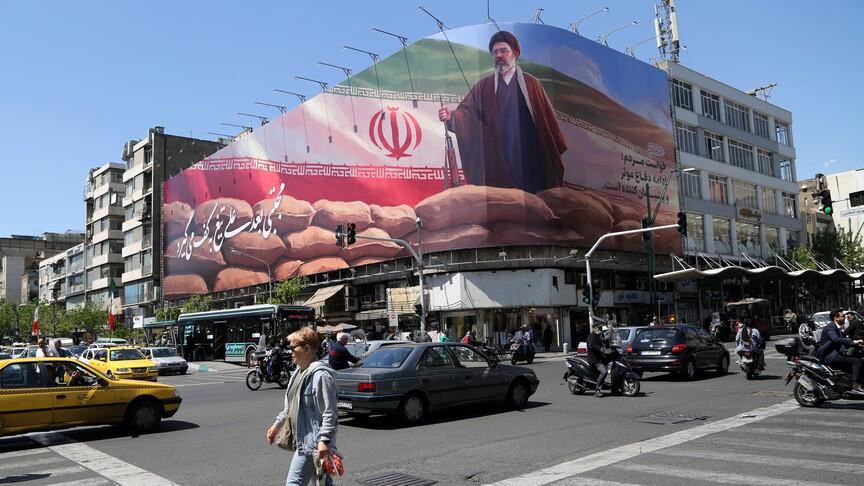
Iran’s rejection letter tied the Arab League resolution to a broader account of escalation that began on February 28, describing “airstrikes that assassinated senior Iranian officials and commanders, including Leader of the Islamic Republic Ayatollah Seyyed Ali Khamenei.”
According to the same account, “The Iranian armed forces responded by launching daily missile and drone operations targeting locations in the Israeli-occupied territories as well as US military bases and assets across the region.”
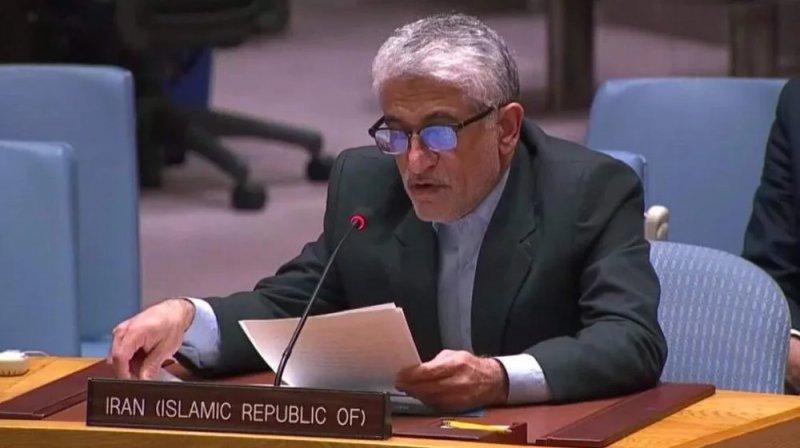
Iravani said the Arab League resolution sought to “distort both the factual record and the applicable legal framework” by falsely attributing responsibility to Iran, which he described as a victim of “an unlawful war of aggression.”
The reports also said Iravani reiterated Iran’s legal position on self-defense under international law, including measures taken “in the Persian Gulf and the Strait of Hormuz.”
In one version of the letter, Iravani said the resolution “has clearly omitted a central and undeniable fact,” and that the United States and the Israeli regime committed aggression in violation of international law and the UN Charter.
Another report added that Iravani recalled Iran’s prior communications to the Secretary-General and the Security Council about “the internationally wrongful acts and complicity of several Arab states,” listing Qatar, Bahrain, Kuwait, Saudi Arabia, the United Arab Emirates, and Jordan.
Arab League and Bahrain reactions
While Iran rejected the Arab League resolution, the Arab League and Arab states portrayed Security Council action condemning Iranian attacks as reflecting broad rejection of those attacks and solidarity with Arab positions.
“13-vote majority”
One report said the Arab League stated that the Security Council’s adoption of a draft resolution condemning Iranian attacks on the Arab Gulf states and Jordan by a “13-vote majority” reflected “broad international rejection of these attacks on Arab countries.”
The same report described a telephone call made by Ahmed Aboul Gheit, Secretary-General of the Arab League, with Dr. Abdul Latif bin Rashid Al-Zayani, Minister of Foreign Affairs of the Kingdom of Bahrain, in which Aboul Gheit congratulated Bahrain on its role as the Arab member in the Security Council in mobilizing international support for the draft resolution.
Aboul Gheit stressed that “the continuation of Iranian attacks on civilian facilities in a number of Arab states” reflects “a state of confusion and a lack of direction in Tehran.”
The Arab League Secretary-General also reiterated that “attacks on sovereign states cannot be justified under any pretext or excuse,” and said Arab states reject using their lands or resources “as a battleground to settle scores.”
In a separate report focused on the Strait of Hormuz, Bahrain’s draft resolution was described as aimed at protecting commercial navigation in the Strait of Hormuz, with the draft calling for authorization to use “all necessary defensive means.”
Security Council veto and rejection
The dispute over Security Council resolutions involving Iran also played out through vetoes and abstentions, with Arab League and Arab states expressing regret after the Council rejected a draft resolution on the Strait of Hormuz.
One report said the Arab League and Arab states “regret the rejection of the draft resolution in the Security Council regarding the Strait of Hormuz,” and reported that Bahrain said the rejection “undermines the Council's credibility and sends a negative message about the international community's ability to address threats to international sea lanes.”

It quoted Foreign Minister Abd al-Latif bin Rashid al-Zayani saying that not adopting the resolution “sends a wrong signal to the world that threats targeting international sea lanes can pass without the international community taking decisive action.”
The same report said the UAE expressed “deep regret” that the Security Council was unable to adopt a clear framework for international cooperation, adding that “The Strait of Hormuz must remain open to all, and freedom of navigation there must be safeguarded.”
Another report said the Security Council “had failed to adopt the draft resolution after China and Russia used their veto and Pakistan and Panama abstained,” even though it had “obtaining the backing of a majority of Council members.”
It also described the draft as authorizing “all necessary defensive means” for at least six months unless a different decision was issued, and said China’s envoy Fu Cong warned against “legitimacy to use force arbitrarily.”
Broader regional disputes and attacks
Beyond the Arab League and Security Council diplomacy, the sources also describe condemnation of Iranian actions in Iraq and the shifting language of Arab summits.
“a strong condemnation of the bombing of the Kurdistan region of Iraq that led to the deaths of a number of innocent civilians and the destruction of several civilian facilities.”
One report said the Arab League and its Arab Parliament condemned “the Islamic Republic's missile strikes on the city of Erbil in northern Iraq,” and described a “seven-point resolution” that included “a strong condemnation of the bombing of the Kurdistan region of Iraq that led to the deaths of a number of innocent civilians and the destruction of several civilian facilities.”
The resolution described the IRGC missile attack as “an overt assault on Iraq's sovereignty, the security of the Iraqi people, and a blatant violation of the principles of good neighborliness and international law, the UN Charter and norms.”
The same report said the member states “held Iran responsible for all consequences and outcomes of this attack and warned that repeating such actions could completely disrupt peace and security in the region,” and it quoted Ahmad Aboul-Gheit describing the attacks as “a blatant violation of Iraq's sovereignty.”
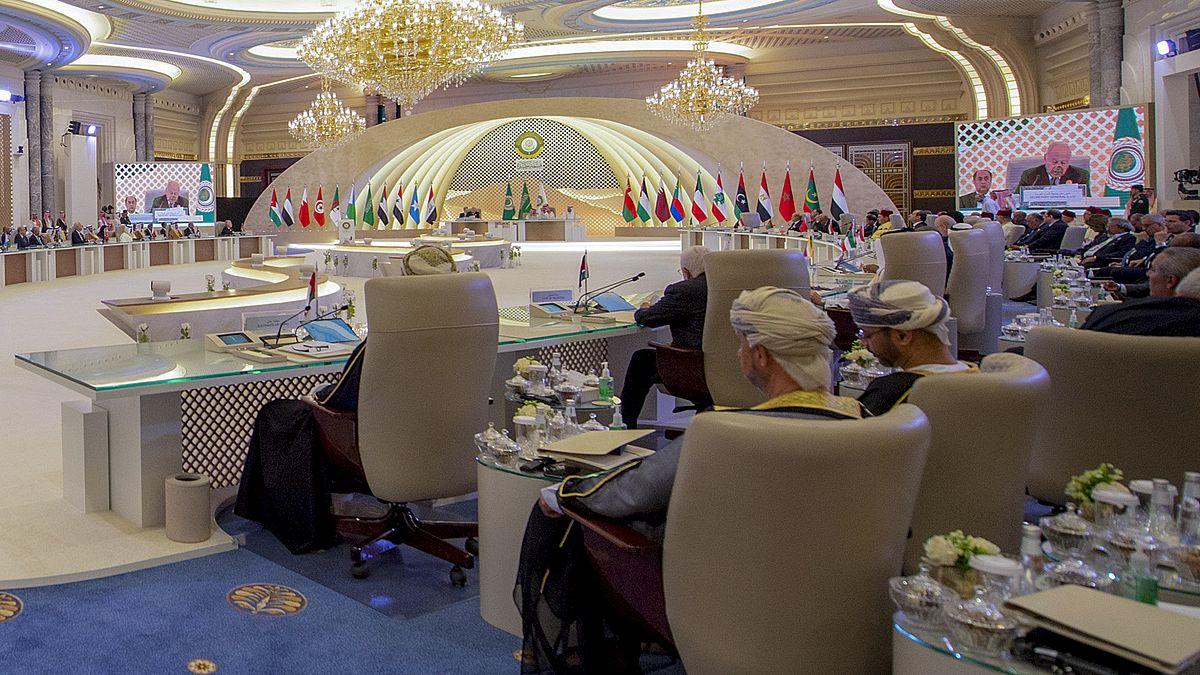
In parallel, another report said the 32nd session of the Arab League member states concluded in Jeddah, Saudi Arabia, and that the final communiqué did not mention Iran by name, stating it removed “Iran's name and its three islands (Greater Tunb, Lesser Tunb, and Abu Musa)” from the Arab League's final text.
Separately, an Iran-focused report said Tehran asked the Secretariat of the Emergency Summit of Arab and Islamic Countries to include “the 'reservations of the Islamic Republic' delegation” in the final report and said Iran did not participate in the United Nations General Assembly vote on the resolution related to the two-state solution between Israel and Palestine, which took place on Friday, 21 Shahrivar.