Iran25 April, 20265 min read
Iran Resumes International Flights From Tehran’s Imam Khomeini Airport To Istanbul, Muscat, Medina
This article is an automated aggregation of coverage from news outlets. Our editorials offer in-depth analysis curated by the NewsCord team.
Imam Khomeini International Airport resumes international flights; outbound to Istanbul, Muscat, Medina. First international flights since U.S.-Israel strikes began two months ago.
Al Jazeera was read line by line by the Watchdog: 3.5. See the score →
Tehran airport restarts
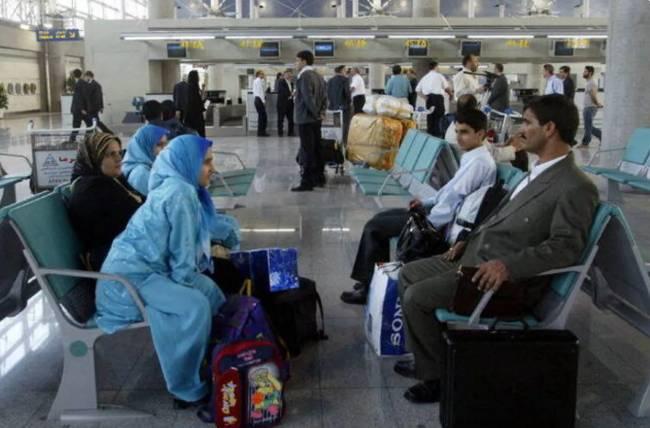
Iran’s Imam Khomeini International Airport in Tehran resumed international passenger flights on Saturday, with multiple outlets tying the restart to a period of disruption after US and Israel attacks. Al Jazeera said flights for Istanbul, Muscat and the Saudi Arabian city of Medina took off from Tehran’s Imam Khomeini International Airport on Saturday, and it described the resumption as the first since the United States and Israel attacked the country two months ago. Anadolu Ajansı reported that the first flights departing Tehran headed to Istanbul, Muscat, and Medina, citing IRIB and a statement from Ramin Kashef Azar, CEO of Imam Khomeini Airport City, to the Iranian Labor News Agency (ILNA) on Friday.
Global Times, citing Tasnim, said Iran’s Imam Khomeini International Airport would resume flights to Istanbul in Türkiye and the Omani capital Muscat as of Saturday. 24 News HD similarly said flights took off from the Imam Khomeini International Airport in Tehran bound for Istanbul, Oman’s capital of Muscat and the Saudi city of Madinah. The resumption was also described as partial by Roya News, which said the airport resumed some international flights on Saturday morning, according to Iran’s semiofficial Mehr news agency.
Why flights paused
The restart came after Tehran shut down airspace following joint U.S. and Israeli strikes that began on Feb. 28, halting civilian aviation operations nationwide, according to 巴士的報.
Al Jazeera described the same period as the US-Israel war on Iran roiling international air travel for weeks, forcing much of the Middle East’s airspace to shut down and leaving tens of thousands of travellers scrambling to return home.

It also said countries including Qatar and the United Arab Emirates partially reopened their airspaces days after attacks began on February 28, with schedules further expanding in the weeks that followed.
Anadolu Ajansı said air traffic was largely disrupted following the onset of war on Feb. 28, when the US and Israel launched a joint offensive on Iran, prompting retaliatory strikes by Tehran.
It added that the war had been on hold since April 8 under a ceasefire mediated by Pakistan.
WION described a week-long suspension of civil aviation during the height of regional hostilities and said the decision followed a week-long suspension of civil aviation during the height of regional hostilities, with the reopening of Iran’s primary international gateway presented as a signal of regional de-escalation.
Ceasefire talks and routes
Alongside the flight restart, several reports linked the timing to ongoing diplomacy and to a broader effort to re-open air travel in phases. Al Jazeera said authorities had started consultations with foreign airlines to clarify routes and to re-attract transit flights as a fragile ceasefire with the US continues, while efforts for more talks between Tehran and Washington continue in Pakistan. It also said Iran Air operated its inaugural flight from Tehran to the second-largest city of Mashhad after a 56-day hiatus, and it added that more flights are scheduled for Baku, Najaf, Baghdad and Doha in the coming days.
Al Jazeera quoted Mohammad Amirani, CEO of the Iran Airports and Air Navigation Company, saying the country’s eastern side—bordering Turkmenistan, Afghanistan and Pakistan—will be prioritised for domestic and transit flights. 24 News HD said the airport opening came as Iran’s Foreign Minister Abbas Araghchi met with Pakistan's top military and political leaders since arriving in Islamabad on Friday night. Anadolu Ajansı said Washington and Tehran held talks in Pakistan two weeks ago, with efforts underway to arrange a new round of negotiations, and it added that Iranian Foreign Minister Abbas Araghchi is in Islamabad, with US envoys Steve Witkoff and Jared Kushner also on the way to the Pakistani capital.
Different outlets, different emphasis
While the core fact of a Saturday restart at Imam Khomeini International Airport was consistent across outlets, the reporting diverged on how much of the network was returning and what the restart signaled. Al Jazeera described the resumption as the first since the United States and Israel attacked the country two months ago and said flights for Istanbul, Muscat and Medina took off on Saturday, while it also detailed a wider schedule for additional destinations and domestic priorities. Roya News, by contrast, framed the move as a partial restoration, saying the airport resumed some international flights on Saturday morning and that authorities had not yet detailed when full international operations will be restored.
Global Times, citing Tasnim, said the airport would resume flights to Istanbul and Muscat as of Saturday, without mentioning Medina in its version of the destinations. The WION account emphasized operational and regulatory steps, stating that the Civil Aviation Organisation of Iran (CAO) confirmed that technical checks were complete and that "no-fly zones" over western and central Iran have been lifted for commercial traffic, and it also quoted a CAO spokesperson relayed by Press TV. Crypto Briefing, in a very different register, said Iran has reopened commercial flights from Tehran’s airport for the first time since US-Israel strikes two months ago and described the move as “signaling stability,” while it also referenced a Polymarket contract and trading details.
What comes next
The sources also point to continuing constraints and to the next steps for air travel as Iran tries to restore capacity. Al Jazeera said the ongoing blockade of the Strait of Hormuz has triggered the prospect of a mounting jet fuel crisis and that the European Union is considering jet fuel imports from the US alongside new minimum reserve quotas. It quoted the head of the International Energy Agency Fatih Birol warning earlier this month that Europe has “maybe six weeks or so [of] jet fuel left” and that flight cancellations could commence “soon” without a shift in supplies.
Al Jazeera also said German aviation company Lufthansa Group on Thursday would slash 20,000 short-haul flights until October amid rising oil prices and fears of jet fuel shortages. WION added that travellers should expect enhanced security protocols and potential delays, even as the airport reopened. Anadolu Ajansı said the staggered resumption suggests a phased approach to restoring aviation capacity, with priority given to key domestic and international routes, and it also said officials have not provided a full timeline for normalization.
