
Iran's Attempted Diego Garcia Strike Reveals Missile Range
Key Takeaways
- Iran launched two ballistic missiles at Diego Garcia; one failed, the other intercepted; no hit.
- Missiles reportedly had about 4,000 kilometers range, far beyond Tehran's publicly claimed 2,000 kilometers.
- Triggered defensive measures, including interceptors, and raised concerns about Europe's vulnerability.
Strategic Missile Launch
Iran's attempted missile strike on the joint US-UK military base at Diego Garcia on March 20-21, 2026, represents a significant escalation in Tehran's missile capabilities and strategic reach.
“Personalized content and ads can also include things like video recommendations, a customized YouTube homepage, and tailored ads based on past activity, like the videos you watch and the things you search for on YouTube”
The attack involved two intermediate-range ballistic missiles launched from Iranian territory toward the remote Indian Ocean base located approximately 4,000 kilometers away.
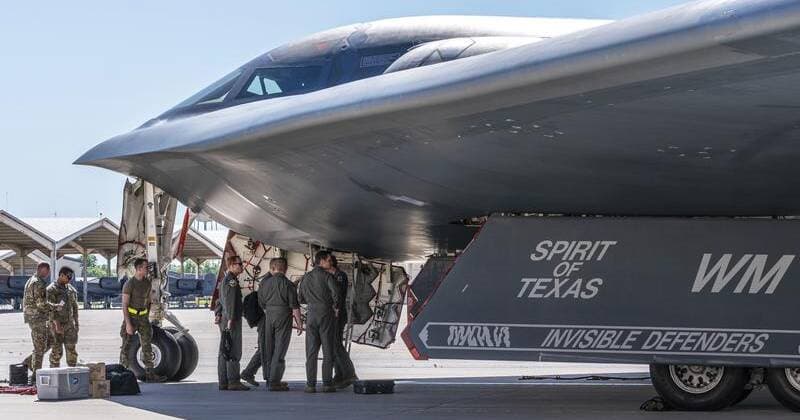
According to multiple sources, one missile failed mid-flight while the other was engaged by an SM-3 interceptor fired from a US Navy warship, though it remains unclear whether the interception was successful.
The semi-official Mehr News Agency described the targeting as a 'significant step that shows that the range of Iran's missiles is beyond what the enemy previously imagined.'
The incident occurred amid intensifying regional tensions as the US-Israel-Iran conflict entered its fourth week, with Iran Foreign Minister Abbas Araghchi having previously claimed Tehran had deliberately limited its missile range to 2,000 kilometers for defensive purposes.
Technical Capabilities Revealed
The technical significance of the attempted strike lies in its unprecedented range, which doubles Iran's previously acknowledged missile capabilities.
Diego Garcia lies roughly 3,800-4,000 kilometers from Iran's territory, far exceeding the 2,000-kilometer ceiling that Iranian officials, including Foreign Minister Abbas Araghchi, had publicly maintained as their self-imposed limit.

Military analysts suggest several possible explanations for this extended range, including the use of modified Khorramshahr-class missiles with reduced payloads, experimental configurations, or potentially repurposed space launch vehicles.
The Khorramshahr-4 missile, officially declared to have a range of 2,000-3,000 kilometers, appears to have been used in a configuration capable of reaching nearly double that distance.
Defence Security Asia reported that the missiles were likely from the Khorramshahr-4 class, also referred to as Kheibar, a liquid-fuelled intermediate-range ballistic missile designed to carry payloads exceeding 1,000 kg but capable of significantly longer range when fitted with lighter warheads.
Strategic Context and Timing
The timing and strategic context of the Diego Garcia strike reveal a complex escalation pattern in the ongoing conflict.
“It remains unclear whether the interception was successful”
The attack occurred just hours before UK Prime Minister Keir Starmer announced that Britain would allow the United States to use its bases, including Diego Garcia, for 'specific and limited defensive operations' targeting Iranian missile capabilities in the Strait of Hormuz.
Iranian Foreign Minister Abbas Araghchi immediately condemned this decision as putting 'British lives in danger' and warned that Iran would exercise 'its right to self-defense.'
The attempted strike represents Iran's first operational use of intermediate-range ballistic missiles and appears to be a direct response to the UK policy shift.
According to multiple sources, the attack was coordinated to demonstrate Iran's ability to threaten military assets far beyond the immediate battlefield, even if the specific missiles failed to reach their target.
Global Strategic Implications
The attempted missile strike on Diego Garcia has profound regional and global implications, fundamentally altering strategic calculations across multiple continents.
The 4,000-kilometer range places major European capitals including Berlin, Paris, Rome, and potentially London within theoretical strike distance of Iranian missiles.

Israeli military Chief of Staff Lt. Gen. Eyal Zamir explicitly stated that 'Berlin, Paris, and Rome are all within direct threat range' following the attempted strike.
This capability extends beyond traditional Middle Eastern targets and forces Western powers to reconsider their defense postures and missile defense strategies.
The incident has also raised serious questions about intelligence assessments of Iran's capabilities, with experts noting that Western agencies had significantly underestimated Iran's missile development.
International Reactions
International reactions to the Diego Garcia strike have been varied but uniformly concerned about the implications for regional stability and global security.
“Personalised advertising and content, advertising and content measurement, audience research and services development”
The UK Ministry of Defence condemned Iran's actions as 'reckless attacks' that 'pose a threat to British interests and British allies,' while emphasizing that RAF jets and other UK military assets would continue defending personnel in the region.

Former US President Donald Trump criticized the UK's response as 'very, very uncooperative' and called the British decision to transfer sovereignty of Diego Garcia to Mauritius 'an act of GREAT STUPIDITY.'
Military analysts have offered differing assessments of the strike's significance, with some viewing it as primarily a strategic demonstration rather than a failed attack, while others emphasize the technical limitations indicated by the missile failures.
Former UK Royal Navy commander Tom Sharpe told AFP that while the attack shows Iran can still move mobile launchers undetected, it would not be a 'game changer' in the war.
More on Iran
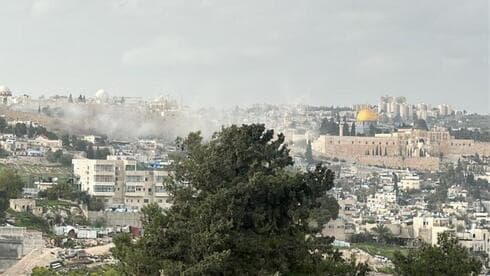
Iran Strikes Dimona Near Israel's Main Nuclear Facility, Wounding Dozens
88 sources compared

Trump Threatens to Obliterate Iran's Power Plants Over Strait of Hormuz
44 sources compared
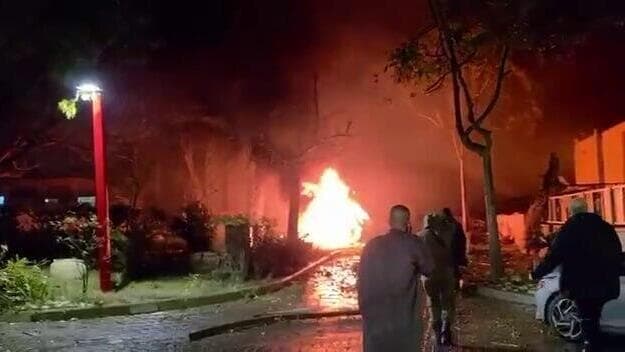
US and Israel Strike Iran's Natanz Enrichment Site; No Radioactive Leaks Reported.
81 sources compared
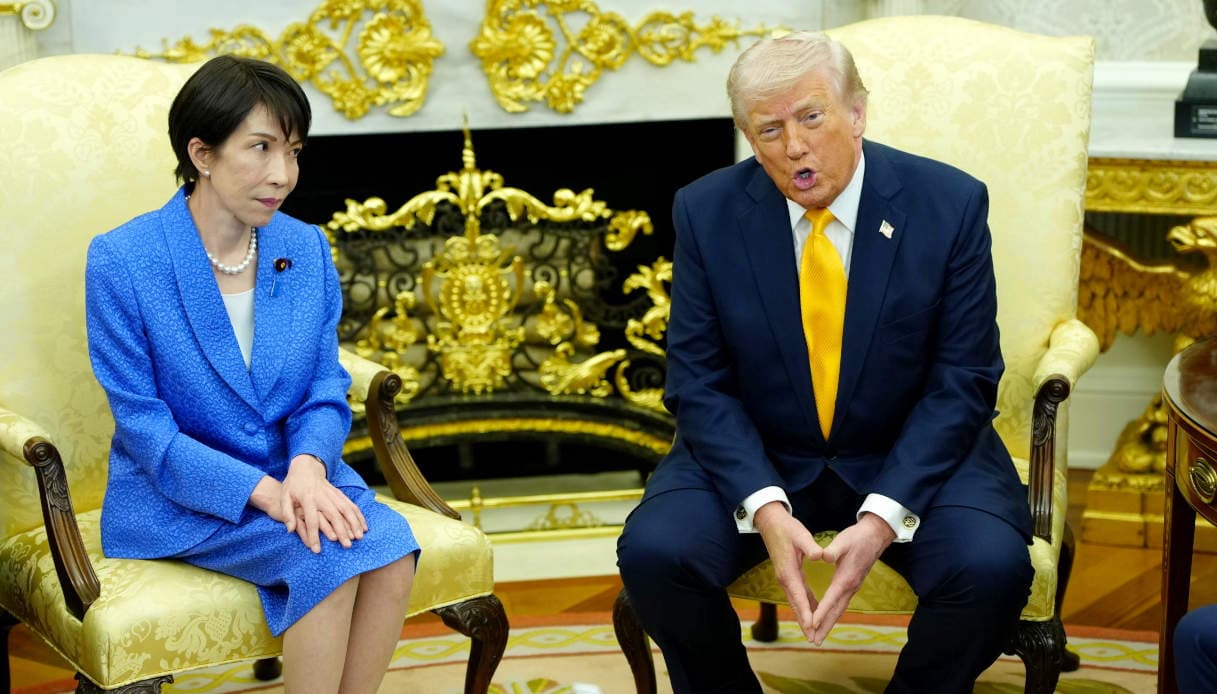
Trump Defends Iran War by Citing Pearl Harbor
12 sources compared