
Iran Attacks Diego Garcia with Ballistic Missiles in Longest Strike Yet
Key Takeaways
- Iran launched two intermediate-range ballistic missiles toward Diego Garcia, a US-UK base.
- One missile intercepted by an SM-3; the other failed mid-flight.
- Represents Iran's longest-range attack to date, with about 4,000-km reach.
Attack Overview
On March 21, 2026, Iran launched two intermediate-range ballistic missiles toward the joint US-UK military base at Diego Garcia in the Indian Ocean.
“Personalized content and ads can also include things like video recommendations, a customized YouTube homepage, and tailored ads based on past activity, like the videos you watch and the things you search for on YouTube”
This marked the longest-range attack in Iran's missile program history.
The strike represented a dramatic escalation in Tehran's operational capabilities.
The target was located approximately 4,000 kilometers from Iranian territory - roughly double the distance Iran has publicly acknowledged its missiles can travel.
Iranian media described the targeting as a "significant step" demonstrating capabilities beyond what adversaries had previously imagined.
Western sources confirmed the launch as Iran's first operational use of intermediate-range ballistic missiles aimed at a target outside the Middle East.
The attack occurred amid heightened regional tensions following the US-Israeli military campaign against Iran that began on February 28, 2026.
The strike came shortly before the UK authorized the US to use British bases for defensive operations against Iranian missile sites targeting ships in the Strait of Hormuz.
Attack Outcome
Despite the ambitious scope of the attack, neither missile successfully reached its intended target.
According to multiple sources, one of the Iranian projectiles suffered a technical failure during flight and crashed into international waters.

The second missile was engaged by a US Navy warship that launched an SM-3 interceptor system.
The effectiveness of this interception remains unclear, with some reports suggesting the interceptor may have successfully destroyed the missile.
Other sources indicate the missile simply fell short of its target.
The defensive response highlighted both the vulnerability of even remote military installations to modern missile arsenals.
It also demonstrated the operational readiness of US naval assets in the Indian Ocean.
The Pentagon maintained a relatively low profile in the hours following the incident.
British officials confirmed the attack had occurred "without success" and condemned Iran's "reckless attacks" that "pose a threat to British interests and Britain's allies."
Range Significance
The most striking aspect of the incident lies in the extraordinary distance involved and what it reveals about Iran's true missile capabilities.
“The strike, despite failing to hit its target, aimed to demonstrate Iran's military reach, particularly its capability to deploy missiles with ranges exceeding 2,000 km”
Diego Garcia sits approximately 4,000 kilometers from Iranian territory - nearly double the 2,000-kilometer range that Iranian officials had long maintained as the self-imposed limit.
Foreign Minister Abbas Araghchi had previously stated that Iran had "deliberately limited" its missile range to "2,000 kilometers."
This attempted strike challenges that narrative and suggests the possibility of undeclared capabilities or significant technological advancements.
Analysts suggest several explanations: development of new intermediate-range ballistic missiles, modification of existing systems with lighter payloads, or adaptation of space launch technology.
The Wall Street Journal reported that US officials view the launch as demonstrating "weapons capability that goes beyond what Tehran was previously known to have possessed."
Israeli military Chief of Staff Eyal Zamir warned that such capabilities mean "Berlin, Paris, and Rome are all within direct threat range."
This revelation fundamentally alters strategic calculations about Iran's reach and potential targets.
Strategic Implications
The attack on Diego carries profound strategic implications that extend far beyond the technical outcome.
By targeting one of the most strategically important military installations operated jointly by the United States and the United Kingdom, Iran has demonstrated its ability to project power far beyond traditional Middle Eastern battlegrounds.

It potentially threatens critical Western infrastructure.
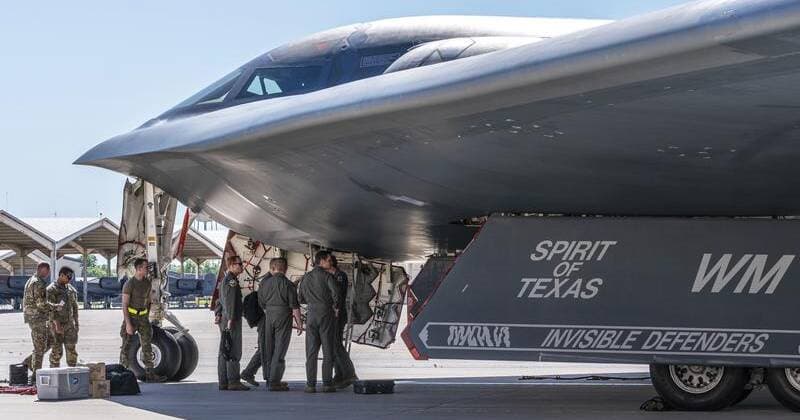
Diego Garcia serves as a vital hub for US military operations in the Indian Ocean, supporting long-range bomber missions, naval deployments, and surveillance operations across Africa, the Middle East, and Asia.
The attack forces a reassessment of military planning assumptions, as no US position can be considered beyond Tehran's reach.
This strategic demonstration carries significant geopolitical consequences.
It complicates the UK's legal position regarding the Chagos Islands.
It accelerates plans for enhanced missile defense systems among Gulf Cooperation Council allies.
It may prompt a global review of base security protocols worldwide.
The incident underscores the evolving nature of the conflict, which has expanded from localized skirmishes to a broader confrontation stretching across multiple theaters of operation.
International Response
The international response to the attempted strike has been multifaceted, reflecting the complex geopolitical dynamics at play.
“Personalised advertising and content, advertising and content measurement, audience research and services development”
The UK Ministry of Defence condemned Iran's actions as "reckless attacks" that "pose a threat to British interests and British allies."

Iranian Foreign Minister Abbas Araghchi accused UK Prime Minister Keir Starmer of putting "British lives in danger by allowing UK bases to be used for aggression against Iran."
US President Donald Trump criticized the timing of UK support, stating "It's been a very late response from the UK."
Trump indicated that US forces were getting "very close" to achieving key objectives in the region.
The attack has created uncertainty in European capitals about their own vulnerability to Iranian missile threats.
Analysts note that the demonstrated 4,000-kilometer range places major European cities within potential striking distance.
The incident has complicated ongoing diplomatic efforts regarding the Chagos Islands sovereignty dispute between the UK and Mauritius.
The strategic importance of Diego Garcia becomes even more pronounced in light of the evolving security landscape.
More on Iran

Trump Threatens to Obliterate Iran's Power Plants Over Strait of Hormuz
44 sources compared

Iran strikes Dimona and Arad near Israel's main nuclear facility
43 sources compared

Trump threatens to obliterate Iran's power plants over a 48-hour Hormuz ultimatum
13 sources compared

US and Israel Strike Iran's Natanz Enrichment Site; No Radioactive Leaks Reported.
81 sources compared