
Trump threatens to obliterate Iran's power plants over a 48-hour Hormuz ultimatum
Key Takeaways
- Trump gave Iran 48 hours to fully reopen the Strait of Hormuz.
- If not opened, he threatened to destroy Iran's power plants, starting with the largest.
- The ultimatum and threat were communicated via Truth Social.
Trump's 48-Hour Ultimatum
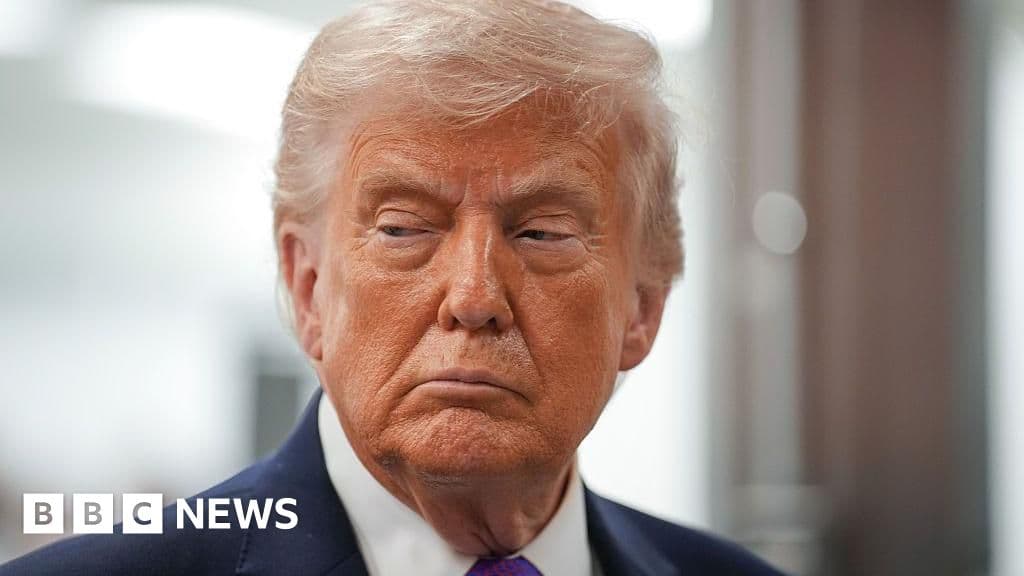
President Donald Trump issued a dramatic 48-hour ultimatum to Iran on Saturday night, threatening to destroy Iranian power plants if the strategically vital Strait of Hormuz is not fully reopened within two days.
“US says it has crippled Iranian threat in Strait of Hormuz United States President Donald Trump has threatened to attack Iran’s power plants if freedom of navigation is not fully restored at the Strait of Hormuz within 48 hours, a dramatic escalation as the US-Israeli war on Iran continues for a fourth week”
In a post on Truth Social published at 7:44 p.m. from Mar-a-Lago in Florida, Trump wrote: 'If Iran doesn't FULLY OPEN, WITHOUT THREAT, the Strait of Hormuz, within 48 HOURS from this exact point in time, the United States of America will hit and obliterate their various POWER PLANTS, STARTING WITH THE BIGGEST ONE FIRST!'

The threat represents a significant escalation in rhetoric, coming barely a day after Trump had suggested the U.S. was 'getting very close to meeting our objectives as we consider winding down our great Military efforts in the Middle East.'
The ultimatum targets Iran's energy infrastructure, with specific mention of the 1,000-megawatt Bushehr Nuclear Power Plant, which uses Russian fuel and is Iran's largest nuclear facility located along the Persian Gulf.
Strategic Importance of Hormuz
The strategic importance of the Strait of Hormuz, through which roughly 20 percent of the world's crude oil passes during peacetime, cannot be overstated as the waterway has virtually ground to a halt since the early days of the war.
Iran has maintained that the Strait remains open to all nations except the U.S. and its allies, with Foreign Minister Abbas Araghchi confirming that several countries had approached Iran seeking safe passage for their vessels.

'This is up to our military to decide,' Araghchi told CBS, noting that a group of ships from 'different countries' had been allowed to pass.
Meanwhile, U.S. Central Command Admiral Brad Cooper asserted that Iran's ability to attack vessels in the strait had been significantly 'degraded' after U.S. fighter jets dropped 5,000-pound bombs on an underground Iranian coastal facility storing anti-ship cruise missiles earlier in the week.
However, analysts have pointed out a seeming contradiction between Trump's escalatory rhetoric and the U.S. military's claims of already accomplishing significant damage to Iran's naval capabilities.
Iran's Retaliatory Threats
In response to Trump's threat, the Iranian military issued a stark warning that it would target all energy infrastructure belonging to the U.S. and its allies in the region if Iran's own energy facilities were attacked.
“CAIRO (AP) — Iranian missiles struck two communities in southern Israel late Saturday, leaving buildings shattered and dozens injured in dual attacks not far from Israel’s main nuclear research center, while President Donald Trump warned the U”
The headquarters of Iran's Khatam al-Anbiya Military Headquarters explicitly stated that Tehran would respond to any attack on its energy infrastructure by targeting energy and technology installations belonging to America and Israel.
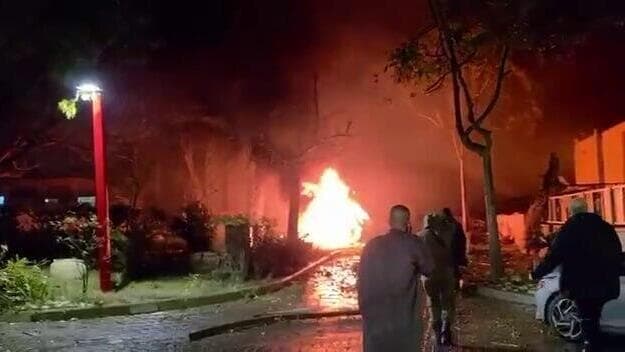
This reciprocal threat came as Iranian missiles struck two communities in southern Israel late Saturday, leaving buildings shattered and dozens injured in attacks not far from Israel's main nuclear research center.
The Iranian warnings underscore the dangerous potential for escalation, with analysts noting contradictions between the American 'euphoria of victory' and Israeli 'readiness' despite Trump's assertions that Iran's military capabilities had been eliminated.
Policy Contradictions
Trump's ultimatum comes amid striking contradictions in the administration's Iran strategy, creating confusion about the true direction of U.S. policy.
Just hours before the power plant threat, Trump had told reporters that reopening the strait was a 'simple military maneuver' and that the U.S. was 'getting very close to meeting our objectives as we consider winding down our great Military efforts in the Middle East.'
However, the Pentagon simultaneously announced it was deploying three additional warships and approximately 2,500 Marines to the region - the second such deployment in a single week.
The administration has also requested an additional $200 billion from Congress to fund the ongoing conflict, a figure that directly contradicts any near-term wind-down scenario.
Trump has insisted that ground forces will not be deployed, but his ambiguous statement that 'if I were, I certainly wouldn't tell you' has raised concerns about potential plans to capture strategic locations like Kharg Island, which contains Iran's primary oil export terminal.
International Response
The international community has responded to the escalating tensions with a joint statement signed by over 20 countries condemning Iran's actions and expressing readiness to contribute to ensuring safe passage through the strait.
“US-Iran war to end soon”
Leaders from the United Kingdom, France, Germany, Italy, Japan, Canada and the United Arab Emirates issued a statement that read: 'We condemn in the strongest terms recent attacks by Iran on unarmed commercial vessels in the Gulf, attacks on civilian infrastructure including oil and gas installations, and the de facto closure of the Strait of Hormuz by Iranian forces.'

The statement continued: 'We express our deep concern about the escalating conflict. We call on Iran to cease immediately its threats, laying of mines, drone and missile attacks and other attempts to block the Strait to commercial shipping, and to comply with UN Security Council Resolution 2817.'
Meanwhile, the economic fallout from the strait's de facto closure continues to mount, with Brent crude oil prices soaring to over $100 per barrel, causing the Trump administration to temporarily lift sanctions on Iranian oil already at sea as part of efforts to stabilize global energy markets.
More on Iran
Trump Threatens to Obliterate Iran's Power Plants Over Strait of Hormuz
44 sources compared

Iran strikes Dimona and Arad near Israel's main nuclear facility
43 sources compared
US and Israel Strike Iran's Natanz Enrichment Site; No Radioactive Leaks Reported.
81 sources compared

Iran Fires Ballistic Missiles at Diego Garcia Base, Fails to Hit Target
132 sources compared