
Iran imposes selective blockade of Strait of Hormuz, charging ships for passage.
Key Takeaways
- Iran developing a vetting and registration system for Strait of Hormuz transit.
- Countries including China, India, Pakistan, Malaysia, and Iraq negotiate passage.
- Iran offers a safe shipping corridor for passage at a price.
Blockade Impact
Iran has imposed a de facto selective blockade on the Strait of Hormuz, significantly disrupting global maritime traffic and driving up oil and gas prices worldwide.
“Iran is developing a new vetting and registration system for ships transiting the Strait of Hormuz as it transitions to a “selective” blockade of the strategic waterway, according to Lloyd’s List”
According to the New York Times, Iran has maintained this blockade since the start of the war three weeks ago, giving the Iranian government a strategic chokehold on global shipping.

The impact has been dramatic, with visible traffic through the strait slowing from more than 130 vessels daily to about an average of three or four vessels per day.
The Times of India corroborates this disruption, noting that tensions in the region continue to affect global maritime routes.
Al Jazeera reports that Iran is developing a new vetting system as part of this 'selective' blockade strategy.
This reduction in traffic has had severe economic consequences, with around a fifth of the world's oil and gas supplies normally passing through this critical waterway.
Safe Corridor
To facilitate controlled passage through its blockade, Iran has established a 'safe shipping corridor' that allows selected vessels to transit through Iranian territorial waters rather than the usual international navigation channels.
The New York Times reports that Iran has allowed some friendly countries, including China, India, Pakistan, Malaysia and Iraq, to secure safe passage of their ships through this strategic waterway.
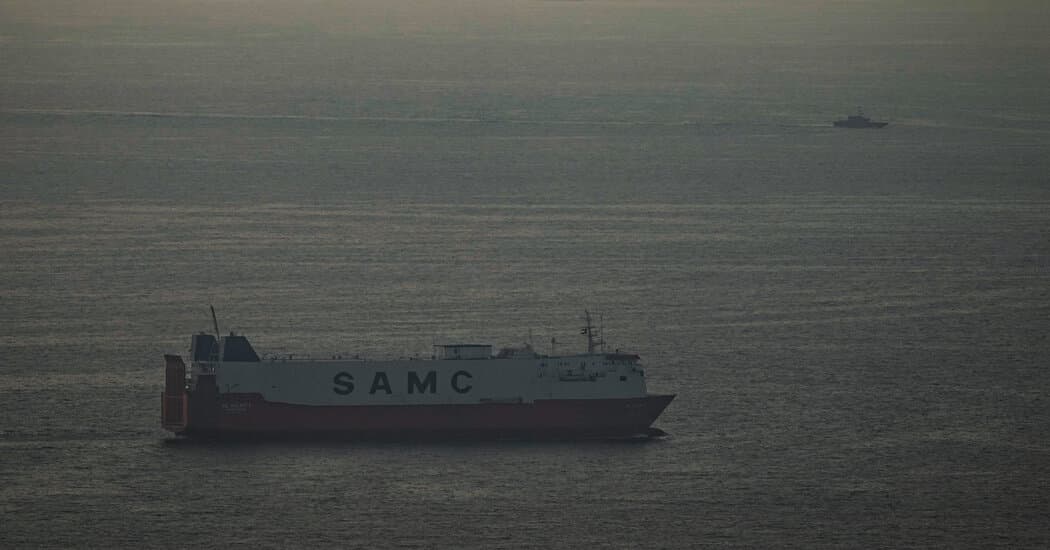
Al Jazeera provides additional context, explaining that several countries are in direct talks with Tehran to coordinate passage.
The Times of India details the vetting process, noting that ships must undergo approval before entering the corridor.
The system is being managed by Iran's Islamic Revolutionary Guard Corps (IRGC), which is developing a registration mechanism.
Shipping operators are required to share extensive details including vessel ownership, cargo and destination information through intermediaries before transit.
Transiting Vessels
At least nine ships have successfully utilized Iran's safe shipping corridor, traveling through an unusual route that takes them close to Iran's Larak Island where IRGC Navy and port authorities conduct visual inspections.
“Iran has introduced a 'safe shipping corridor' that allows selected vessels to pass through the Strait of Hormuz via a route inside its territorial waters, as tensions in the region continue to disrupt global maritime traffic”
The New York Times, citing Lloyd's List, reports that among these vessels were ships from India and Pakistan, along with vessels that had been sanctioned by the United States as part of Iran's shadow fleet traveling under the flags of Aruba, Palau and Madagascar.
The Times of India provides specific examples of three Indian gas tankers—Shivalik, Nanda Devi and Jag Laadki—that have successfully transited the strait and arrived in India after taking this route.
Al Jazeera corroborates these developments, noting that ships have been approved on a case-by-case basis.
Al Jazeera also reports that a new vetting and registration system is reportedly under development by Iran's Islamic Revolutionary Guard Corps (IRGC).
This indicates that Iran is transitioning from ad-hoc approvals to a more formalized system of controlled passage.
Strategic Leverage
Iran's new supreme leader, Mojtaba Khamenei, has reinforced the country's aggressive stance on controlling the Strait of Hormuz, declaring in his first statement that 'the lever of closing the Strait of Hormuz must continue to be used.'
According to the New York Times, this statement indicates that Iran intends to maintain its strategic control over this critical waterway.
Meanwhile, Iranian lawmakers are reportedly discussing new rules to regulate passage, including the implementation of transit fees that could create a significant revenue stream for the Iranian government during this period of heightened tensions.
The Times of India notes that while the current process is handled on a case-by-case basis, reports suggest a more formal and structured approval system may be introduced in the coming days.
Al Jazeera reports that Iran's transition to a 'selective' blockade appears designed to maximize leverage while still maintaining some commercial relationships with key trading partners.
Human Cost
The human and economic toll of Iran's blockade has been substantial, with more than 20 commercial vessels having been struck in and around the strait.
“War in theMiddle East Advertisement Supported by Countries and companies have been negotiating with the Iranian authorities to secure passage”
Approximately 2,000 ships and 20,000 seafarers are currently trapped in the area, according to the International Maritime Organization as reported by the New York Times.
This situation has created a humanitarian crisis for maritime workers and has disrupted global supply chains.
Particularly affected are countries heavily reliant on Gulf oil exports.
The Times of India highlights how India has been directly affected, with three of its gas tankers successfully navigating the dangerous waters.
This indicates some nations are finding ways to maintain vital trade routes despite the tensions.
Al Jazeera notes that the controlled passage system represents Iran's attempt to balance geopolitical objectives with the need to maintain some level of international commerce.
The country is carefully calibrating its approach to maximize strategic advantage while avoiding complete isolation.
Global Impact
The economic implications of Iran's selective blockade extend far beyond immediate shipping disruptions.
This situation potentially reshapes global energy markets and trade patterns for the foreseeable future.
With approximately a fifth of the world's oil and gas supplies normally passing through the Strait of Hormuz, the sustained reduction in traffic has created significant price volatility.
Supply chain uncertainties have increased dramatically across global markets.
The New York Times notes that Iran's ability to selectively allow passage while maintaining a de facto blockade gives it substantial leverage in geopolitical negotiations.
The Times of India reports that India has been actively engaged in discussions with Tehran to secure passage for its vessels.
This highlights how major economies are navigating this new reality.
Al Jazeera suggests that Iran's approach represents a calculated strategy to maximize pressure while avoiding complete economic isolation.
The vetting system allows Tehran to maintain relationships with key trading partners while still exerting significant control over the strategic waterway.
More on Iran

Iranian missiles strike Dimona and Arad, injuring over 100.
47 sources compared
Israel and U.S. Strike Natanz Nuclear Facility Again; Iran Blames Attack
69 sources compared

Iran Attacks Diego Garcia with Long-Range Missiles, Targeting U.S.-UK Base
82 sources compared
Trump Defends Iran War by Citing Pearl Harbor
12 sources compared