Yemen14 August, 20262 min read
Iran Rejects U.S. Claims It Uses Flights To Sana’a To Transfer Arms
This article is an automated aggregation of coverage from news outlets. Our editorials offer in-depth analysis curated by the NewsCord team.
Iran rejects US allegations it uses flights to Sana’a to transfer arms or military personnel. The Iranian envoy called the claims baseless and lacking supporting evidence.

Hormuz, Yemen, and Flights
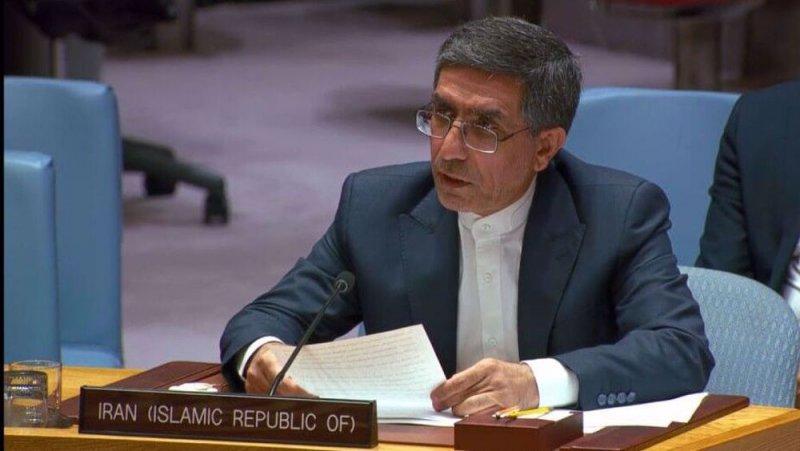
Iran rejected U.S. allegations that Tehran is destabilising Yemen or using commercial flights to Sana’a to transfer military personnel or equipment, with Iran’s ambassador and deputy permanent representative to the UN Gholamhossein Darzi saying the claims were “without any supporting evidence.” Darzi told the UN Security Council in a letter addressed to UN Secretary-General António Guterres and the president of the UN Security Council that the U.S. assertion about Iranian commercial flights to Sana’a violated UN Security Council Resolution 2216, but he said the allegations were “completely baseless and unsupported by any credible evidence.”
He argued that “The recent flights from Iran to Sana’a have been humanitarian in nature,” and said the prolonged closure and severe restrictions imposed on Sana’a International Airport, along with the blockade, had inflicted “devastating humanitarian consequences on the Yemeni population.” The exchange came amid a renewed escalation in Yemen following Saudi airstrikes on Sana’a International Airport last month, aimed at halting humanitarian flights carrying patients and stranded civilians, according to the same account.

UN Letter and Accusations
In his letter, Darzi accused Washington of attempting to mislead the Security Council and described the U.S. position as “hypocritical,” while he said it was “particularly regrettable” for a UN member state to level such accusations. Darzi also challenged the U.S. claim to be a defender of peace and stability in Yemen, saying the United States could not credibly assume such a role while seeking to avoid responsibility for the destruction inflicted on the Yemeni people.
He criticized Washington’s military actions against Yemen in March 2025, saying they “violated the country’s sovereignty and territorial integrity and were contrary to the UN Charter and Security Council resolutions.” Darzi further argued that Washington’s efforts to secure political support for Security Council Resolution 2722, adopted in 2024, were followed by a “selective and abusive interpretation” used to justify military action against Yemen and its civilian infrastructure.
Chemical Weapons Debate
Separately, a Yemen and Gulf affairs analyst, Emily Melikian, said the Iran-backed Houthis may still renew their threat to navigation in the Red Sea, even though she said they lack the necessary scientific infrastructure to develop a fully integrated chemical weapons program. Melikian said Yemen’s Information Minister Muammar al-Eryani accused the Houthis in September of manufacturing chemical weapons from materials smuggled from Iran, and she repeated his claim that the rebels have “secret laboratories” where they produce and test toxic and chemical-biological substances intended for ballistic missiles and drones.
She noted that this accusation followed reports that Yemen’s government forces seized a 750-ton weapons shipment from Iran that included chemical and conventional weapons, which they tried to portray as generators, transformers, air pumps, and hydraulic columns. Melikian said that while international authorities or neutral sources had not confirmed the content of the seizure or the intended use of chemical weapons, the international community should press the United Nations and the Organisation for the Prohibition of Chemical Weapons to investigate such claims.