Iran20 April, 20267 min read
Iran Rejects U.S. Peace Talks in Pakistan, Citing Naval Blockade and Hormuz Closure
Iran rejects second US-Pakistan peace talks amid naval blockade and alleged ceasefire violations. Iran re-closed the Strait of Hormuz, disrupting maritime traffic.
BBC was read line by line by the Watchdog: 5.3. See the score →
Talks collapse amid blockade
Iran on Sunday denied it would participate in a new round of peace talks with the United States, state media reported, hours after President Donald Trump said its negotiators would head to Pakistan on Monday for a second round.
CNBC reports that Iran’s state news agency IRNA said Iran’s “absence from the second round of talks stems from what it called Washington's excessive demands, unrealistic expectations, constant shifts in stance, repeated contradictions, and the ongoing naval blockade, which it considers a breach of the ceasefire.”

CNBC also links the diplomatic setback to a separate U.S. naval action in the Gulf of Oman, saying Trump warned that a ship called the TOUSKA in the Gulf of Oman to stop, and that “When it did not, the U.S. Navy fired upon it and the vessel was seized.”
CBS News similarly frames the standoff as Iran refusing to join talks in Pakistan, citing that Iran state media said Tehran “doesn't plan to be involved in the new round of talks due to the U.S. blockade of iranian ports.”
The same CBS report adds that Iran’s parliamentary speaker said the Strait of Hormuz will remain closed “if the U.S. does not lift the blockade.”
In parallel, Al Jazeera reports that Iran signalled on Monday it had no plans to send negotiators to Islamabad, warning that the U.S. naval blockade of the Strait of Hormuz since April 13 and the overnight capture of an Iranian container ship breached the truce and international law.
Across the coverage, the dispute is anchored to the Strait of Hormuz and the blockade, with the talks’ timing set against the ceasefire’s approaching deadline.
TOUSKA seizure and threats
The refusal to join talks comes as the U.S. and Iran trade accusations over the Strait of Hormuz and a U.S. seizure of an Iranian-flagged vessel.
CNBC says Trump posted that the U.S. had intercepted a ship called the TOUSKA in the Gulf of Oman, warning it to stop, and that “When it did not, the U.S. Navy fired upon it and the vessel was seized.”

CBS News adds that Iran’s response included retaliation claims, saying Tehran warned it would retaliate, with Tasnim reporting that Iran had sent drones in the direction of U.S. military ships after its vessel was seized.
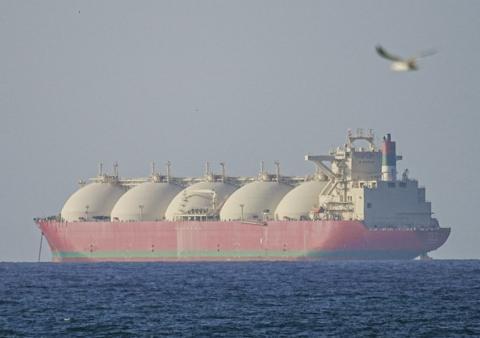
Al Jazeera describes the same incident as Trump announcing that the U.S. Navy guided missile destroyer USS Spruance intercepted the Iranian-flagged cargo ship Touska nearly 900 feet (274 metres) long in the Gulf of Oman after its crew refused to heed warnings, writing that “Our Navy ship stopped them right in their tracks by blowing a hole in the engine room.”
Al Jazeera also states that Iran has described the seizure of the ship as “piracy.”
Financial Post, drawing on Bloomberg material, says gold fell after the weekend flare-up and notes that Trump said the U.S. Navy fired upon and seized an Iranian-flagged cargo ship while Tehran warned that ships approaching the Strait of Hormuz would be treated as violating a ceasefire.
Financial Express provides additional operational detail, saying the U.S. Navy fired “several rounds from a 5-inch MK45 gun into that section of the vessel to disable it,” after the ship refused to stop for six hours despite repeated warnings.
Iran’s conditions and warnings
Iran’s position is presented as conditional on the blockade being lifted, with Iranian officials tying participation in talks to U.S. actions in the Strait of Hormuz and the naval blockade of Iranian ports.
CNBC reports that IRNA said Iran’s decision to walk away from negotiations came as Trump cited the TOUSKA incident and as the U.S. continued operating a naval blockade of ships entering and exiting Iranian ports since last week.
CNBC also says Iran has blocked the strait to ships other than its own since the U.S. and Israel attacked on Feb. 28, and that it announced on Friday it would reopen the waterway before reversing on Saturday after Trump declined to lift a U.S. blockade of Iranian ports.
In the same CNBC account, Iran’s parliament speaker and top negotiator, Mohammad Bagher Ghalibaf, said talks to end the war with the U.S. and Israel are continuing but that his country stands ready to resume the conflict and warned the U.S. against using a naval blockade in the strait, saying, “It is not the case that we think just because we are negotiating, the armed forces are not ready.”
Ghalibaf also reiterated Iran’s intentions to restrict traffic through the strait, saying, “It is impossible for others to pass through the Strait of Hormuz but not us.”
Al Jazeera adds that Iranian Foreign Ministry spokesman Esmaeil Baghaei told Pakistan that Washington “violated the ceasefire from the beginning of its implementation,” citing the U.S. naval blockade of the Strait of Hormuz since April 13 and the overnight capture of an Iranian container ship.
Al Jazeera further reports Baghaei warning that if the U.S. and Israel launched fresh aggression, Iran’s armed forces “will respond accordingly,” while reaffirming that Tehran’s “10-point proposal” remained its basis for any negotiation.
Pakistan prepares as talks loom
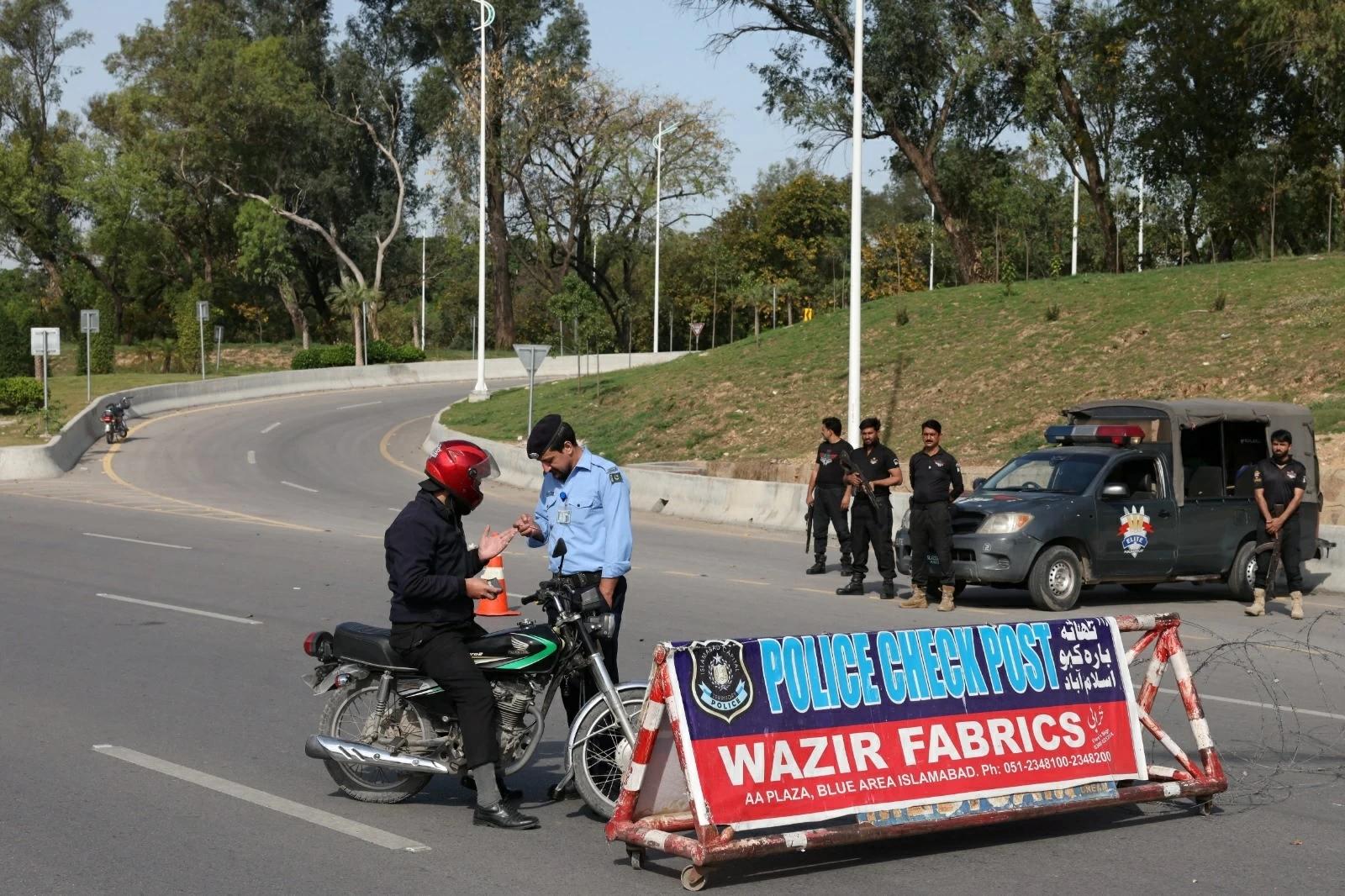
While Iran signals it will not send negotiators, Pakistan’s preparations for hosting talks are described as extensive and time-sensitive, with hotels cleared and security tightened in the capital. Al Jazeera reports that Islamabad was gearing up to host the second round of talks between the United States and Iran aimed at ending their war, and that Pakistan’s Marriott Hotel asked guests to vacate by Sunday afternoon, while the Serena Hotel “soon issued the same order and stopped taking reservations.” Al Jazeera says roads into the Red Zone, the capital’s most heavily fortified area, were sealed, and that the district houses key government buildings including the National Assembly, foreign embassies and both five-star hotels.
The report adds that “Thousands of additional police and paramilitary personnel arrived from across the country,” and that barbed wire appeared as part of the preparations. Al Jazeera also states that unlike the first round of talks held in Islamabad on April 11, Pakistan aimed to get the U.S. and Iran to agree to multiple days of negotiations until a memorandum of understanding is signed, effectively extending the ceasefire, with sources close to these efforts telling it that the MoU could give negotiators “even up to 60 days.”
Jagonews24 similarly says Pakistan tightened security in Islamabad amid uncertainty over the talks, reporting that “Around 20,000 security personnel have been deployed, key areas sealed off, and state authorities have requisitioned hotels in preparation for delegations.” CNBC says that if the talks were to take place, the U.S. delegation to Pakistan would once again be headed by Vice President JD Vance, and that envoys Steve Witkoff and Jared Kushner would also be traveling to Islamabad for the talks.
Markets and the ceasefire deadline
The diplomatic breakdown and the renewed disruption around the Strait of Hormuz are also reflected in market reporting, with financial coverage linking the flare-up to inflation risks and uncertainty about talks. Financial Post says gold fell after a weekend flare-up in Middle Eastern waters renewed inflation risks from an energy-supply shock and cast doubt over talks to end the war, and it reports that bullion dropped as much as 1.9% before paring some of the loss to trade near $4,790 an ounce. The same Financial Post account says the latest incidents jeopardized prospects for potential peace talks in Islamabad before a fragile 14-day ceasefire expires on Tuesday, and it notes that Trump said the US Navy fired upon and seized an Iranian-flagged cargo ship while Tehran warned that ships approaching the Strait of Hormuz would be treated as violating a ceasefire.
Financial Post also states that several vessels were forced to abandon crossings only hours after Iran had said Friday that the key waterway was open, and that the latest incidents have jeopardized prospects for talks in Islamabad before the ceasefire expires. CNBC provides additional context on the ceasefire and escalation timeline, saying Trump announced the blockade on April 12 after complaining that Tehran has not appeared to reopen the strait, one of his conditions for agreeing to the fragile two-week ceasefire that is currently in effect.
CNBC also says oil prices plunged more than 10% on Friday to below $90 per barrel on hopes that energy supplies would start flowing again from the region, and that the closure of the sea lane connecting the Persian Gulf to global energy markets has triggered the largest oil supply disruption in history. CBS News ties the political timeline to the ceasefire’s end, saying Iran and the United States, along with Israel, are just days away from the end of the two-week ceasefire that halted the Middle East war, ignited by surprise US-Israeli strikes on Iran on February 28.