Iran Releases Video Showing IRGC Commandos Seizing MSC Francesca and Epaminondas in Strait of Hormuz
Key Takeaways
- IRGC captured two vessels in the Strait of Hormuz.
- Vessels identified as MSC Francesca and Epaminondas.
- Iran released a video purporting to show commandos seizing the ships.
Seizures After Ceasefire
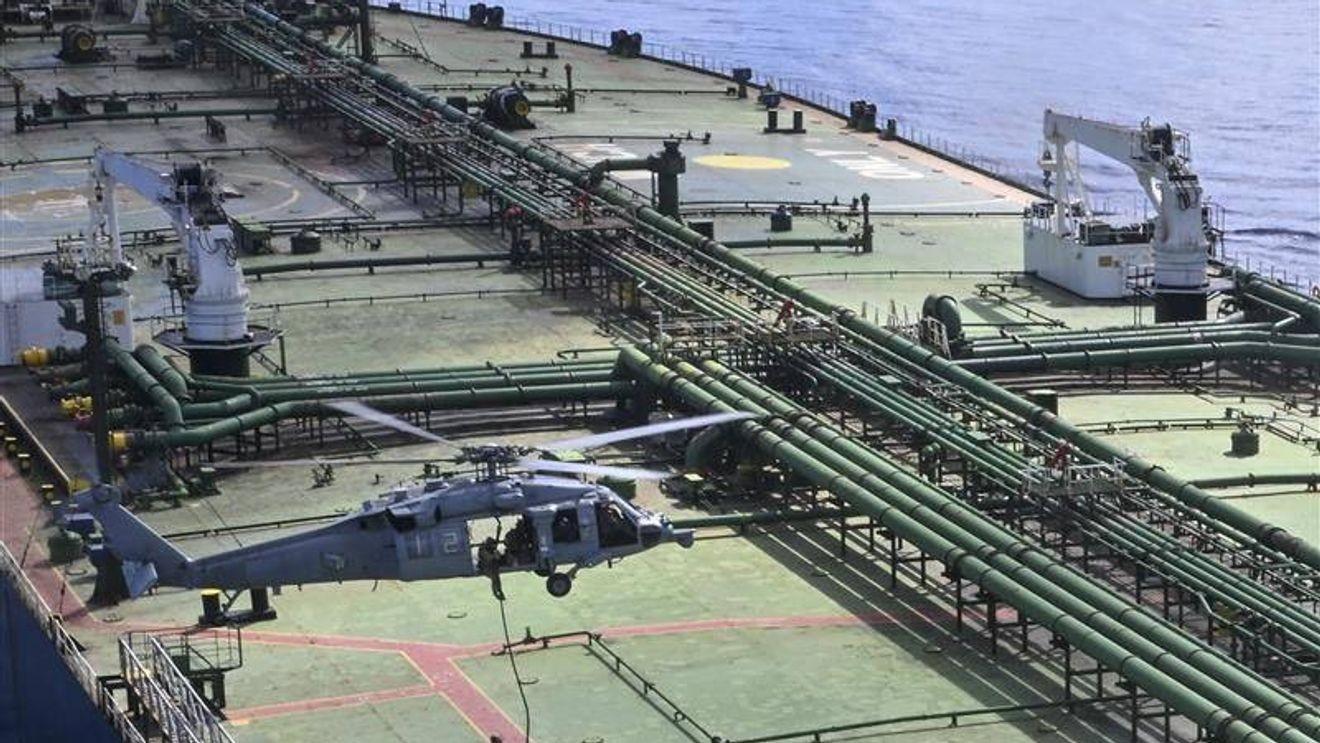
Iran released a video purporting to show armed, masked commandos seizing two cargo vessels in the Strait of Hormuz, after the regime boasted it had seized the Panama-flagged MSC Francesca and Liberia-flagged Epaminondas vessels.
“Iran has captured two foreign commercial vessels in the Strait of Hormuz and moved them to its coast, in a further escalation that comes hours after United States President Donald Trump said he would extend a ceasefire with Tehran”
The New York Post said the propaganda clip was pumped out by state media Wednesday after the cease-fire was extended, and described Islamic Revolutionary Guard Corps soldiers speeding toward a container ship with “MSC” on the side before scaling a ladder and boarding.

The same account said the IRGC accused the two vessels of operating without the required permit and tampering with their navigation systems, and it added that personnel on the Epaminondas reported damage to its bridge after Iranian soldiers opened fire and hurled grenades from a gunboat, according to the UK Maritime Trade Operations.
The New York Post also reported that the MSC Francesca came under fire around six miles off the coast of Iran, and that sources at the intelligence firm Vanguard said the vessel was “instructed to drop anchor,” BBC reported.
In parallel, the Al Jazeera report said Iran captured two foreign commercial vessels in the Strait of Hormuz and moved them to its coast hours after President Donald Trump said he would extend a ceasefire with Tehran.
Al Jazeera quoted Iranian state media saying the IRGC said the vessels had violated maritime regulations and entered the strategic waterway without coordination, and it described the capture as “in a further escalation” after an earlier incident in which an Iranian gunboat fired on a container vessel near Oman.
The AP similarly framed the sequence as a day after Iran attacked three cargo ships in the strait, capturing two of them, and it said the U.S. seized another tanker associated with smuggling Iranian oil in the Indian Ocean, ratcheting up the standoff.
U.S. Orders Escalation
As Iran publicized its seizure through state media video, the U.S. moved toward a more forceful posture in the same waterway.
The CBC reported that President Donald Trump ordered the U.S. military to “shoot and kill” Iranian small boats choking the Strait of Hormuz after seizing another tanker associated with the smuggling of Iranian oil, and it quoted Trump saying, “I have ordered the United States Navy to shoot and kill any boat, small boats though they may be ... that is putting mines in the waters of the Strait of Hormuz.”

CBC added that Trump said there was “to be no hesitation” and that “our mine 'sweepers' are clearing the Strait right now,” with the activity ordered to continue “at a tripled up level!”
The NPR account tied the same sequence to peace talks in limbo, saying Trump extended a ceasefire while maintaining a U.S. naval blockade of Iranian ports, and it reported Iran dismissed the extension as meaningless because the blockade violated the deal.
NPR also said the U.S. Central Command directed 31 vessels to change course since imposing its blockade earlier this month, and it reported that Brent crude oil was again trading at over $100 a barrel as the impasse continued to disrupt shipping.
The Honolulu Star-Advertiser described Trump’s Tuesday move as extending a ceasefire until the U.S. discussed an Iranian proposal in peace talks, while Iran’s parliament speaker and lead negotiator Mohammad Baqer Qalibaf said a full ceasefire only made sense if the blockade was lifted.
In that same report, Qalibaf said reopening the Strait of Hormuz was impossible with what he called a “flagrant breach of the ceasefire,” and he wrote, “You did not achieve your goals through military aggression and you will not achieve them by bullying either,” in his first response to Trump’s announcement.
The Australian Broadcasting Corporation described the broader “battle of the blockades” as directives changed, with some ships crossing the strait while others were turned around, and it said that on April 13 CENTCOM said forces would not “impede freedom of navigation for vessels transiting the Strait of Hormuz to and from non-Iranian ports.”
Pentagon and Tracking
While Iran and the U.S. traded accusations about ceasefire compliance, U.S. actions in the Indian Ocean and the Strait of Hormuz were accompanied by released footage and ship-tracking claims.
“US military says it seizes another oil tanker associated with Iran US military says it seizes another oil tanker associated with Iran DUBAI, United Arab Emirates (AP) — The U”
The AP said the Defense Department released video footage of U.S. forces on the deck of the oil tanker Majestic X, which was seized in the Indian Ocean, and it quoted a Pentagon statement: “We will continue global maritime enforcement to disrupt illicit networks and interdict vessels providing material support to Iran, wherever they operate.”
AP reported that ship-tracking data showed Majestic X in the Indian Ocean between Sri Lanka and Indonesia, roughly the same location as the oil tanker Tifani, earlier seized by American forces, and it said Majestic X had been bound for Zhoushan, China.
The WPDE local report similarly said U.S. forces on Thursday seized another oil tanker linked to smuggling Iranian crude, and it described Department of War video showing military helicopters hovering over the tanker Majestic X during the operation in the Indian Ocean.
WPDE also said the Majestic X was a Guyana-flagged vessel formerly known as the Phonix and sanctioned by the U.S. Treasury Department in 2024 for transporting Iranian crude in violation of sanctions, and it described the sequence as following a day after Iran’s Revolutionary Guard fired on three ships and took control of two vessels.
NPR added that the U.S. Central Command had directed 31 vessels to change course since imposing its blockade earlier this month, and it said Brent crude oil was again trading at over $100 a barrel Thursday as the impasse continued to disrupt shipping through the strait.
The Al-Monitor report described Iran’s response as IRGC Navy seizing two merchant ships in the Strait of Hormuz and redirecting them toward the Iranian coast, quoting state-run Iranian media as saying the ships had not been given permission to pass through the strait.
Al-Monitor also said the IRGC accused the crews of MSC Francesca and Epaminodas of operating without authorization and tampering with navigational systems as they tried to exit the strait, and it said the IRGC accused the Francesca of being linked to Israel.
Panama Condemns, Washington Defends
As the U.S. and Iran escalated around the Strait of Hormuz, Panama and Washington offered sharply different interpretations of the same Iranian seizure.
The New York Post reported that Panama condemned Iran for seizing the vessel, branding the act “illegal,” and it said Panama’s officials described Tehran’s act as posing a “serious threat to maritime security,” constituting an “unnecessary escalation” at a time when the West is trying to ensure the Strait of Hormuz remains open.
The New York Post also said Washington responded by arguing the cease-fire wasn’t violated, quoting White House press secretary Karoline Leavitt telling Fox News: “These were not US ships. These were not Israeli ships. These were two international vessels,” and it added that Leavitt said Iran’s actions involved “speedy gunboats.”
In the same account, Leavitt said, “Iran has gone from having the most lethal navy in the Middle East to now acting like a bunch of pirates,” framing the Iranian seizure as a law-and-order issue rather than a military dispute.
The Honolulu Star-Advertiser reported that Iran’s parliament speaker and lead negotiator Mohammad Baqer Qalibaf said a full ceasefire only made sense if the blockade was lifted, and it quoted him writing, “You did not achieve your goals through military aggression and you will not achieve them by bullying either,” while also saying the “only way is recognizing the Iranian people’s rights.”
Al Jazeera’s reporting from Tehran added another layer by quoting its correspondent Tohid Asadi saying, “This is in line with what we heard from the IRGC previously, saying that any passage of ships, vessels or oil tankers through the Strait of Hormuz should be with the permission and coordination of the IRGC.”
The Al Jazeera piece also said Iranian officials were discussing charges and transit fees for vessels using the route, and it described the capture as reflecting Iran’s continuing strategy to impose control and authority over maritime traffic through the chokepoint.
Meanwhile, the NBC News account said Trump told Iran’s leaders he was giving them time to “come up with a unified proposal” in peace talks, but that the U.S. naval blockade would continue, and it said the truce was extended indefinitely while peace talks remained uncertain.
Economic and Diplomatic Stakes
The dispute over the Strait of Hormuz carried immediate economic stakes and left peace talks in doubt, according to multiple reports.
“President Donald Trump in a morning social media post ordered the U”
CBC said the Iranian attack on and seizure of the cargo ships intensified its assault on shipping in the waterway through which 20 per cent of the world's traded oil passes in peacetime, and it reported that the conflict has already sent gas prices skyrocketing far beyond the region and raised the cost of food and a wide array of other products.

CBC said the price of Brent crude oil nosed over $100 US per barrel, marking a 35 per cent increase from prewar levels, and it reported that the European Union energy commissioner Dan Jørgensen warned Wednesday of lasting impact for consumers and businesses, likening it to other major energy crises over the last half-century.
AP similarly said the standoff has effectively choked off nearly all exports through the strait with no end in sight, and it reported that the disruption has already sent gas prices skyrocketing and raised the cost of food and other products, with Brent crude oil nosing over $100 per barrel and marking a 35% increase from prewar levels.
AP added that Jørgensen warned the disruption is costing Europe around 500 million euros ($600 million) each day.
NPR said Brent crude oil was again trading at over $100 a barrel Thursday as the impasse continued to disrupt shipping through the strait, and it reported that Iran dismissed Trump’s ceasefire extension as meaningless because the blockade on Iranian ports is a violation of the deal.
The Honolulu Star-Advertiser described the strait as carrying a fifth of the world’s oil trade before the war and said the crucial waterway was effectively shut, straining economies across the world, while it reported that thousands of people have been killed across the Middle East, mostly in Iran and Lebanon.
In that same report, it said the Islamic Revolutionary Guards Corps seized two vessels for what it called maritime violations and escorted them to Iranian shores, and it reported that the Revolutionary Guards warned that any disruption to order and safety in the strait would be considered a “red line,” Tasnim said.
Finally, the Australian Broadcasting Corporation described the blockade as turning back sanctioned vessels and said that early Thursday morning the U.S. said nearly 30 ships had been turned around as part of its blockade against Iran, while Kpler Marine Traffic data showed several ships likely linked to Iran had made it through since the blockade began.
More on Iran

US Intercepts Iranian-Flagged Tankers Near India, Malaysia, Sri Lanka, Redirects Them Away
14 sources compared
Iran Begins Collecting Strait of Hormuz Transit Fees, Deposits First Revenue in Central Bank
16 sources compared

Iran Attacks Ships in Strait of Hormuz as Trump Extends Ceasefire and U.S. Blockade Continues
43 sources compared
Iran Fires on Three Ships and Seizes Two in Strait of Hormuz, Trump Extends Ceasefire
28 sources compared