
Iran Says Post-War Strait Of Hormuz Transit Requires Its Security Protocols
Key Takeaways
- Iran says Hormuz transit will be allowed only under its security protocols after the war.
- Iran frames Hormuz transit as conditional on security protocols amid US-Israel aggression.
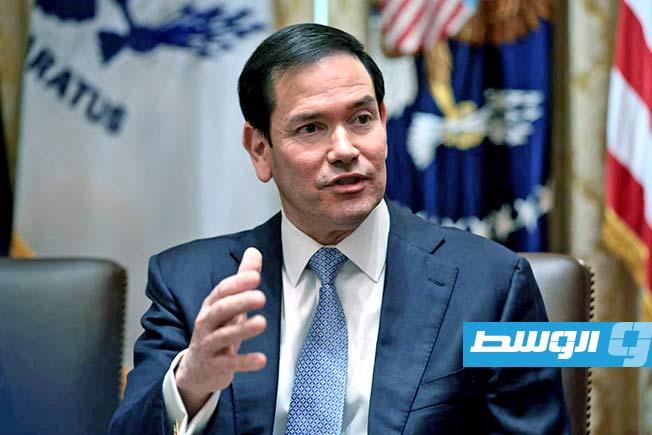
- US secretary says Hormuz is an economic weapon in Iran's hands.
Protocols After Ceasefire
Iranian defense officials said post-war transit through the Strait of Hormuz would be allowed only under Iran’s security protocols, linking any reopening to the end of what they described as US-Israeli aggression.
Brigadier General Reza Talaei Nik told a meeting of defense ministers of the Shanghai Cooperation Organization in Bishkek, Kyrgyzstan, on Tuesday that Iran recognizes international concerns about the restrictions it has imposed on passage through the strait.

He said the restrictions are a response to US-Israeli attacks on Iran that “began in late February and halted with a ceasefire on April 8.”
Talaei Nik said Iran would allow commercial shipping through the Strait of Hormuz, described as “a vital conduit for global oil and gas shipments,” if the war stops permanently.
He framed the condition in terms of Iran’s security, saying, “Allowing the smooth transit of commercial ships will be on the agenda after the end of the war, provided that protocols that do not jeopardize Iran's security are observed.”
Press TV and Mehr News Agency both carried the same core message from Talaei-Nik at the SCO meeting in Bishkek, with Mehr quoting him again that post-war transit is only possible under Iran’s security protocol.
The officials also tied their transit plan to a broader effort to introduce a new legal regime for the strait, including a total ban on ships owned by or linked to the Israeli regime and restrictions on ships related to hostile countries and their affiliates.
New Legal Regime and Toll
Alongside the security-protocol framing, Iranian officials described a proposed legal framework and a toll payment system for passage through the Strait of Hormuz.
Press TV said efforts in the Iranian government and parliament aim to introduce a new legal regime for transit in the strait, under which “a total ban will be imposed on ships owned by or linked to the Israeli regime,” while ships related to hostile countries and their affiliates would face restrictions.
The same report said Iran is also planning to introduce a toll payment system for passage through the strait “with the aim of compensating for the losses suffered because of years of economic sanctions imposed on the country by Western governments.”
Mehr News Agency echoed the SCO meeting remarks and described the message read from the caretaker of the Iranian Defense Ministry, focusing on continued power of the Armed Forces of the country and resistance of the Iranian people.
In the account carried by Latest news from Azerbaijan, the proposed system was described in similar terms, stating that ships owned by or affiliated with Israel would face “a complete ban,” while vessels linked to countries deemed hostile to Iran could face restrictions.
The Reuters-linked reporting in Iran International added a more specific mechanism: CNN, citing a senior Iranian official, said Tehran would give priority to ships that pay fees to pass through the strait.
The senior official said, “Given there are limits on the number of ships that will be allowed to transit, Iran has decided to give priority to ships that respond more quickly to the new Hormuz Strait protocols and pay the costs of security and safety services,” and he added that passage of ships that do not pay these fees “will be postponed.”
Tight Controls and Priority Fees
Iran International described a concrete tightening of controls after Iran announced renewed measures for the Strait of Hormuz, including priority passage tied to fees.
“An Iranian deputy defence minister has said the country could allow passage through the Strait of Hormuz in the Persian Gulf after the conclusion of what he described as US-Israeli “aggression”, provided that security protocols are in place to safeguard Iran’s interests”
It said the incident occurred on Saturday, April 18, after Iran announced renewed tightening of its control over the strategic chokepoint.
CNN, citing a senior Iranian official, reported that Tehran would give priority to ships that pay fees and respond more quickly to the new Hormuz Strait protocols, while passage of ships that do not pay would be postponed.
Iran International also said Tanker Trackers reported that two Indian ships, after being fired upon by the Revolutionary Guards in the Strait of Hormuz, were forced to change course and head back west.
One of these ships was described as “a massive oil tanker flying the Indian flag” carrying “around two million barrels of Iraqi oil.”
The report said India is currently, alongside China, one of Iran's top oil buyers.
It further stated that Reuters reported ship-tracking systems had previously shown a convoy of eight tankers crossing the Strait of Hormuz in the first broad movement of ships since the start of the U.S. and Israeli military strikes on Iran on February 28 of last year, about seven weeks ago.
Iran International said Tehran announced it had reimposed tight military controls, and it described the strait as having before the war carried about a fifth of global oil trade.
The report also said Iran had announced on Friday, April 17, following a separate 10-day cease-fire brokered by the United States between Israel and Hezbollah in Lebanon, a temporary reopening of the Strait of Hormuz, but that on Saturday, April 18, Khatam al-Anbiya announced passage had again come under “tight military control for the Islamic Republic.”
Diplomatic Pressure and Warnings
The reporting also placed Iran’s strait controls inside a wider diplomatic and military timeline, with U.S. and British officials urging a return to normal navigation.
Iran International said U.S. President Donald Trump told that there were “somewhat positive” developments regarding Iran, while warning that if no peace agreement is reached by Wednesday, April 22 (the end date of the two-week truce), fighting could resume.

It said Iran had announced a temporary reopening of the Strait of Hormuz on Friday, April 17 after a separate 10-day cease-fire brokered by the United States between Israel and Hezbollah in Lebanon, but that Khatam al-Anbiya later cited “repeated American violations” and maritime piracy operations under the cover of the blockade as the reason for reimposing tight oversight.
The report said Spokesman for the Khatam al-Anbiya central headquarters, Ibrahim Zolfagari, said Iran had previously agreed “in good faith” to a managed passage for a limited number of oil tankers and commercial ships, but continued American measures forced Tehran to reimpose tighter oversight.
It also stated that Washington did not immediately respond to these statements.
British Foreign Secretary Yvette Cooper said on Saturday, April 18 that although there is a ceasefire in the war with Iran, the Strait of Hormuz has not yet returned to its normal state, and she urged Tehran to allow a full resumption of vessel movement.
Reuters quoted Cooper saying, “We are at a delicate diplomatic moment, a ceasefire has been reached, but normal movement through the strait has not yet resumed.”
Cooper also said, “We need to keep the Strait of Hormuz open, because that helps the economies of all countries around the world that are under pressure.”
The report further said Axios reported that Trump held a meeting in the White House Situation Room on Saturday, April 18 to discuss the Hormuz Strait crisis and negotiations with Iran, with Vice President Mike Pence and others including Marco Rubio, Pete Hegseth, Scott Beisant, Susie Wiles, Steve Wytkov, John Ratcliffe, and Dan Kin attending.
Power, Oil Prices, and Stakes
Across the accounts, the stakes of Iran’s Hormuz transit policy were tied to global oil and gas shipments, international oil prices, and the risk of renewed hostilities.
“Speaking at the meeting of the Ministers of Defense of Shanghai Cooperation Organization (SCO)’s member states in Bishkek, capital of Kyrgyzstan, on Tuesday, Brigadier General Reza Talaei-Nik emphasized that the world clearly heard the sound of breaking the backbone of unilateralism and the global dictatorship following the war of aggression waged by US and Israel against Iran”
Press TV said current restrictions on passage through Hormuz have caused a major surge in international oil prices, increasing pressure on the United States and Europe, and it added that experts believe the West should reach a compromise with Iran to allow transit via the Strait to return to normal levels.

Mehr News Agency similarly framed the SCO meeting message around breaking the “backbone of unilateralism” after the “war of aggression waged by US and Israel against Iran,” while reiterating that post-war transit would be possible only under Iran’s security protocol.
Latest news from Azerbaijan repeated that restrictions were a response to US-Israeli attacks that began in late February and ended with a ceasefire on April 8, and it again described the strait as an essential route for global oil and gas trade.
Iran International added a market reaction, saying Brent crude fell 11 percent to $88 a barrel after the announcement of the reopening of the Strait of Hormuz.
It also described Iran’s internal messaging, saying Iran’s so-called unseen Supreme Leader Mojtaba Khamenei announced on his Telegram channel that the Iranian navy is prepared to inflict “bitter new defeats” on the enemies.
The report said Khatam al-Anbiya blamed “repeated American violations” and maritime piracy operations under the cover of the blockade for the decision to impose tight military control again.
It also described a U.S. warning through a senior American official that if progress is not made, the war could resume in the coming days.
In the same narrative, the report said more than 50 countries support efforts to guarantee freedom of navigation and more than 12 countries are ready to participate in mine clearance and securing navigation after the conflict ends, linking Iran’s decisions to broader international operational planning.
More on Iran

Trump Says U.S.-Iran Memorandum Will Be Signed Sunday, Strait of Hormuz Reopens
10 sources compared

Donald Trump Says U.S.-Iran Deal Will Be Signed Sunday, Strait of Hormuz Reopening
16 sources compared

Trump Says U.S.-Iran Memorandum Will Be Signed Sunday as U.S. Shoots Down Iranian Drones
11 sources compared

Donald Trump Says U.S.-Iran Memorandum Will Be Signed Sunday, Strait of Hormuz To Reopen
12 sources compared