Iran Sends Fresh Peace Proposal to Pakistani Mediators as Trump Signals Possible Attacks
Key Takeaways
- Iran has sent a fresh peace proposal to Pakistani mediators to negotiate with Washington.
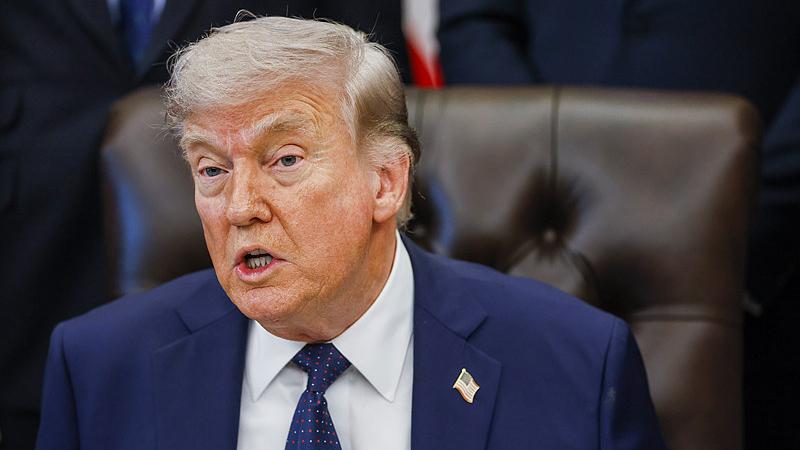
- Trump signaled possible attacks on Iran; hinted Washington could restart the war.
- Oil prices rose to multi-year highs amid Strait of Hormuz tensions.
Fresh proposal via Pakistan
Iran has sent a fresh peace proposal for negotiations with the United States to Pakistani mediators, state media says, according to CNN.
CNN reports that US President Donald Trump said earlier that “no one knows the status of talks with Iran aside from himself and a handful of others,” while the proposal’s contents and whether Trump will accept it were “not yet clear.”

The standoff described by CNN has lasted “nearly four weeks” since a temporary ceasefire, with the US blockading Iran’s ports and the Strait of Hormuz “remaining effectively closed by Tehran.”
In the same CNN account, Trump said yesterday that “no one knows their status apart from him and a handful of others,” suggesting talks were still proceeding even as they appeared at a standstill.
CNN also ties the diplomatic track to economic pressure, saying the Strait of Hormuz remains largely closed and US gas prices are at an average of $4.39 per gallon, “their highest level since July 2022.”
The report adds that prices jumped another 9 cents to $4.39 for a gallon of regular, and that it marked “the biggest one-day jump in prices in the last six weeks.”
CNN further states that the White House is claiming the war in Iran is over amid an open-ended ceasefire, with a senior administration official saying that for war powers purposes “the hostilities that began on Saturday, February 28 have terminated.”
War powers and ceasefire
The dispute over whether the United States can use military force without congressional authorization is intertwined with the ceasefire timeline described by CNN and Al Jazeera.
CNN says lawmakers and US officials disagree on whether a legal deadline for the use of military force without congressional authorization has passed, with the Trump administration insisting that the ceasefire “terminated” hostilities for the war powers deadline.

CNN quotes a senior administration official arguing that “the hostilities that began on Saturday, February 28 have terminated,” and notes that the official cited a two-week ceasefire agreed on April 7 that has since been extended.
CNN adds that “There has been no exchange of fire between US Armed Forces and Iran since Tuesday, April 7,” and links this to Defense Secretary Pete Hegseth’s testimony that the administration’s understanding “means the 60-day clock pauses or stops in a ceasefire.”
Al Jazeera, in a separate account of the Iran war on day 63, also frames the ceasefire in war-diplomacy terms, saying a senior official in the US administration stated that for War Powers Resolution purposes, hostilities that began in February have now “terminated.”
Al Jazeera quotes the same US administration framing: “Both parties agreed to a two-week ceasefire on Tuesday, April 7, that has since been extended,” and “There has been no exchange of fire between US Armed Forces and Iran since Tuesday, April 7.”
The Al Jazeera report also describes ongoing regional signals that the conflict is not fully settled, saying Iran’s President Masoud Pezeshkian described the US naval siege of Iranian ports as an “extension of military operations” that is “intolerable.”
Iran’s leadership and internal rift
Iran’s posture toward the United States is presented in the sources as both uncompromising and contested inside the Iranian political system.
CNN describes the standoff while also reporting that Iranians in Tehran told CNN they anticipate the US will resume the war, with a woman in her 40s saying the current ceasefire “doesn’t feel like a ceasefire.”
She added, “Every day the pressure just keeps building, nothing feels normal anymore,” and another man said, “They are resigned to it,” describing people as “just witnessing these things happen to them.”
In parallel, The Times of India reports remarks by Iran’s Supreme Leader Ayatollah Khamenei, saying he “will continue to protect its strategic military and technological capabilities while sharply rejecting US influence in the region.”
The Times of India quotes Khamenei saying, “Ninety million proud and honorable Iranians inside and outside the country regard all of Iran’s identity-based, spiritual, human, scientific, industrial and technological capacities — from nanotechnology and biotechnology to nuclear and missile capabilities — as national assets, and will protect them just as they protect the country’s waters, land and airspace.”
NDTV adds a separate layer of tension by reporting that President Masoud Pezeshkian and Parliament Speaker Mohammad Bagher Ghalibaf reportedly seek the removal of Foreign Minister Abbas Araghchi amid US talks.
NDTV says a report by Iran International claimed Araghchi has been acting on the IRGC chief’s directive “without keeping Pezeshkian in the loop,” and that Pezeshkian has told associates he will fire Araghchi if he continues.
Threats, warnings, and escalation signals
Multiple sources describe a parallel track of warnings that keep the conflict’s trajectory volatile even as ceasefire language persists.
CNN reports that the Strait of Hormuz remains effectively closed by Tehran and that the US blockades Iran’s ports, while it also notes that Trump said yesterday that “no one knows their status apart from him and a handful of others.”

Al Jazeera says Trump signaled the war could restart, quoting that he said he has not ruled out restarting the war and that Iranian leaders “want to make a deal badly,” while also predicting falling petrol prices once the conflict ends.
Al Jazeera also reports that Iran’s President Masoud Pezeshkian described the US naval siege of Iranian ports as an “extension of military operations” that is “intolerable.”
Khoj Samachar frames the Iranian warning more directly, saying Tehran issues a firm warning over any potential military action and that “even a limited strike would trigger a strong and painful response.”
Khoj Samachar quotes a senior figure from the Islamic Revolutionary Guard Corps stating that “even a minor military move would not go unanswered,” and adds that Iranian officials emphasized their response would not be “symbolic but impactful.”
DW reports that a Democratic senator told CNN that an attack on Iran is imminent, quoting Richard Blumenthal saying the prospect of a near-term military strike is “on the table” and that the probability is “very troubling.”
Planning for possible strikes
Beyond diplomatic proposals, the sources also describe operational planning and preparations for potential military action.
“Skip to main content The War in the Middle East - Latest Developments Latest news All Iranian media: Tehran offers Pakistan a new proposal for negotiating with Washington Syria”
CNN’s live update ties the standoff to military posture by describing the US blockading Iran’s ports and the Strait of Hormuz “remaining effectively closed by Tehran,” while it simultaneously reports that lawmakers and US officials dispute war powers timing.
Fararu reports that US security meetings in Washington are considering a possible military response to Iran, and it cites Axios, saying Brad Cooper, the commander of CENTCOM, is set to brief Trump on new plans for possible military action against Iran.
Fararu also cites Barak Ravid, who reported that CENTCOM had prepared a plan to carry out a wave of “short and powerful” attacks against the Islamic Republic to break the deadlock in negotiations, while Trump had not yet ordered execution.
The same Fararu account says Bloomberg reported CENTCOM sought to deploy the Army’s hypersonic missiles “Dark Eagle” to the Middle East so they could be used to strike the Islamic Republic if necessary.
Fararu adds that the aim was to have longer-range missile systems to strike ballistic-m missile launchers Iran has placed deeper inland within its territory, and it says Trump reviewed a fresh Iranian proposal in a White House Situation Room meeting and found those proposals insufficient.
Anadolu Ajansı’s live blog describes the broader war context, saying “the American-Israeli aggression on Iran's military sites and its civilian infrastructure, industrial zones and universities continues,” while Tehran responds with “multiple rocket waves throughout the day.”
Economic stakes and maritime chokepoints
Economic and humanitarian stakes are repeatedly tied to the Strait of Hormuz and the broader war economy in the sources.
CNN says the Strait of Hormuz remains largely closed and that US gas prices are at an average of $4.39 per gallon, “their highest level since July 2022,” marking an increase of 33 cents in the last week.
CNN reports that prices jumped another 9 cents to $4.39 for a gallon of regular and that it was “the biggest one-day jump in prices in the last six weeks.”
Al Jazeera reports oil at four-year highs, saying the US crude benchmark Brent for June delivery spiked more than 7 percent to $126.41 and West Texas Intermediate was up 3.4 percent to $110.31 before later paring gains.
The Al Jazeera account also notes that the UAE has banned its citizens from travelling to Iran, Lebanon and Iraq and called on those already there to leave immediately, citing regional developments.
DW adds a food-security angle, saying “The Iran war has put nearly 10 billion meals a week at risk,” and it quotes Scott Bassett on X about Iran’s currency and “economic fury” campaign.
DW also reports that about 25–30 percent of global transactions in raw materials needed to produce fertilizer pass through the Strait of Hormuz, and that the corridor has effectively been closed for two months.
More on Iran
Iran War Halts Strait of Hormuz Shipping, Yara Chief Warns of Global Fertiliser Squeeze
15 sources compared

Donald Trump Threatens Iran Infrastructure as Hamadan Neighborhood Attacked and MQ-9 Destroyed
12 sources compared

Saman Rezaei Says US And Israel Attacks Killed At Least 44 Iranian Seafarers
13 sources compared
Iran Officials Reject U.S. Claims, Say Mojtaba Khamenei Is Alive in Perfect Health
12 sources compared