Iran · 02 May, 2026 · 7 min read
Iran War Halts Strait of Hormuz Shipping, Yara Chief Warns of Global Fertiliser Squeeze
Up to 10 billion meals a week at risk globally due to fertiliser supply disruption. Strait of Hormuz blockade disrupts fertiliser shipments and global food security.
How quickly shortages impact food prices (immediacy vs delayed harvest-time effects).
5 of 6 outlets skipped it: a World Bank report attributes the cost surge primarily to higher natural gas prices..
BBC was read line by line by the Watchdog: 6.6. See the score →
15outlets compared
Same story, two versions
tap a side to read it in full
The Business Standard
““the conflict, which has effectively halted shipping through the Strait of Hormuz””Read the original ↗
These word choices imply different operational realities (total halting vs. a blockade posture vs. broader disruption), which affects how immediate and predictable the fertiliser shortfall is considered to be.
Fertiliser squeeze from Hormuz
A war tied to Iran is triggering a global fertiliser squeeze that threatens food production, according to multiple reports citing the same core mechanism: disruption to shipping through the Strait of Hormuz.
“effectively halted shipping through the Strait of Hormuz”
Svein Tore Holsether, chief executive of Yara, told the BBC that the conflict has effectively halted shipping through the Strait of Hormuz and is now threatening food production on a global scale.

Holsether warned that declining crop yields resulting from reduced fertiliser availability could trigger a worldwide bidding war for food, and he urged European governments to carefully weigh the consequences of such a price war on the most vulnerable populations in developing countries.
In one account, the disruption is described as “fertiliser squeeze” driven by soaring energy costs and export disruptions that push farmers’ affordability to a four-year low, as highlighted in a World Bank report cited by Euronews.E
Euronews also reported that European agriculture ministers are calling for urgent intervention to prevent a prolonged food price crisis and to safeguard grain harvests for next year’s season.E
The Business Standard and ABP News both frame the threat in terms of fertiliser availability and affordability, with Holsether warning of a shortfall of nitrogen fertiliser and potential yield losses.T
Across the coverage, the Strait of Hormuz is repeatedly presented as the chokepoint for fertiliser flows, with one report stating that roughly one-third of the world’s fertilisers ordinarily transit through it, including urea, potash, ammonia and phosphates.
Numbers on meals and yields
The reports converge on a specific scale of potential impact, with Holsether linking fertiliser shortfalls to meal losses and yield reductions.
The Business Standard quotes Holsether saying, "We're up to half a million tons of nitrogen fertiliser not being produced in the world right now because of the situation we are in," and it adds that the shortfall could translate to up to 10 billion fewer meals produced each week.T

In the same report, Holsether warns that withholding nitrogen fertiliser could slash yields for certain crops by as much as 50% within a single growing season.
ABP News similarly describes Holsether’s warning that disruptions could lead to a “global auction” for fertiliser, and it states that without sufficient nitrogen fertiliser, yields for certain crops could fall by up to 50% in a single growing season.
The News International repeats the meal and tonnage framing, quoting Holsether: "We're up to half a million tons of nitrogen fertiliser not being produced in the world right now because of the situation we are in," and it says, "I would get to up to 10 billion meals that will not be produced every week as a result of the lack of fertilisers."
Another report, The Guardian, adds a different price and ingredient detail, saying urea prices rose by between “60% and 70% since the US and Israel launched their war on Iran at the end of February,” and it describes ammonia supplies being “torpedoed by the war.”
Euronews adds a cost driver, reporting that the World Bank report indicates the surge in costs is primarily driven by a spike in natural gas prices.E
Voices: executives, ministers, analysts
The coverage includes direct warnings and policy reactions from business leaders, government officials, and industry representatives, with each voice emphasizing different parts of the chain.
“"the most vulnerable people pay the highest price for this in developing nations, where they cannot afford to follow that."”
Holsether’s warning to BBC is quoted in multiple outlets, including his warning that the fertiliser market is global and that the main destinations would be Asia, South East Asia, Africa and Latin America, where the impact would be most immediate.
He also warned that if there is a bidding war on food, “the most vulnerable people pay the highest price for this in developing nations, where they cannot afford to follow that,” a line repeated in The Business Standard.
Euronews reports that a spokesperson for Fertilisers Europe said, "Europe is not facing a supply issue for the current season" and argued that EU institutions should reinforce aid and assistance to European farmers.E
Euronews also quotes the same spokesperson saying, "It must be stressed that Europe is not currently facing a fertiliser supply issue," while a representative at CropLife Europe told Euronews that “Food security depends on resilience which means ensuring farmers have timely access to all the tools they need to protect crops and manage risk, even in periods of volatility.”E
The World Bank report cited by Euronews is described as linking the crisis to natural gas prices, and Euronews quotes Fertilisers Europe explaining, "As EU nitrogen fertiliser production is primarily based on natural gas, the spike in the natural gas costs will have an impact on the fertilizer production costs."E
Analysts are also quoted: Euronews cites the Food and Agriculture Organisation’s assessment that the hardest-hit regions include India, Bangladesh, Sri Lanka, Egypt, Sudan and various parts of Sub-Saharan Africa.E
How outlets frame the same threat
While the underlying story is consistent—war-linked disruption to the Strait of Hormuz, fertiliser shortages, and food security risks—outlets frame the urgency and the geographic emphasis differently.
The Business Standard and ABP News foreground the scale of meal losses and the mechanism of nitrogen fertiliser not being produced, with Holsether’s figures of “half a million tons” and “up to 10 billion meals” appearing as central anchors.
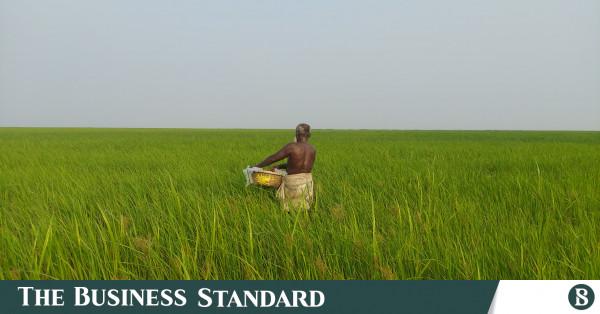
Euronews, by contrast, emphasizes a World Bank report and the concept of a “fertiliser squeeze,” describing farmers’ affordability reaching a four-year low and tying the cost surge to natural gas prices.E
The Guardian focuses on European supply-chain oversight and the idea of a “de facto global auction,” quoting Holsether that “the most important thing we can do now is raise the alarm on what we are seeing right now – that there is a risk of a global auction on fertiliser that means it becomes unaffordable for those most vulnerable,” and it adds specific ingredient and price details such as urea supply from Gulf states and ammonia disruptions.
The News International and The News International-style accounts stress the weekly cadence of the threat, repeating “billions of meals at risk every single week” and quoting Holsether’s meal estimate in a way that foregrounds immediate weekly consequences.
Meanwhile, Irem Business and other West Asian-language reporting add a more granular supply-chain description, stating that “Urea supplies Urea supplies, a nitrogen fertilizer, stopped at the world’s largest production facility in Qatar,” and that “Sulfur and ammonia flows” were disrupted.
The Africa-focused framing in الجزيرة نت highlights regional vulnerability with specific price jumps and trade shares, including that “about a third of global urea trade passes through the Strait of Hormuz” and that the reference price of urea in Egypt jumped from the 400–490 dollar per ton range to around 700 dollars per ton.
Consequences and next steps
The reports describe consequences that extend beyond fertiliser prices into hunger projections, agricultural planning, and potential supply-chain breakdown risks.
“push an additional 45 million people into acute hunger in 2026”
The Business Standard says the UN World Food Programme has warned that the combined fallout from the Middle East conflict could push an additional 45 million people into acute hunger in 2026, and it adds that in Asia and the Pacific, food insecurity is projected to rise by 24%.T

Euronews reports that the World Bank assessment highlights that reduction in fertiliser application today could lead to significantly lower harvests in the coming seasons, potentially extending the duration of the current poverty crisis.E
The Guardian adds that Holsether said it was important “to communicate the message about the danger of what potentially could happen before it is too late.”
In Africa-focused reporting, الجزيرة نت cites a time window from the UN’s Food and Agriculture Organization, stating that it has set a time window of no more than three months to act before risks rise to levels that could affect farming decisions for 2026 and beyond.
That same report describes how the Strait of Hormuz closure would prevent the arrival of about 30% of global fertiliser trade to countries including Kenya, Tanzania, and Mozambique, according to the UN Food and Agriculture Organization (FAO).
Euronews reports that European agriculture ministers are reportedly calling for strategies to safeguard the supply of fertilisers and to mitigate the impact of high energy prices across EU countries.E