
Iran · 01 May, 2026 · 8 min read
Saman Rezaei Says US And Israel Attacks Killed At Least 44 Iranian Seafarers
At least 44 Iranian seafarers killed and 29 injured since start of US-Israel war. Casualties include 22 civilian sailors, 16 fishermen, and 6 dock workers.
11 of 12 outlets skipped it: iranian domestic media published handwritten notes attributed to Ali Larijani in an apparent response to Israel’s claim of his death..
Al Jazeera was read line by line by the Watchdog: 2.8. See the score →
13outlets compared
Same story, two versions
tap a side to read it in full
BBC
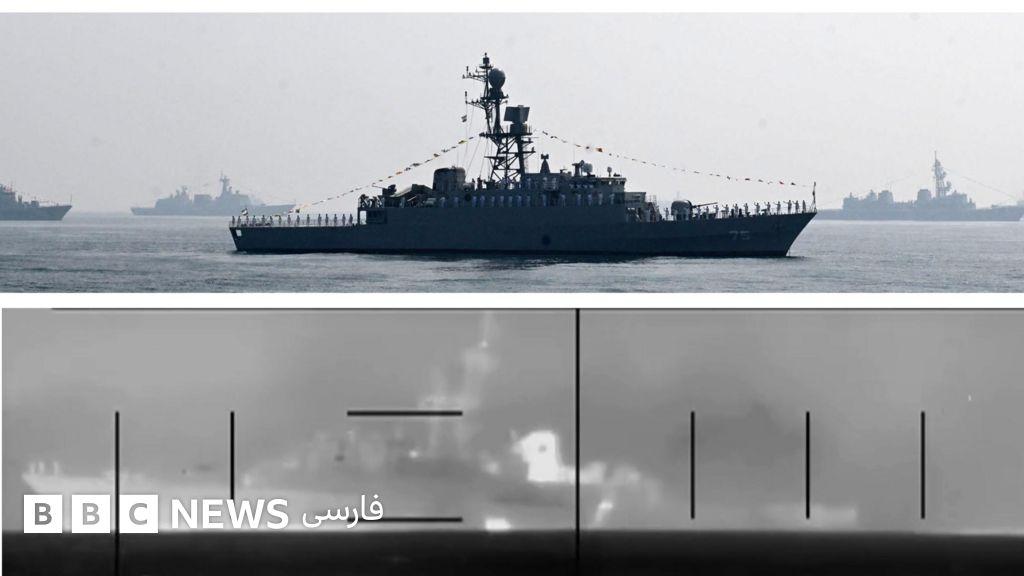
““More than 200 Iranian sailors who survived the Dena torpedo boat and the Bushehr ship, which had been stranded in Sri Lanka, are now on their way back to Iran.””Read the original ↗
DW
““Returning the bodies of 84 Iranian sailors killed in the attack by a U.S. submarine:””Read the original ↗
One outlet emphasizes repatriation of survivors, while another leads with repatriation of bodies; this changes what readers infer the incident’s humanitarian outcome was at that moment.
Seafarers in the crossfire
Iranian maritime workers and sailors have become a focal point of the war’s human cost, with multiple outlets citing figures attributed to Iran’s merchant marine leadership.
“at least 44 Iranian seafarers have been killed and 29 injured since the start of the United States-Israel war on Iran”
The head of Iran’s merchant marine union, Saman Rezaei, told media that “at least 44 Iranian seafarers have been killed and 29 injured since the start of the United States-Israel war on Iran,” and that the list includes “22 civilian sailors, 16 fishermen and six dock workers” killed between “February 28 and April 1.”

Reuters and other independent verification are not provided in the source, and the claim “could not be verified by the media,” with Rezaei saying the list was compiled by the “Iran Ports and Maritime Organization” and members of his union.
Rezaei also said the list “does not include members of Iran’s navy killed by US and Israeli forces,” and he submitted his findings in complaint letters to the United Nations’ International Maritime Organization (IMO).
In those letters, Rezaei attributed the deaths to “attacks by US and Israeli armies on Iranian ports and commercial fleets” across Iran’s territorial waters and the Gulf.
He further said his letters state “at least 29 Iranian seafarers were also injured and nine are missing,” and he described a “humanitarian crisis” affecting “all seafarers in the Persian Gulf.”
The same source reports that seafarers faced “severe psychological distress” after spending “60 days trapped in a war zone spanning the Gulf to the Indian Ocean,” underscoring how the conflict has extended beyond direct strikes into prolonged confinement.
Blockade, closure, and detentions
The war’s maritime dimension is also being driven by interdiction and the effective closure of key corridors, according to the same reporting.
The source says “a US-Iran ceasefire has been in force since April 8,” but that the US “separately launched a naval blockade of all Iranian ports on April 13 to cut off Iran’s oil exports and pressure Tehran to reopen the Strait of Hormuz.”
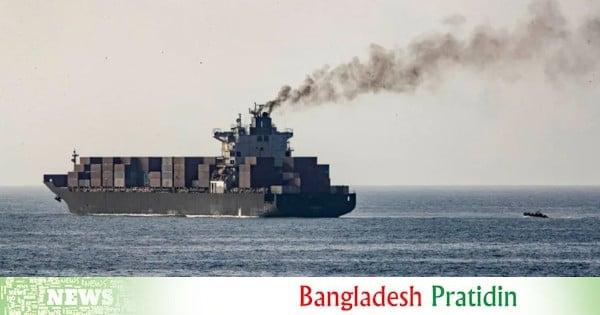
It adds that “The waterway, through which a fifth of the world’s energy and gas exports normally flow, has been de facto closed since the start of the war,” and that the shutdown “has stranded 20,000 seafarers in and around the strait for at least two months.”
Even after the ceasefire, the source reports that “Iranian forces have continued to fire on ships trying to exit the Strait of Hormuz,” and on “April 22, seized two Panama and Liberia-flagged cargo ships.”
The same reporting says US forces “separately seized the Iranian-flagged MV Touska and detained its crew in the Gulf of Oman on April 19,” with US Central Command (CENTCOM) accusing the vessel of violating its naval blockade.
It further states that the Touska is “also reportedly under US sanctions due to its “prior history of illegal activity”, according to US President Donald Trump.”
Rezaei told the media that those detained on board the Touska included “23 crew members, two cadets, two women and one child,” and that “the two women and the child were among the six members of the Touska released this week by US forces and returned to Iran.”
The source also cites the IMO saying Iran’s attacks on vessels in the Gulf, or those attempting to cross the Strait of Hormuz, “have also killed at least 10 seafarers since the start of the war,” while emphasizing that seafarers are civilians on either side.
Stephen Cotton of the ITF said, “The point is, these are seafarers. You can say they are under an Iranian flag, and there are sanctions, but not everybody agrees with the sanctions.”
Escalation and threats at sea
As the conflict expands, Iranian and US statements about maritime operations and escorting ships have sharpened the risk profile around the Strait of Hormuz.
“We are awaiting their presence”
In one report, the Islamic Revolutionary Guard Corps (IRGC) warned American forces in the strait, recalling the “burning of the American tanker 'Bridgton' in 1988,” after “four sailors were killed and three others injured” when a tugboat was fired upon on “March 6, 2026, six nautical miles north of the coast of Oman.”
The IRGC spokesman, Major General Ali Mohammad Naeini, said Iran would “'strongly' welcome escorting American oil tankers through the strait,” adding: “We are awaiting their presence,” while warning against a repetition of the Bridgton incident and “the recent attacks on oil tankers.”
Another IRGC spokesman, Abu al-Fadl Shakarji, said Iran would “target only vessels linked to the United States and Israel,” and warned that the “U.S. military has lost its morale and become exhausted.”
The same report says the IMO announced “four sailors were killed and three others were seriously injured after gunfire on the tug in the Strait of Hormuz,” and it quotes IMO Secretary-General Arsenio Domínguez expressing “grave concern and sorrow over the incident,” noting the danger of escalation to international navigation.
On the US side, the report quotes U.S. Energy Secretary Chris Wright saying the U.S. Navy will begin escorting ships through the Strait of Hormuz “as soon as regional forces are able to reduce Iran’s ability to harm U.S. forces and neighbors.”
Wright told Fox News the naval escort would begin “'as soon as possible,'” and the report says he linked the timing to the current focus of American military assets to limit Iran’s ability to cause trouble in the region.
The report also states that Abu al-Fadl Shakarji emphasized that Iran has “not shut the Strait of Hormuz and does not intend to do so in the future,” and that it does not bear responsibility for the safety of ships or their crews.
It frames the strait as a vital artery, citing that “25% of seaborne oil trade and 20% of LNG shipments pass,” and it adds that the corridor handles “about 33% of the world’s fertilizers.”
US posture and diplomatic friction
Beyond maritime incidents, the sources describe a broader US posture that mixes military escalation with skepticism toward de-escalation.
CNN Arabic reports that U.S. President Donald Trump told CNN that “the United States and Israel want 'things that are largely similar' in the war with Iran,” and it quotes him saying, “We want things that are largely similar.”
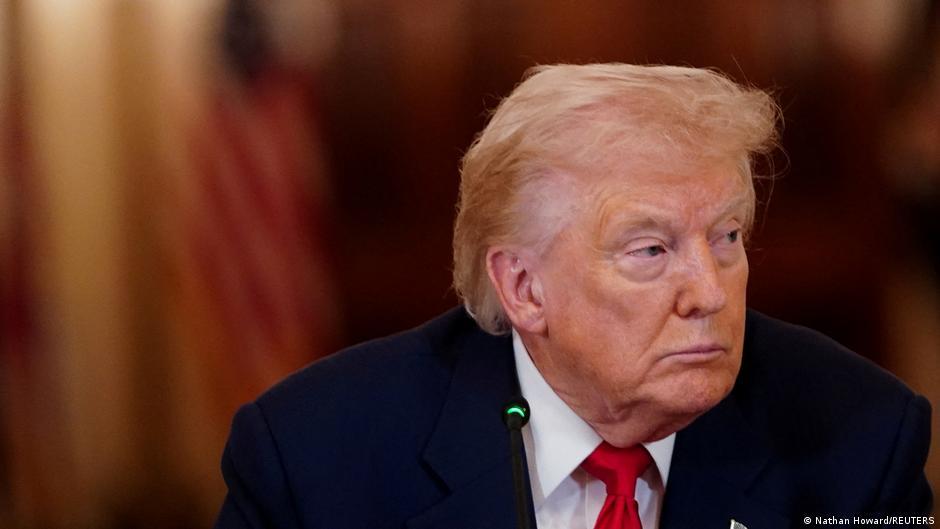
The same report says Trump downplayed the prospects of a ceasefire, insisting that “the United States is the strongest and it wants to end the war decisively,” and it adds that he said, “I don't want a ceasefire, because it does not hold when the other side is completely wiped out.”
CNN Arabic also states that “Thousands of Marines and American sailors are heading toward the Middle East,” portraying the movement as preparation to continue the conflict.
Middle East Eye, meanwhile, says the US sent a third aircraft carrier to the Mena region, quoting US Central Command that the USS George HW Bush “has entered its area of responsibility” and that two other carriers—“the USS Abraham Lincoln and the USS Gerald R Ford”—are already deployed.
It also says CENTCOM “diverted 33 vessels since enforcing its naval blockade on Iran,” and that the figure rose from 31 earlier in the day, according to an update posted on X.
The same Middle East Eye report says air defence systems were activated in parts of Tehran on Thursday, with Iranian media reporting attempts to intercept “hostile targets,” and it notes that authorities did not provide details on the nature of the threat.
On the diplomatic track, Al-Hurra reports an unnamed official saying two mediating countries conveyed proposals to the Iranian Foreign Ministry to reduce tensions or seek a ceasefire with the United States, but that it was “not the time for peace until the United States and Israel are forced to bow to defeat and pay compensation.”
The same report says the war entered its third week and “has killed at least two thousand people with no end in sight,” while also stating that the Strait of Hormuz remains “largely closed.”
Humanitarian and verification gaps
While the sources provide detailed casualty and operational claims, they also repeatedly flag uncertainty and verification limits, particularly around lists of victims and claims of events.
“could not be verified by the media”
In the merchant marine reporting, the casualty list “could not be verified by the media,” and Rezaei said the list was compiled by Iran Ports and Maritime Organization and members of his union, while also noting that it “does not include members of Iran’s navy killed by US and Israeli forces.”
The same source says Rezaei submitted findings in complaint letters to the IMO during “March and April,” and it states that “The claim could not be verified by the media,” even as it reports that the letters attribute deaths to “attacks by US and Israeli armies on Iranian ports and commercial fleets.”
It also says Rezaei told the media that those detained on board the MV Touska included “23 crew members, two cadets, two women and one child,” but that “these figures could not be independently verified.”
In a separate maritime context, the report about the tug incident cites the IMO’s announcement that “four sailors were killed and three others were seriously injured,” while quoting the IMO Secretary-General Arsenio Domínguez expressing “grave concern and sorrow over the incident.”
The BBC report on the Dena and Bushehr ships similarly provides operational details about survivors leaving Sri Lanka, stating that “32 sailors rescued from 'IRIS Dena' and 206 from 'IRINS Bushehr' have left the country,” and it says “Jayasakara told Reuters that the sailors departed last night by air.”B
It also reports that “The bodies of 84 Iranian sailors who were killed in the attack were recovered and later flown back to Iran on a charter flight,” and it specifies that the Dena was struck about “19 nautical miles (40 kilometers) from the port of Galle, Sri Lanka.”
Taken together, the sources show that while some figures are attributed to named officials and institutions, others are explicitly described as not independently verifiable, and the conflict’s maritime casualties are therefore presented through a mix of official claims and partial corroboration.