Iran20 April, 20269 min read
Iran Threatens Retaliation After U.S. Seizes Iranian-Flagged Cargo Ship Touska
This article is an automated aggregation of coverage from news outlets. Our editorials offer in-depth analysis curated by the NewsCord team.
US seized Iranian-flagged cargo ship Touska near Strait of Hormuz after warning to stop. Iran threatened retaliation, with reports of drone strikes against US vessels following the seizure.
BBC was read line by line by the Watchdog: 3.3. See the score →
Ship Seizure and Escalation
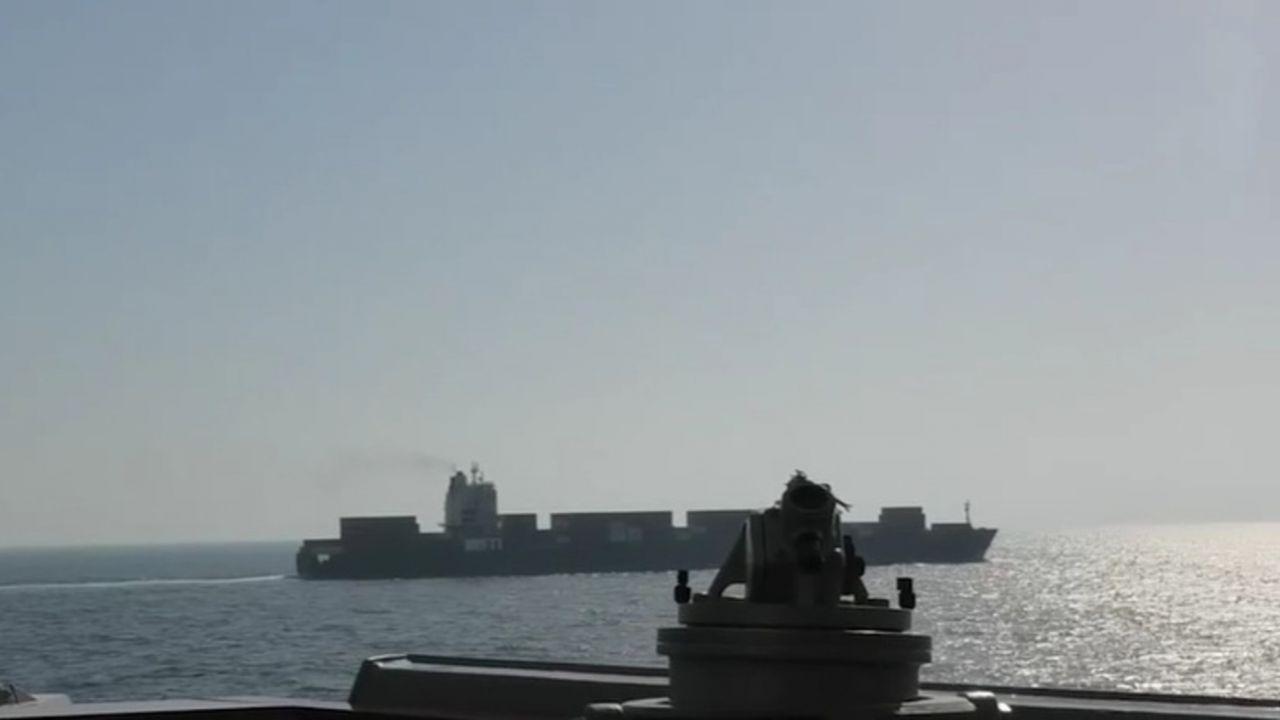
The crisis between Iran and the United States intensified after the U.S. seized an Iranian-flagged cargo ship in the Gulf of Oman, with Donald Trump saying the vessel was named Touska and that it was stopped after its crew “refused to listen.”
In a Truth Social post, Trump wrote that the ship was warned by a US Navy guided missile destroyer to stop and that the U.S. “stopped them right in their tracks by blowing a hole in the engineroom,” adding that the “TOUSKA is under US Treasury Sanctions” and that the U.S. had “full custody of the ship.”

The BBC reported that the U.S. intercept and seizure came as part of a naval blockade, and it said the ceasefire was due to expire on Wednesday.
The Anadolu Ajansı report, citing CENTCOM, said the USS Spruance disabled the vessel before helicopter-borne Marines seized it, and it added that Marines continue to hold the vessel in US custody.
Anadolu Ajansı also stated that CENTCOM said the ship was bound for the Iranian port of Bandar Abbas, and it described CENTCOM releasing video footage showing a US warship warning the vessel before firing.
The Al Jazeera account similarly said Trump stated the ship was warned and that US Marines had custody and were “seeing what’s on board,” while also noting that the U.S. Central Command said Touska was headed to Bandar Abbas and ignored multiple warnings over six hours.
Across the reporting, the seizure was framed as a direct challenge to the ceasefire and the blockade, with the BBC describing Iran’s response as a violation of the ceasefire and a promise to retaliate soon for an “act of armed piracy.”
Ceasefire in Jeopardy
The seizure landed as the U.S.-Iran ceasefire approached its end, and multiple outlets described rising concern that the truce would not hold.
The Council on Foreign Relations newsletter said Iran threatened to retaliate after the U.S. seized an Iranian cargo ship, “raising new uncertainty over whether peace talks would move forward,” and it described a weekend of tension in the Strait of Hormuz that included Iran closing the waterway and firing on ships attempting to pass.
The CFR account also said U.S. President Donald Trump announced on social media that he was sending envoys to Pakistan for further peace talks, and it described Trump renewing threats to attack Iranian civilian infrastructure if negotiations failed.
It further stated that a two-week ceasefire was set to end Tuesday at 8:00 p.m. ET, while also warning that “uncertainty still reigns.”
The Hill reported that concerns grew on Monday that the ceasefire between the United States and Iran might not hold after the U.S. said it had seized an Iranian cargo ship that tried to run its blockade and Iran vowed to retaliate.
Semafor similarly said the ceasefire ends this week and that Trump threatened to “knock out every single Power Plant” if an agreement was not reached by then, tying the escalation to the timing of the truce.
The BBC placed the expiration at Wednesday and said the announcement came after the White House confirmed Vice-President JD Vance would lead another delegation for a second round of talks in Pakistan, while Tehran had not confirmed attendance.
Al Jazeera added that the development came amid a standoff in the Strait of Hormuz, describing hopes of extending the fragile ceasefire as raised by reports that Trump’s negotiators would travel to Islamabad on Monday for possible talks.
In the same BBC report, Iran’s state news agency IRNA said reports of a second round of talks were “not true,” and it said the blockade and Washington’s “excessive” demands and threatening rhetoric had “so far hindered the progress of the negotiations.”
Retaliation Threats and Military Statements
Iran’s response to the seizure was presented in multiple reports as both immediate and tied to the ceasefire, with Iranian military leadership warning that it would retaliate soon.
The BBC said Iran’s top military headquarters spokesperson for Khatam al-Anbiya stated that the U.S. in “violation of the ceasefire opened fire on one of Iran's commercial vessels in the waters of the Sea of Oman, disabled its navigation system, and boarded it” by “deploying” marines, and it quoted the statement that “Armed Forces of the Islamic Republic of Iran will soon respond to and retaliate for this act of armed piracy by the US Navy.”
Al Jazeera likewise quoted a Khatam al-Anbiya spokesperson warning that “We warn that the armed forces of the Islamic Republic of Iran will soon respond and retaliate against this armed piracy by the US military,” framing the response as retaliation for what Iran called armed piracy.
The Hill reported that the operational command for Iran’s military, Khatam al-Anbiya Central Headquarters, issued a statement vowing to take “necessary action against the terrorist U.S. military,” and it also offered an explanation for why Iranian forces didn’t fight back against U.S. Marines, saying “Due to the presence of some family members of the ship’s crew, they faced constraints in order to protect their lives and ensure their safety, as they were in danger at every moment.”
Anadolu Ajansı added that Iranian military spokesman Ebrahim Zolfaghari said U.S. forces opened fire before boarding and that US forces boarded after deploying “a number of terrorist marines,” while also warning, “We warn that Iran’s military forces will soon respond to and retaliate against this armed act of piracy by the US military.”
Firstpost, citing state-run Tasnim news agency, said Iran launched drones against US warships in the Gulf of Oman in retaliation, and it reported that it did not report any damage.
The Council on Foreign Relations newsletter said Iran’s semi-official Tasnim News reported that Iran responded by launching drone attacks on U.S. ships in the Gulf of Oman.
Across the accounts, the U.S. and Iran each described the other side’s actions as violations of the ceasefire, with the BBC describing Iran’s claim and the U.S. framing the seizure as a blockade enforcement after warnings over six hours.
Diplomacy in Islamabad
While the seizure and retaliation threats unfolded, the diplomatic track moved toward Pakistan, with multiple outlets describing both planned talks and uncertainty about whether Iran would attend.
The Council on Foreign Relations newsletter said U.S. President Donald Trump announced on social media that he was sending envoys to Pakistan for further peace talks, and it said Pakistan had moved forward with logistical plans for a meeting this week, creating security checkpoints throughout Islamabad.

It also reported that unnamed U.S. officials told Axios over the weekend that Washington was considering a deal that would unfreeze sanctioned Iranian assets in exchange for Iran handing over its enriched uranium stockpile, while Iranian Foreign Ministry spokesperson Esmail Baghaei denied today that Iran was considering such a deal.
The Hill reported that negotiations surrounding a peace deal were supposed to take place this week in Islamabad, but it said Iranian Foreign Ministry spokesperson Esmail Baghaei told the AP that Iran had “no plans” on attending talks.
The BBC said the White House confirmed Vice-President JD Vance would lead another delegation for a second round of talks in Pakistan, and it said Tehran had not yet confirmed its attendance, while Iranian state media reported that officials would not participate while the U.S. blockade remained in place.
The BBC also said Trump announced his representatives would arrive in Pakistan on Monday, and it reported that a White House official told the BBC that the delegation would include Trump advisers Steve Witkoff and Jared Kushner, both present at the previous talks.
Al Jazeera reported that Trump’s statement came hours after he said U.S. negotiators would travel to Islamabad on Monday for possible talks with Iran aimed at ending the US-Israel war on Iran, raising hopes of extending the fragile ceasefire.
The BBC added that preparations for further discussions had begun in Islamabad and that guests at the hotel where the talks took place between the U.S. and Iranian delegations last weekend were told they needed to leave, according to the BBC’s Pakistan correspondent.
In the same BBC report, Pakistan’s Prime Minister Shehbaz Sharif spoke to Iran’s President Masoud Pezeshkian on Sunday evening, according to a statement released by his office, and it noted that the statement did not mention further talks between Iran and the U.S.
Semafor also said Trump said U.S. representatives had left for Pakistan for further talks, but it emphasized that Tehran had not confirmed whether it would take part despite Masoud Pezeshkian stressing the importance of diplomacy.
Stakes: Strait of Hormuz and Power Targets
The stakes described by the outlets centered on the Strait of Hormuz, the blockade, and the threat of attacks on infrastructure, with the U.S. and Iran each linking their actions to the other’s behavior. The BBC said the Strait of Hormuz remained closed on Sunday, a day after the Islamic Revolution Guard Corps (IRGC) said it was ending a temporary reopening over the U.S. blockade, and it quoted Iran saying it would stay closed until the U.S. ended its naval blockade. The BBC also stated that “About 20% of the world's oil and liquefied natural gas (LNG) is usually transported through the strait,” and it said the number of ships making the journey had “dramatically decreased during the recent conflict,” contributing to “global energy prices to soar.”
“Iran said Saturday it was once again closing the waterway—and fired on ships attempting to pass—due to the continued U.S. blockade of Iran’s coastline.”
The Council on Foreign Relations newsletter described Iran’s weekend actions in the Strait of Hormuz, saying Iran was once again closing the waterway and firing on ships attempting to pass due to the continued U.S. blockade of Iran’s coastline. It also said Trump renewed threats to attack Iranian civilian infrastructure if negotiations failed, and it described Trump warning that if negotiations failed the entirety of Iran would be “blown up.” Semafor echoed the infrastructure threat by quoting Trump’s warning that he would “knock out every single Power Plant” if an agreement was not reached by then.

The BBC included Trump’s additional threat in another Truth Social post, writing, “If they don't take the DEAL, it will be my Honour to do what has to be done,” and it said Trump accused Iran of violating the ceasefire by attacking ships in the Strait of Hormuz on Saturday, including a French ship and a freighter from the UK. Al Jazeera described the standoff as a chokepoint for shipment of about a fifth of the world’s oil and said that after a short-lived rise in transit attempts on Saturday, ships in the Gulf once again stayed put after reports of vessels coming under fire mid-passage. In this context, the BBC reported that the ceasefire had been declared after five weeks of attacks across the Middle East following U.S. and Israeli strikes across Iran on 28 February, underscoring how quickly the situation could shift again as the truce expires.