Iran Warns It Will Respond Decisively If U.S. Violates Ceasefire Before Talks in Pakistan
Key Takeaways
- Iran warns of immediate, decisive response to any U.S. ceasefire violation.
- Pakistan hosts peace talks; Iran signals possible attendance.
- Iran says it has new battlefield cards.
Ceasefire, talks, and threats
Iran and the United States moved toward a second round of face-to-face peace talks in Pakistan as a two-week ceasefire neared its expiration, but both sides traded warnings and mixed signals about whether diplomacy would hold.
El País reported that the U.S. delegation plans to travel to Islamabad on Tuesday, led by Vice President J. D. Vance, while a senior Iranian official said Tehran is considering “joining” the talks and Ali Abdollahi, the commander heading the Khatam al-Anbiya Headquarters, warned that his country “is prepared to respond decisively” to any American violation of the ceasefire, according to Tasnim News Agency.

The same El País report said the ceasefire expires “hours before the two-week ceasefire announced by Trump on April 7 expires (early hours of the 8th in Iran).”
BBC said Iran’s stance is consistent even as “mixed messages” circulate, with International Crisis Group’s Iran project director Ali Vaez arguing that “People are reading too much into some of the mixed messages coming out of Tehran.”
CNN reported that Vice President JD Vance and top U.S. officials are expected to leave for Pakistan “today” ahead of a potential second round of negotiations, and said a second round is planned for “Wednesday in Islamabad.”
The Washington Post described the situation as “shaky footing” as the ceasefire set to expire Wednesday, with Iranian officials threatening not to attend after the U.S. seizure of an Iranian-flagged vessel near the Strait of Hormuz.
In parallel, the New York Times said clearer indications emerged that negotiators would go to Pakistan “on Tuesday for a second round of peace talks,” even as the two countries remained at an impasse over marine traffic through the Strait of Hormuz.
Ship seizure and blockade
The lead-up to the Pakistan talks was dominated by the U.S. seizure of an Iranian cargo ship in the Strait of Hormuz and the continuing U.S. blockade of Iranian ports, which Iranian officials said violated the ceasefire.
NPR reported that “the U.S. on Sunday fired on and seized an Iranian cargo ship in the Strait of Hormuz as part of a U.S. naval blockade on vessels accessing Iran's ports,” and it cited a video from U.S. Central Command showing the seizure of the Touska after “guided-missile destroyer USS Spruance (DDG 111) disabled Touska's propulsion.”

NPR said President Trump told reporters that the U.S. military “stopped them right in their tracks by blowing a hole in the engine room” after the ship failed to heed repeated warnings, and that Marines then took control of the vessel to investigate its cargo.
The Washington Post added that the U.S. military said the Iranian-flagged cargo ship was seized for attempting to bypass the blockade, and it described the Touska as “a container ship seized by U.S. forces in the Arabian Sea on Sunday” in the New York Times’ live coverage.
CNN said Iran’s Foreign Ministry called for the release of the Iranian cargo vessel seized by the U.S. Navy on Sunday, as well as “its sailors, crew and their families,” and said Iran vowed to retaliate for the seizure.
The New York Times reported that the U.S. Navy had “so far turned back 27 ships as part of its blockade of the strait,” and it described the impasse as centered on marine traffic through the Strait of Hormuz.
BBC also tied the dispute to the Strait of Hormuz, quoting Ali Vaez on how Iran announced it had removed the blockade before Trump said he would maintain the U.S. blockade, and how “the Iranian military came out and said they would re-impose their blockade.”
Who is going and what they want
As the ceasefire deadline approached, multiple outlets described the delegations and the core issues expected to dominate talks in Islamabad.
“Pictures of the face-to-face meeting have been shared by Pakistanâs foreign ministry China's ambassador to Pakistan has expressed Beijingâs "full support" for Islamabadâs efforts to facilitate peace talks between the US and Iran”
CNN said Vice President JD Vance and top U.S. officials are expected to leave for Pakistan, and it listed Steve Witkoff, Jared Kushner, and JD Vance as part of the delegation expected to participate “should they happen,” while also saying a second round is planned for “Wednesday in Islamabad.”
The Washington Post said the U.S. delegation would include Vice President JD Vance, Middle East special envoy Steve Witkoff and Trump’s son-in-law Jared Kushner, and it reported that “the U.S. delegation plans to travel to Islamabad soon,” citing a person familiar with his plans speaking on condition of anonymity.
The New York Times reported that Vice President JD Vance is expected to leave Washington for Islamabad on Tuesday, and it said two Iranian officials indicated Mohammad Bagher Ghalibaf would attend “if Mr. Vance also did.”
BBC said Iran’s state broadcaster rejected “rumours” about the departure or arrival of the delegation and quoted a post on its Telegram channel: “so far, no delegation from Iran has travelled to Islamabad, neither a primary nor a secondary, neither initial nor follow-up.”
The Hindu said Tehran had “yet to decide on joining a new round of peace talks with the United States in Pakistan,” quoting Foreign Ministry spokesperson Esmaeil Baqaei saying “bad faith” and “historical mistrust,” while also quoting Trump’s position that the naval blockade would remain in place “until a deal is reached.”
On the substance of negotiations, CNN laid out sticking points including the fate of Iran’s uranium stockpiles, noting that Trump suggested Iran agreed to ship its stockpile and that Iran has about “400 kilograms of 60% enriched uranium,” while also describing proposals involving unfreezing Iranian assets “north of $20 billion.”
Mixed messages and framing
Outlets diverged in how they framed Iran’s posture toward talks, the certainty of delegation travel, and the meaning of public rhetoric.
BBC emphasized that Iran’s stance is consistent and argued that “mixed messages” reflect “Iranians reacting to President Trump's 'inconsistent positions',” quoting International Crisis Group’s Ali Vaez: “People are reading too much into some of the mixed messages coming out of Tehran.”

In contrast, BBC also reported that Iran’s state broadcaster said “so far, no delegation from Iran has travelled to Islamabad,” rejecting “rumours” about the departure or arrival of the delegation and the estimated date of its arrival.
The Washington Post described the same moment as “shaky footing,” saying Iranian officials threatened not to attend after the U.S. seizure of the Touska and that the ceasefire set to expire Wednesday was accompanied by continued escalation in and around the Strait of Hormuz.
CNN described the situation as “fluid due to continued heated public rhetoric by both the US and Iranians,” and it said there were “hurdles that still need to be resolved” even as talks were planned.
El País reported that Tehran was considering “joining” the talks and quoted Ali Abdollahi warning that Iran is “prepared to respond decisively,” while also noting that Masud Pezeshkián accused the U.S. government of issuing “less constructive and contradictory' signals.”
The Guardian added a separate layer by quoting Ali Abdollahi’s warning that Iran would not allow Donald Trump to “create false narratives over the situation on the ground,” and it said Mohammad Bagher Ghalibaf warned they were “prepared to reveal new cards on the battlefield.”
Energy, security, and consequences
The consequences of the Iran-U.S. standoff extended beyond diplomacy, with outlets describing security preparations in Islamabad and energy and aviation fuel shortages tied to the Strait of Hormuz.
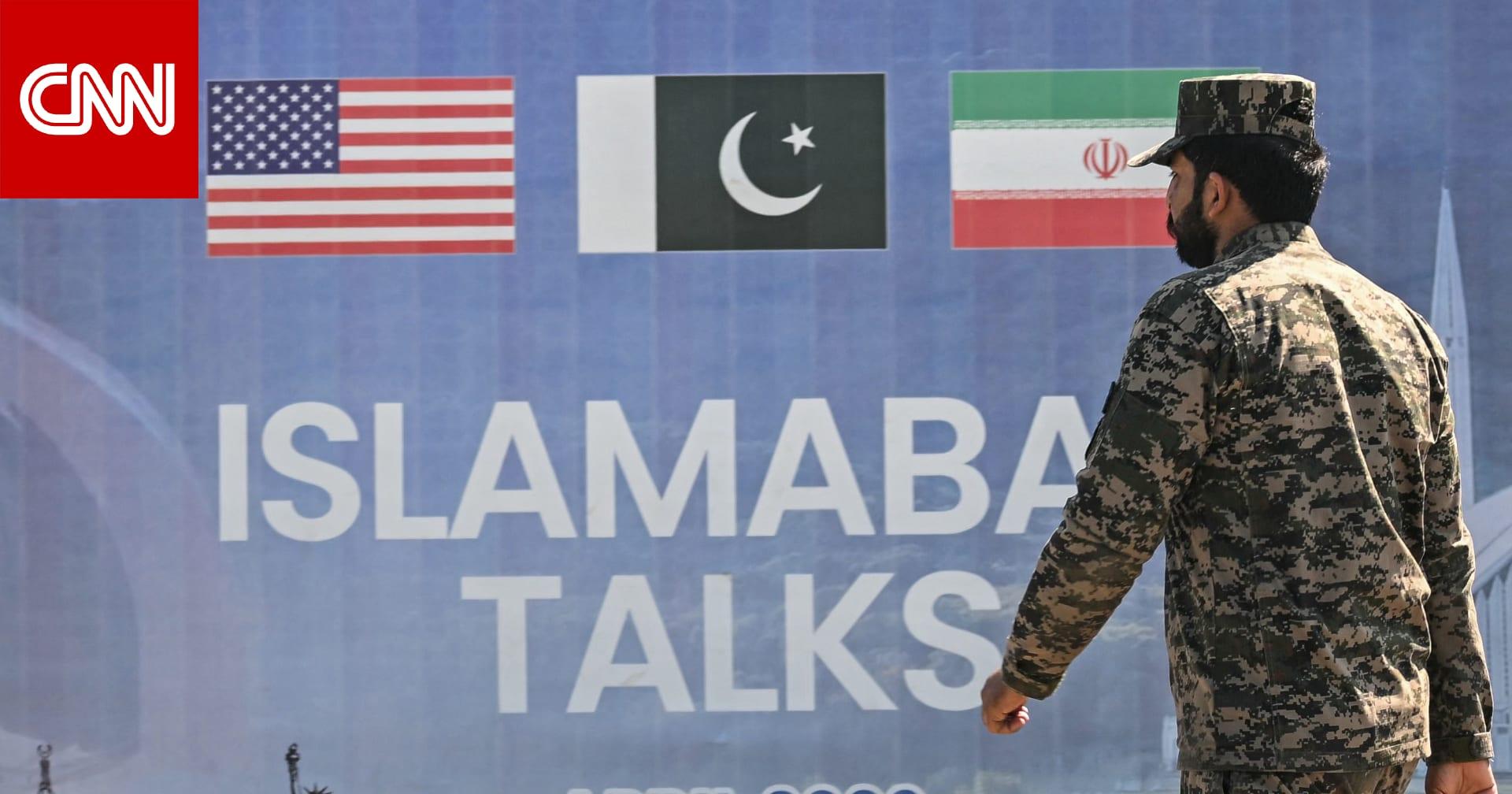
BBC said security was being ramped up in Islamabad and that posters reading “Islamabad Talks” were lining the streets of the capital, while it also warned that if negotiations collapse, Pakistan could get dragged into fighting with its neighbour Iran.
The Washington Post said the U.S. seizure of the Touska was the first time U.S. forces boarded a ship since the blockade took effect April 13, and it reported that “some 20,000 seafarers” were stranded on idle ships for more than seven weeks after the strait’s closure.
El País reported that Brussels warns of a difficult summer due to aviation fuel shortages caused by the war with Iran, and it said the coming summer will be “difficult” in Europe due to fuel shortages caused by the closure of the Strait of Hormuz, even in the best-case scenario, quoting European Energy Commissioner Dan Jorgensen.
El País also said airlines warned of fuel shortages in recent weeks due to the blocking of the Strait of Hormuz, through which “20% of world oil and 75% of the aviation fuel used in Europe passes.”
NPR reported that the expiration of the temporary ceasefire looms this week and that Trump warned that if Iran does not accept his terms, the U.S. would “knock out every single Power Plant, and every single Bridge, in Iran.”
The Guardian described the military posture as Ali Abdollahi warning that Iran’s armed forces are ready to deliver an “immediate and decisive response” to any renewed hostile action, and it said Trump threatened to resume bombing if an agreement is not reached by Wednesday’s deadline.
More on Iran
Iran Refuses Talks in Islamabad, Warns US and Israel of Response After Strait of Hormuz Seizure
31 sources compared
Trump Says He Faces No Pressure as U.S. Seizes Iranian Vessel Before Ceasefire Expiry Wednesday
26 sources compared

Trump Says He Faces No Pressure as U.S. Seizes Iranian Vessel Near Strait of Hormuz
25 sources compared

Trump’s Iran War Accelerates U.S. Alliance Breakup With The World
11 sources compared