Iran21 April, 20267 min read
Trump’s Iran War Accelerates U.S. Alliance Breakup With The World
This article is an automated aggregation of coverage from news outlets. Our editorials offer in-depth analysis curated by the NewsCord team.
Europe shows limited enthusiasm and warns of political and economic turmoil from US-Iran strike. Iran war erodes U.S. influence worldwide and strains key alliances.

War’s ripple effects
The war underway with Iran is damaging America’s influence worldwide and accelerating a “break-up with the world,” Politico reported, describing how President Donald Trump’s second term and his “erratic moves” are leaving allies and partners scrambling.
Politico said the erosion of U.S. power could be “tough to reverse” as rival powers such as China take advantage, and it tied the shift to Trump’s “haphazard ways, including tariffs.”

The same Politico piece quoted a Washington-based Asian diplomat who said: “Many have grown tired of the chaos that characterizes this war, and they fear the potential economic impact, but I have not seen any major protests in response.”
In parallel, Al-Jazeera Net framed the conflict as a driver of alliance breakdown, saying the war “appears to accelerate what some see as an American rupture with the rest of the world since Trump’s return.”
Al-Jazeera Net also linked the U.S.-Iran war to energy shocks, saying the closure of the Strait of Hormuz and Iranian attacks on energy facilities hit the global energy sector.
It added that Asian countries most exposed to energy-price volatility “pledged to accelerate renewable-energy facilities and restart nuclear plants,” while Europe planned to expand energy-efficiency and renewable-energy programs and deploy more electric vehicles.
In the same Al-Jazeera Net account, U.S. Energy Secretary Chris Wright told CNN that the United States will maintain influence, explaining: “We are a net exporter of oil to the world, and we are—by a wide margin— the largest net exporter of natural gas in the world.”
Strait of Hormuz shock
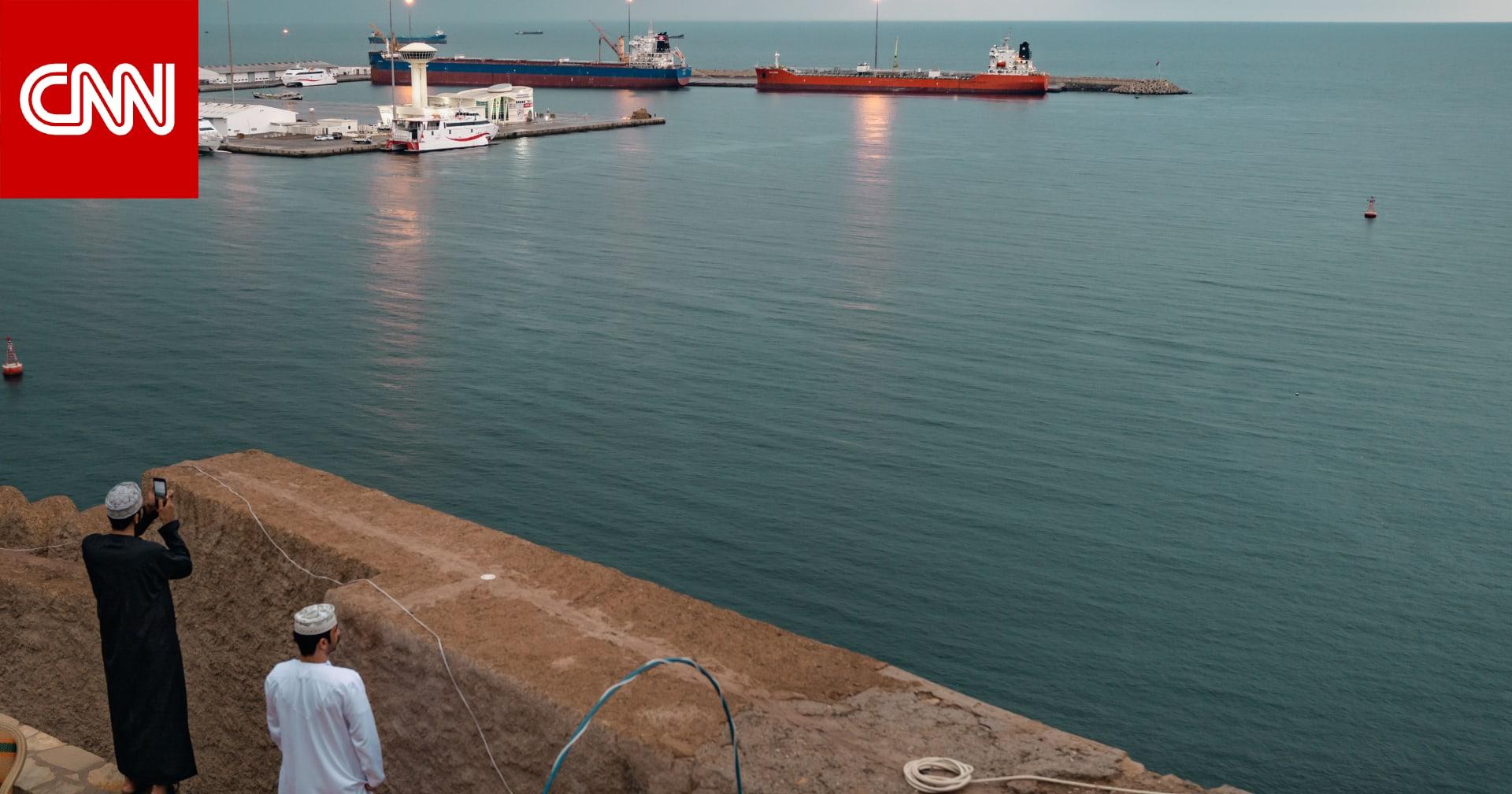
Multiple reports tie the U.S.-Iran war to the Strait of Hormuz as a strategic pressure point that affects energy, shipping, and national planning. War on the Rocks argued that “a serious disruption in the Strait of Hormuz now hits South Korea directly through energy imports, shipping, industrial production, and economic confidence,” and it quantified South Korea’s exposure by saying South Korea depends on the Strait of Hormuz for about “61 percent of its crude oil imports and 54 percent of its naphtha imports.” The same War on the Rocks analysis said that in 2025 “around 20 million barrels per day moved through the Strait of Hormuz — roughly a quarter of global seaborne oil trade,” with “most of that flow was bound for Asia.”
It added that “alternative export routes out of the Persian Gulf remained limited,” and that “even partial disruption is enough to become a strategic shock for an import-dependent country like South Korea.” CNN Arabic described the closure as effectively shutting the corridor after the initial air strikes, saying Iran “effectively closed the Strait of Hormuz, through which a fifth of the world’s oil passes.”

CNN Arabic also reported that allies were not briefed in advance about the war and were not asked to participate from the outset, and it said President Donald Trump criticized other countries for not providing military support. It then described a two-week ceasefire announced by Trump on a condition of reopening the Strait, while Iran said its military would continue coordinating passage and warned “the war is not over yet.”
Voices on alliances and risk
The sources present multiple, sharply different voices about whether the U.S. can be relied on and what allies should do next.
“South Korea should reduce its dependence on the U.S. and seek a ‘Plan B.’”
Politico quoted a Washington-based Asian diplomat who said: “If a more reasonable person becomes the next president, the image of the U.S. might improve, but for policymakers this raises some tough long-term questions about the alliance, how far we can go to stay aligned with the U.S. and what we should do if we can’t rely on the U.S. anymore.”
Politico also quoted Canadian Prime Minister Mark Carney describing U.S. ties as “weaknesses” to correct, saying: “We have to take care of ourselves because we can’t rely on one foreign partner,” and “We can’t bet our future on the hope that it will suddenly stop.”
In the Korean-language report from 조선일보, former U.S. Vice President’s National Security Advisor Philip Gordon told the newspaper that “The world has changed to the point where the U.S. can no longer promise to always remain by South Korea’s side and ensure the alliance remains solid,” and he urged: “South Korea should reduce its dependence on the U.S. and seek a ‘Plan B.’”
Gordon also argued that “The situation in Iran is a reckless and unnecessary war stemming from a miscalculation by U.S. President Donald Trump,” and he said “Diplomatic negotiations would have been a better alternative.”
On the U.S. side, Politico reported that White House spokesperson Anna Kelly said Trump’s America First approach has translated to “better trade deals” and “increased defense spending by allies,” and she asserted: “World leaders have talked about the threat posed by Iran for 47 years, but no one had the courage to address it.”
ABC News similarly quoted Anna Kelly saying: “While the United States doesn't need Europe, Europe benefits from President Trump's decisive action more than anyone,” and she repeated: “Eliminating Iran's nuclear threat is something that world leaders have talked about for 47 years, but no one else had the courage to address.”
Ceasefire, escalation, and bargaining
The ceasefire and the negotiations around it are described as fragile and contested, with both sides’ positions shaping the risk of renewed escalation. Socialist Alternative wrote that “With 24 hours left of the ‘ceasefire’ with Iran, Trump is zigzagging between announcing that he is ‘very close to a fair deal’ and again threatening to ‘knock out every power plant and bridge’ in Iran.” It also claimed that “US blockade was enforced by acts of war, in attacking and seizing an Iranian-flagged container ship,Touska,” and it said Tehran responded by “closing the Strait once again.”
In the same Socialist Alternative account, it stated that “Already before the attack, the Iranian regime had announced it would not participate in talks in Islamabad, Pakistan,” while “Pakistani sources, however, have announced that Tehran will attend.” Independent reporting in اندبندنت عربية described a ceasefire “described as fragile” and said there is “no political or diplomatic agreement yet to end a war that has lasted more than five weeks.”
That report said negotiations resumed between Washington and Tehran in Islamabad after the first round failed following the ceasefire, and it emphasized that one major negotiating issue is whether the Strait of Hormuz will revert to the “pre-28 February status.” It warned that talk of Tehran extracting concessions from the United States would be “a highly negative development for the region and the global economy,” and it said the American side discussed “releasing Iranian assets and unfreezing them,” with amounts “around six billion dollars” held by Qatar and “about 20–21 billion dollars” tied to electricity payments from Iraq.
Europe’s reluctance and Gulf recalibration
European and Gulf responses to the Iran war are portrayed as uneven, with some European leaders refusing to join the U.S.-Israeli campaign and Gulf officials recalibrating risk. ABC News reported that “no European nations have joined the U.S.-Israeli war, despite near-constant pressure from Trump to do so,” and it said “Seven weeks on” the lack of participation persisted even as some European states allowed U.S. forces to use “key military bases” and joined defensive operations. ABC News quoted Liana Fix, a senior fellow for Europe at the Council on Foreign Relations, saying: “I do think that there was a significant amount of overestimation in that.”
It also quoted Gregoire Roos of the Chatham House think tank saying: “The moment you say your ambition is to foster sovereignty, you cannot expect those whose sovereignty you're fostering or supporting to treat you with a special privilege.” In parallel, the Atlantic Council described Gulf officials’ private stance, saying “Gulf officials tell me that they have absorbed Iranian retaliation for hosting a US-Gulf security architecture they were never permitted to name,” and it argued that “The current terms are no longer acceptable.”
The Atlantic Council said the arrangement’s weakness is “asymmetric dependence,” describing it as “not an alliance,” and it argued that the war “answered one question” about whether the system was designed to survive “a real war.” Finally, BBC reported that a Telegraph article warned that “Gulf allies will not forgive the United States for waging war on Iran without consulting them,” and it added that Saudi Arabia conducted “its first official contact with Iran since the conflict began on Thursday.”