
Trump Threatens Iran With Bombs as U.S.-Iran Ceasefire Expires Wednesday
Key Takeaways
- Trump threatened to bomb Iran if no deal before ceasefire expiry.
- Ceasefire deadline looms as U.S.-Iran talks likely to resume in Pakistan.
- Vance slated to lead, but reports say may not travel.
Ceasefire deadline looms
As a two-week U.S.-Iran ceasefire set to expire Wednesday drew near, the prospect of a second round of talks in Pakistan became increasingly uncertain, with U.S. President Donald Trump publicly casting doubt on whether an agreement would be reached.
“Islamabad, Pakistan – Iran has signalled that it has no plans to send negotiators to Islamabad for a new round of talks with the United States, threatening Pakistan’s plans for multiday negotiations between the warring nations less than 48 hours before a fragile ceasefire is set to expire”
The Associated Press reported that Trump told Bloomberg News on Monday he was “highly unlikely” to renew the ceasefire, which it said is set to expire Wednesday.

AP also said Mohammed Bagher Qalibaf, Iran’s chief negotiator and parliament speaker, wrote on X early Tuesday that “We do not accept negotiations under the shadow of threats,” and that Iran is preparing “to reveal new cards on the battlefield.”
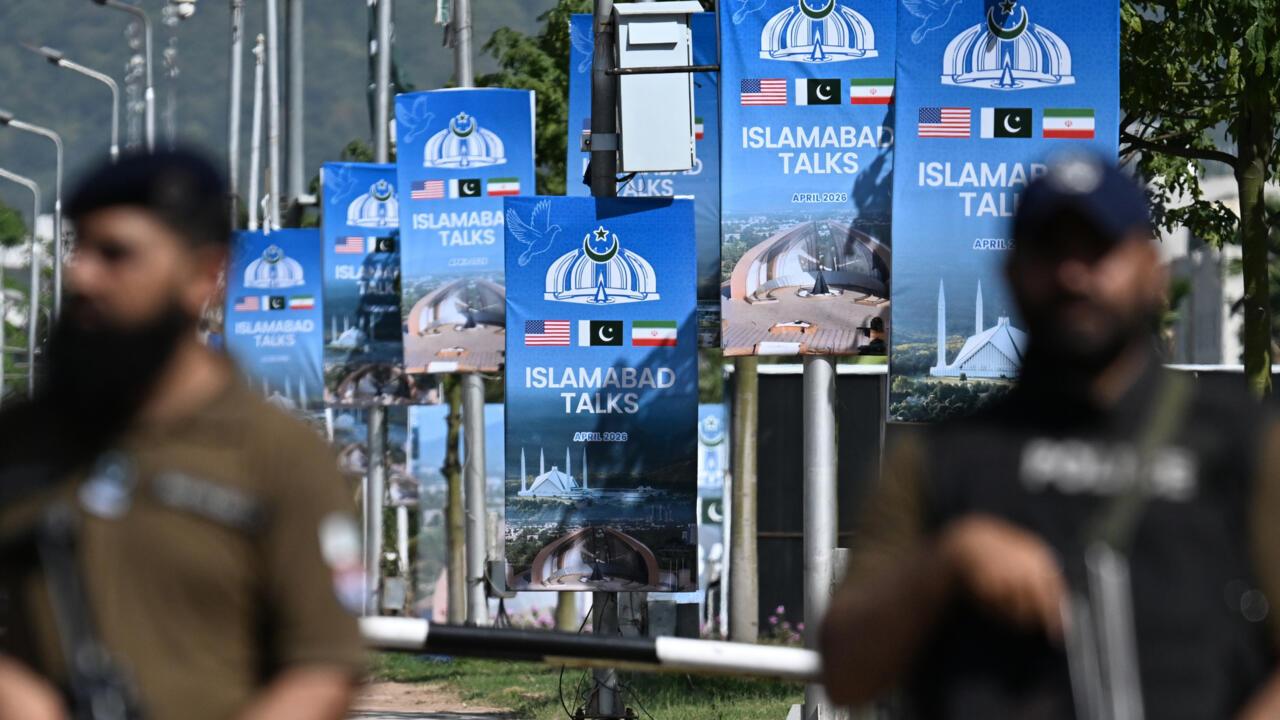
The AP live updates described Pakistan tightening security in Islamabad ahead of possible talks, with thousands of personnel deployed and patrols increased along routes leading to the airport.
The New York Times similarly said Vice President JD Vance was expected to leave for Pakistan on Tuesday ahead of the scheduled end of the cease-fire, and that Iran had not confirmed whether its negotiators would attend.
In parallel, CNBC reported Trump threatened Iran again on Monday, saying “lots of bombs [will] start going off” if no deal is reached before the ceasefire expires Tuesday evening.
Across the reporting, the talks were framed as a narrow window in which both sides were preparing to test whether diplomacy could outlast the military pressure surrounding the Strait of Hormuz.
Threats, blockade, and oil
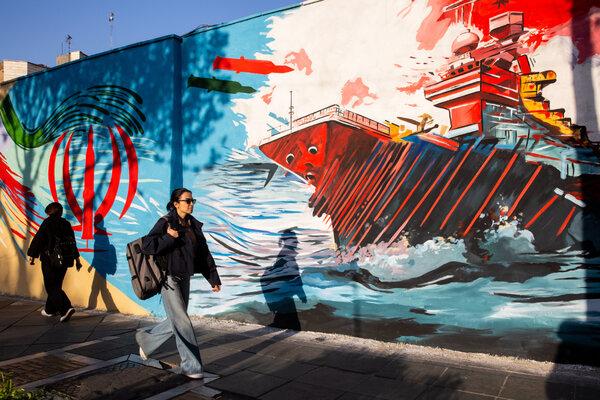
The diplomatic push unfolded alongside escalating pressure in the Strait of Hormuz and renewed U.S. threats aimed at Iranian infrastructure, with multiple outlets tying the negotiating urgency to the blockade and shipping disruptions.
CNBC said Trump demanded Iran fully reopen the Strait of Hormuz to ship traffic, adding that shipping has slowed to a trickle since the war began on Feb. 28.
It reported that the de facto closure of the key shipping route sent global oil prices spiraling and that the U.S. imposed a retaliatory naval blockade of Iran's ports in the middle of the ceasefire.
CNBC also quoted Trump’s Truth Social claim that the blockade is “absolutely destroying Iran” and said it will not be lifted until a deal is struck.
The New York Times described a tense calm in the Strait of Hormuz on Monday, a day after the U.S. Navy seized and boarded an Iranian cargo ship in the nearby Arabian Sea, and said the U.S. Navy had turned back 27 ships as part of its blockade of Iranian ports.
AP reported that speculation about talks with the United States grew as Iran weighed how to respond to the U.S. Navy’s seizure of an Iranian container ship over the weekend.
In this environment, Trump’s threats were repeatedly linked to the negotiating deadline, with CNBC describing his warning that “the whole country is going to get blown up” if Tehran does not sign a deal and his insistence that Iran’s bridges and power plants would be targeted.
Iran’s position and internal divisions
Iran’s stance toward the talks was presented as both publicly defiant and internally contested, with multiple reports describing how Tehran framed U.S. pressure as coercion while also preparing for possible participation.
AP said Iran state TV issued an on-screen alert saying that “no delegation from Iran has visited Islamabad ... so far” as speculation about possible talks with the United States grew.
The New York Times reported that in public, Iran refused to confirm whether its officials would participate, and it quoted Iran’s foreign ministry spokesman Esmail Baghaei calling a U.S. delegation plan “their own business.”
It also said Mohammad Bagher Ghalibaf told reporters on Monday that Iran would not attend under threats from the United States, and it repeated his line that “We do not accept negotiations under the shadow of threats.”
At the same time, the New York Times said that in private, two senior Iranian officials told it that an Iranian delegation was making plans to travel to Islamabad on Tuesday and to resume talks with the United States.
InvestingLive, citing Axios, described internal divisions and said Iranian negotiators had initially delayed engagement amid pressure from the Islamic Revolutionary Guard Corps, before receiving approval from the Supreme Leader to attend.
Al Jazeera reported that Iran had signalled it had “no plans to send negotiators to Islamabad for a new round of talks,” and it quoted Esmaeil Baghaei saying Washington had “violated the ceasefire from the beginning of its implementation.”
Who goes to Islamabad
The reporting also diverged on the details of who would travel and when, even as multiple outlets agreed that Islamabad would host the second round of U.S.-Iran talks.
The New York Times said Vice President JD Vance was expected to lead an American delegation back to Islamabad, and it said the talks were scheduled just over a week after a round of talks in Islamabad with Iran’s lead negotiator, Mohammad Bagher Ghalibaf, ended without a deal.

AP said U.S. Vice President JD Vance was expected to lead an American team to the talks, and it noted that Iran had offered no word on who could lead its delegation.
CNBC reported that a U.S. delegation “plans to travel to Islamabad soon,” and it said a source told it the delegation had yet to depart, after Trump told a New York Post reporter that U.S. officials are “heading over now.”
CNN Arabic said Trump told viewers that representatives from the United States would travel to Pakistan to negotiate with Iran, and it reported that Iranian sources expected an Iranian delegation to arrive in Pakistan on Tuesday and to hold talks with the United States.
Kurdistan24 and Mathrubhumi English both described the U.S. side as including Vance alongside special envoy Steve Witkoff and Trump’s son-in-law Jared Kushner, and they both said the same trio represented Washington during the previous round on April 11–12.
In contrast, Al Jazeera reported that Iran had signalled it had no plans to send negotiators to Islamabad, even as Pakistan prepared for multiday negotiations and asked guests to vacate hotels including the Serena Hotel and the Marriott Hotel.
Nuclear file and next steps
As negotiators approached the deadline, the nuclear file and the terms of any extension or framework agreement were described as the most contentious issues, with multiple outlets pointing to specific figures and proposed approaches.
Al Jazeera said diplomats expected the talks to focus on Iran’s nuclear and ballistic ambitions and the freedom of navigation through the Strait of Hormuz, and it described the first round in Islamabad at the end of last weekend as ending without tangible progress.

It also reported that diplomats said reaching a framework agreement may be possible based on a nuclear package and an economic package, while warning that the nuclear file remained the most contentious.
Al Jazeera further specified that the discussions focus on Iran's stockpile of about 440 kilograms of 60-percent enriched uranium, describing it as material that could be used to make several nuclear weapons if further enriched.
The New Indian Express reported that during the first round on April 11, American negotiators proposed a 20-year pause on Iran's enrichment of uranium, and it said Iran responded with a proposal for a five-year suspension that the U.S. rejected.
AP said China called for further negotiations and described the situation as “at a critical stage of transition between war and peace,” urging all parties to maintain momentum for ceasefire and negotiations.
The New York Times added that oil prices pulled back and stocks inched higher on Tuesday as investors looked to the possibility of a second round of peace talks, with Brent crude about $95 a barrel and West Texas Intermediate around $87 a barrel.
More on Iran
JD Vance Leads U.S. Delegation to Islamabad as U.S.-Iran Ceasefire Expires
13 sources compared
Trump Says He Faces No Pressure as U.S. Seizes Iranian Vessel Before Ceasefire Expiry Wednesday
26 sources compared
Iran Warns It Will Respond Decisively If U.S. Violates Ceasefire Before Talks in Pakistan
18 sources compared

Trump Says He Faces No Pressure as U.S. Seizes Iranian Vessel Near Strait of Hormuz
25 sources compared