Iran27 April, 20266 min read
Iranian F-5 Jet Strikes Camp Buehring in Kuwait, Breaching U.S. Air Defenses
This article is an automated aggregation of coverage from news outlets. Our editorials offer in-depth analysis curated by the NewsCord team.
Iranian F-5 bombed Camp Buehring in Kuwait during Epic Fury. Jet penetrated layered air defenses despite multi-layered Patriot protections.

F-5 Strike on Camp Buehring
An Iranian fighter jet reportedly struck Camp Buehring in Kuwait during the opening phase of the war, in an operation described as a rare fixed-wing breach of layered U.S. air defenses.
PressTV says an Iranian fighter jet “Successfully evad[ed] layered American and allied air defense systems to strike a highly fortified US military base in Kuwait,” adding that the aircraft took off in “early March” from “a base in southwestern Iran, likely from southern Khuzestan province.”
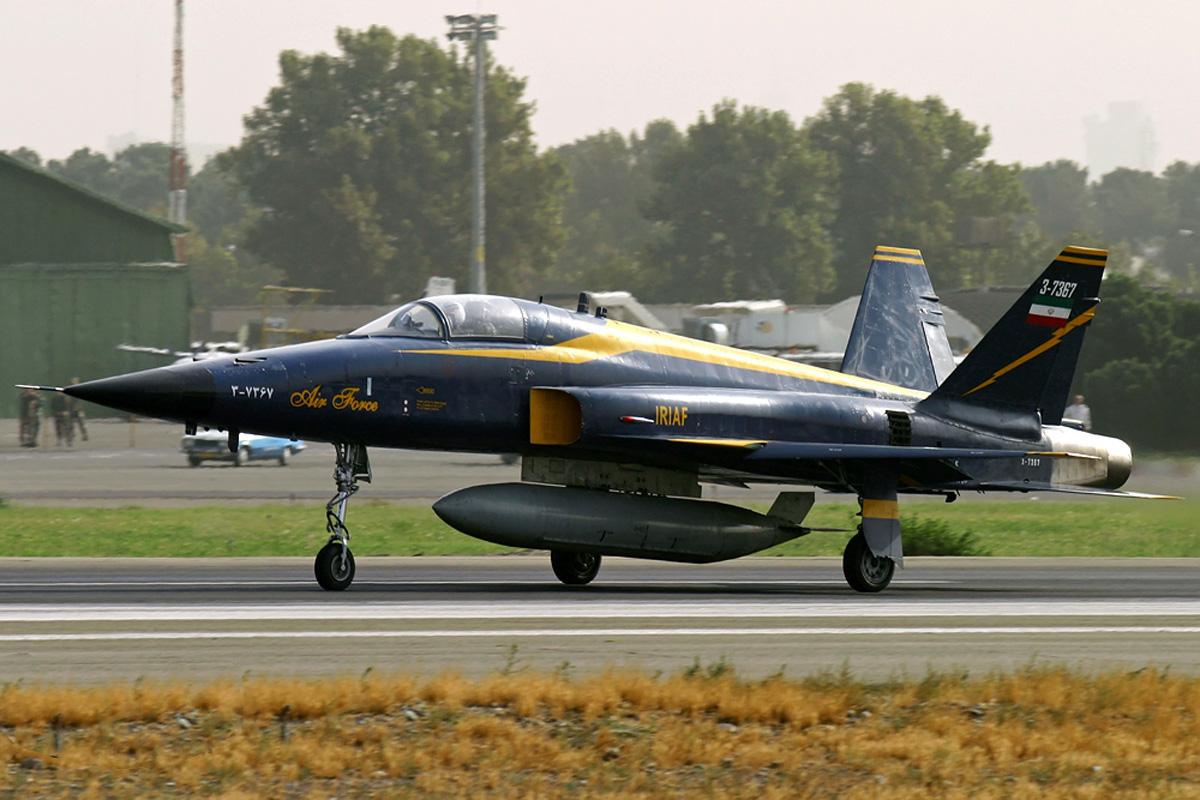
PressTV further states the jet flew “at extremely low altitude across the Persian Gulf toward Kuwait,” released “a payload of conventional bombs,” and that “The bombs struck the base. And then, the aircraft returned home.”
The Aviationist, citing NBC News, similarly frames the Camp Buehring strike as “an alleged strike by an Iranian F-5 fighter jet,” saying it would be “the first time an enemy fixed-wing aircraft has struck an American military base in years.”
The Week describes the same reported attack as an Iranian F-5 jet bombing “Camp Buehring—a US defence base in Kuwait—an operational report said,” while also emphasizing that the base was “heavily protected by a multi-layered US air defence deployment, including Patriot systems.”
Multiple outlets also connect the reported strike to the broader opening of hostilities, with The Hill stating the war began “Feb. 28” with “a series of U.S.-Israeli strikes,” and with Army Recognition describing the Camp Buehring strike as occurring “during the opening phase of hostilities.”
How the Penetration Worked
Several reports describe the mechanics of how an Iranian F-5 could get through, centering on low-altitude routing and compressed reaction time during saturation. PressTV says the pilot used “a low-altitude approach profile that exploited the fundamental limitations of radar coverage,” arguing that flying “at an altitude of only a few dozen meters above the terrain or water surface” kept the aircraft “below the radar horizon of Patriot missile batteries and other ground-based interception systems.” PressTV adds that “the curvature of the earth and ground clutter masked its approach,” and it claims the mission was feasible without external fuel tanks because “The distance from southwestern Iran to Kuwait is relatively short.”
Army Recognition and The Aviationist both tie the reported penetration to a narrow timeline, with Army Recognition stating the F-5 “likely exploited a brief moment of overwhelming in U.S. air defenses” and that the aircraft flew at a low altitude creating “a roughly 120-second window between radar contact and impact.” The Aviationist similarly says the strike likely occurred “under highly specific conditions, possibly exploiting the saturation of air defenses by missile and drone attacks in the initial days of the war.” The Week adds that the F-5 “flew at a low altitude and succeeded in evading detection and response from Patriot systems and close-range air defence networks,” while also quoting Defence Security Asia that “Patriot batteries are typically optimised for high-performance missile threats, while short-range interceptor systems are supposed to cover weaknesses against low-altitude aircraft threats.”

Damage, Costs, and Targets
Beyond the Camp Buehring strike, multiple outlets describe a wider pattern of damage to U.S. military assets and bases across the Gulf, with repair costs running into billions. The Hill reports that “Iran has reportedly caused billions of dollars in damage to U.S. military assets and bases in the Gulf region,” citing “Six people familiar with the damage” who told NBC News that “runways, high-end radar systems, dozens of aircraft, warehouses, command headquarters, aircraft hangars and satellite communications infrastructure were struck.” The Hill says the destruction “could cost up to $5 billion to repair,” and it specifies that the figure “does not include fixes to radar systems, weapons systems, aircraft and other equipment that were either impaired or rendered unsalvageable.”
Middle East Monitor, citing NBC News, similarly says “repair costs could reach 5 billion dollars,” and it lists affected sites including “Camp Buehring base in Kuwait,” “Al Dhafra and Al Ruwais bases in the United Arab Emirates,” “Prince Sultan Air Base in Saudi Arabia,” and “Muwaffaq Salti Air Base in Jordan.” Middle East Monitor also reports that “The main US Navy building in Bahrain also sustained extensive damage,” with repairs to the “Fifth Fleet headquarters alone estimated at around 200 million dollars.” The Aviationist adds that the NBC News report describes “a widespread Iranian campaign targeting U.S. military infrastructure across multiple countries,” and it says the cost of repairs “may reach well over $5 billion.”
Competing Claims and Uncertainty
The reporting also diverges on how certain the F-5 identification is and how the event is framed, with some outlets treating it as a confirmed operational feat and others stressing that the aircraft type might be wrong. PressTV presents the Camp Buehring strike as a “stunning success,” saying it was “Later confirmed by US officials speaking to US media,” and it asserts that “the first time a fixed-wing aircraft had bombed a major American military base since the Korean War.” By contrast, The Aviationist, while citing NBC News, repeatedly flags uncertainty, stating “At this time, we cannot independently verify these reports,” and it adds “It must be noted that the aircraft type might also be wrong.”
The Aviationist gives a specific example of that uncertainty by saying “The F-5E’s range without external fuel tanks is reported to be approximately 480 nautical miles,” and it argues that Camp Buehring “would put it almost out of reach of F-5s operating from known Iranian bases in the area.” Aerospace Global News likewise says “Still, the F-5 strike is not confirmed,” and it quotes The Aviationist urging caution that “It must be noted that the aircraft type might also be wrong.” Even within damage reporting, The Hill notes that “We do not discuss battle damage assessments for operation security reasons,” quoting a Pentagon official, while also describing that “Briefings for lawmakers regarding the cost of the military operations have been sparse.”

What Happens Next
The sources also describe what the damage assessments mean for future costs, transparency, and operational posture, while emphasizing that some details remain undisclosed.
The Hill reports that “As part of Epic Fury, the potential future costs to rebuild American military infrastructure overseas may include repair, reconstruction, outright replacement, or even abandonment/decommissioning of locales,” quoting Mackenzie Eaglen of the American Enterprise Institute, and it adds that “War damage also includes estimated costs for infrastructure that is unsalvageable.”

The Hill also says a Pentagon official told The Hill, “We do not discuss battle damage assessments for operation security reasons. Our forces remain fully operational, and we continue to execute our mission with the same readiness and combat effectiveness.”
Middle East Monitor similarly frames the damage as “billions of dollars in damage,” and it lists repairs to the “Fifth Fleet headquarters alone estimated at around 200 million dollars,” while also noting that repair costs could reach “5 billion dollars.”
The Aviationist adds that the NBC News report cites “three U.S. officials, congressional aides and an assessment by the American Enterprise Institute (AEI),” and it says “The cost of the repairs to infrastructure may reach well over $5 billion.”
In addition to infrastructure, The Hill reports that “Estimates suggest it could take the United States 4–5 years to replenish these stockpiles.”