
US Blockades Strait of Hormuz After Iran Rejects Ceasefire Extension in Talks
Key Takeaways
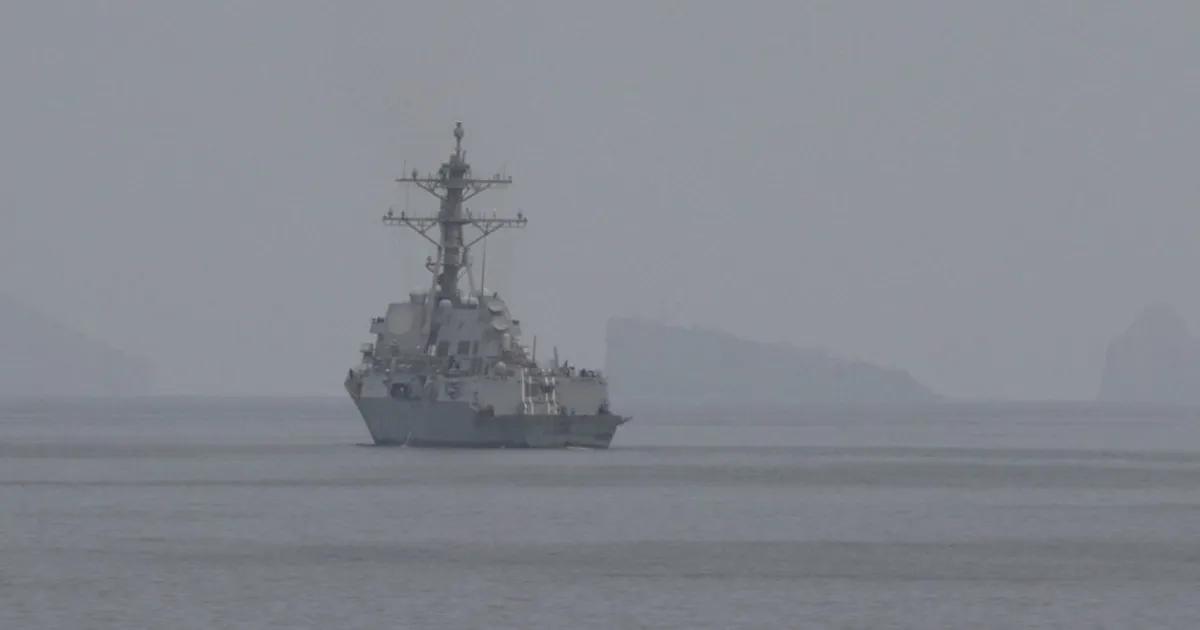
- Two U.S. destroyers crossed the Strait of Hormuz for mine-clearing operations.
- IRGC Navy warned any misstep will plunge the enemy into deadly whirlpools.
- Trump announced a naval blockade plan for Hormuz after Iran talks faltered.
Talks Collapse
After nearly 20 hours of negotiations, the US and Iran failed to reach an agreement to extend the ceasefire.
Vice President Vance declared the US had made their final and best offer but Iran refused to accept.

Iran's parliamentary speaker Ghalibaf wrote that the opposing side failed to gain the trust of the Iranian delegation.
The core sticking points were Iran's nuclear program and control of the Strait of Hormuz.
Trump announced the US Navy would blockade the Strait of Hormuz, framing it as a response to Iranian world extortion.
The death toll from the conflict had climbed above 2,100, including more than 700 children.
Blockade and Escalation
Trump announced the US would begin blockading the Strait of Hormuz after the talks faltered.
The blockade would stop vessels suspected of paying illegal tolls to Iran.
Trump warned that any Iranian who fires at us will be blown to hell.
The Strait of Hormuz handles around a 20% share of global energy flows.
A US Navy destroyer was intercepted and driven away by Revolutionary Guard vessels.
Oil and gas prices had already soared since the bombings began.
Divergent Death Tolls
Iran's emergency services reported more than 2,100 people killed, including 707 children.
The Guardian counted 1,648 confirmed dead across Iran, Israel, and the Palestinian territories.
The death toll from the Rahman Textile factory fire rose to 33.
Divergent casualty figures emerged from the Narayanganj fire.
The Bangladesh Garment Workers' Federation called the fire corporate murder.
Economic and Regional Impact
The blockade threatened to send energy markets into turmoil.
The strait handles about 20% of the world's oil and natural gas.
Brent Crude surged to almost $120 per barrel in late March.
The war had already cost the global economy an estimated $1.8 trillion.
The developments carried significant implications for countries like India.
Petroleum Minister Puri stressed supply diversification.
More on Iran

US-Iran Peace Talks Fail as Iran Rejects Nuclear Restrictions in Islamabad
30 sources compared

US-Iran Talks in Islamabad End Without Agreement After 21 Hours
55 sources compared

US-Iran Talks Fail Over Strait of Hormuz, Uranium, and Frozen Funds
22 sources compared

US-Iran Talks Fail in Islamabad as Iran Refuses to Renounce Nuclear Weapons
15 sources compared