
Iran’s IRGCN Mosquito Fleet Surrounds And Attacks Merchant Vessels In Strait Of Hormuz
Key Takeaways
- Iran deploys swarms of small boats to disrupt shipping in the Strait of Hormuz.
- The Strait is a vital global energy route, and Iran leverages it to influence flows.
- Observers describe the Strait of Hormuz as weaponized leverage with geopolitical implications.
Mosquito fleet in Hormuz
Iran is using what it calls a “mosquito fleet” of small attack boats to disrupt shipping in the Strait of Hormuz, according to the Australian Broadcasting Corporation.
“In short: Despite losing much of its conventional navy, Iran is using its so-called mosquito fleet of small attack boats to disrupt shipping in the Strait of Hormuz”
The ABC says Iran’s so-called mosquito fleet is “operating in the seas” with dispersion, speed and volume, and that “With potentially thousands in hiding, Iran is using swarms of boats to surround and attack merchant vessels.”
The ABC reports the Islamic Revolutionary Guard Corps Navy (IRGCN) operates the mosquito fleet and that it was “established in the 80s as a second asymmetric navy.”
The ABC describes the boats as small civilian speedboats “mounted with rocket-propelled grenades or machine guns,” and says today they are “often carrying missiles and used with mini submarines and drone warfare.”
The ABC also quotes former Pentagon official and Atlantic Council fellow Alex Plitsas, who says, “They call them 'mosquito fleets' because they're small and annoying — and they hit.”
In the same ABC account, Jennifer Parker, a former naval officer and maritime security expert at The Australian National University National Security College, tells the broadcaster, “They're definitely a threat,” and adds that the boats “traditionally come out and harass vessels and merchant ships.”
The ABC frames the confrontation as an operational pattern, saying Parker described an encounter in 2008 where the boats “would threaten you, they'd come at you at speed, they'd point their weapons at you … they'd steer really close to the vessel.”
US response and escalation
The ABC says the United States is responding by “beefing up air power over the strait,” and it reports that the US claims it has “recently sunk at least six small Iranian boats with Seahawk helicopters.”
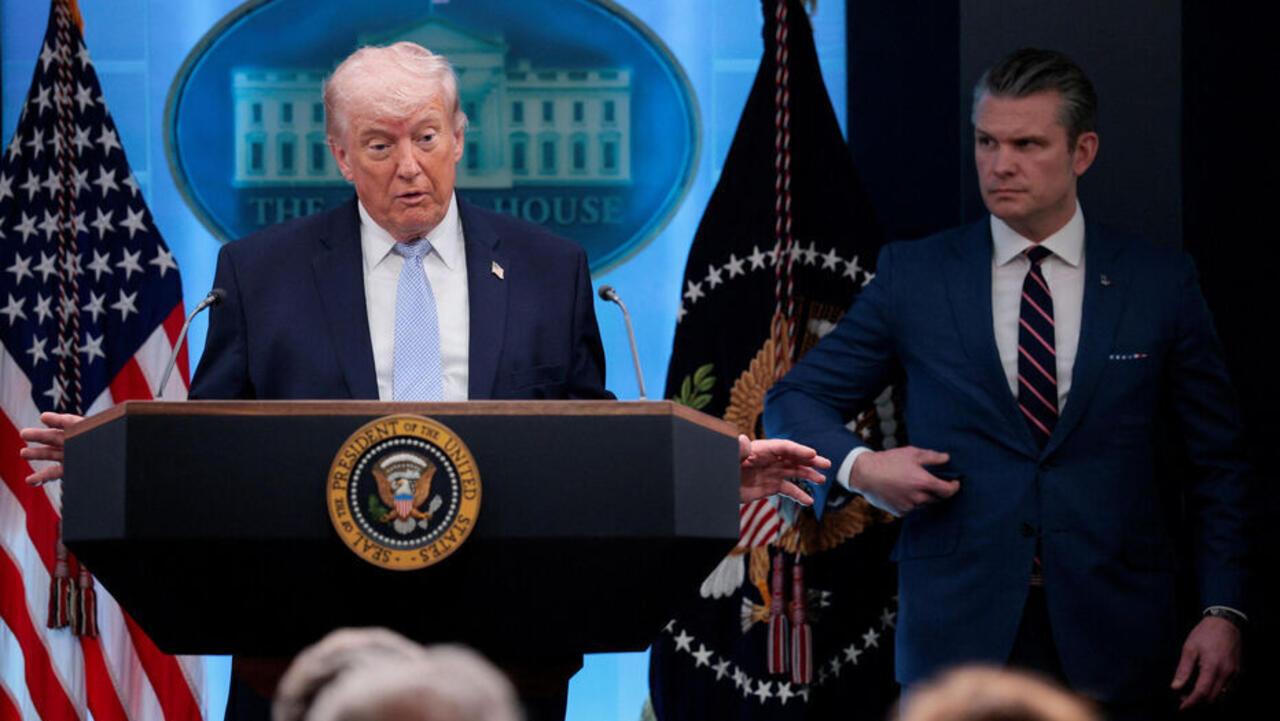
The same account ties the US posture to President Donald Trump’s public statements about the scale of Iran’s naval losses, saying Trump claims the United States has “completely obliterated” the majority of the Iranian navy.
The ABC adds that Trump has boasted about destroying submarines and sinking several warships, saying the rest “will soon be floating at the bottom of the sea”.
The ABC also describes how the US frames the threat, reporting that Trump dismissed the capabilities of Iran’s asymmetric navy and said the US was not firing at the “fast attack ships” because he did not consider them to be “much of a threat.”
At the same time, the ABC says analysts have observed the mosquito fleet “was becoming increasingly active in recent weeks,” and it links that activity to shipping and energy disruption.
The ABC states that “Before the war, about 20 per cent of the world's oil flowed through the strait,” and it says Iran’s blockade of the waterway and the US military’s closure of Iranian ports in the Gulf of Oman “have sent energy prices skyrocketing.”
The ABC further describes the operational method, saying the speedboats are launched from multiple directions at high speeds to “saturate surveillance and defensive systems.”
It also says merchant shipping vessels “generally had no way of defending against the mosquito fleets,” because “They don't generally employ guards to shoot these vessels (speedboats), and they certainly don't have machine guns.”
Integrated denial system
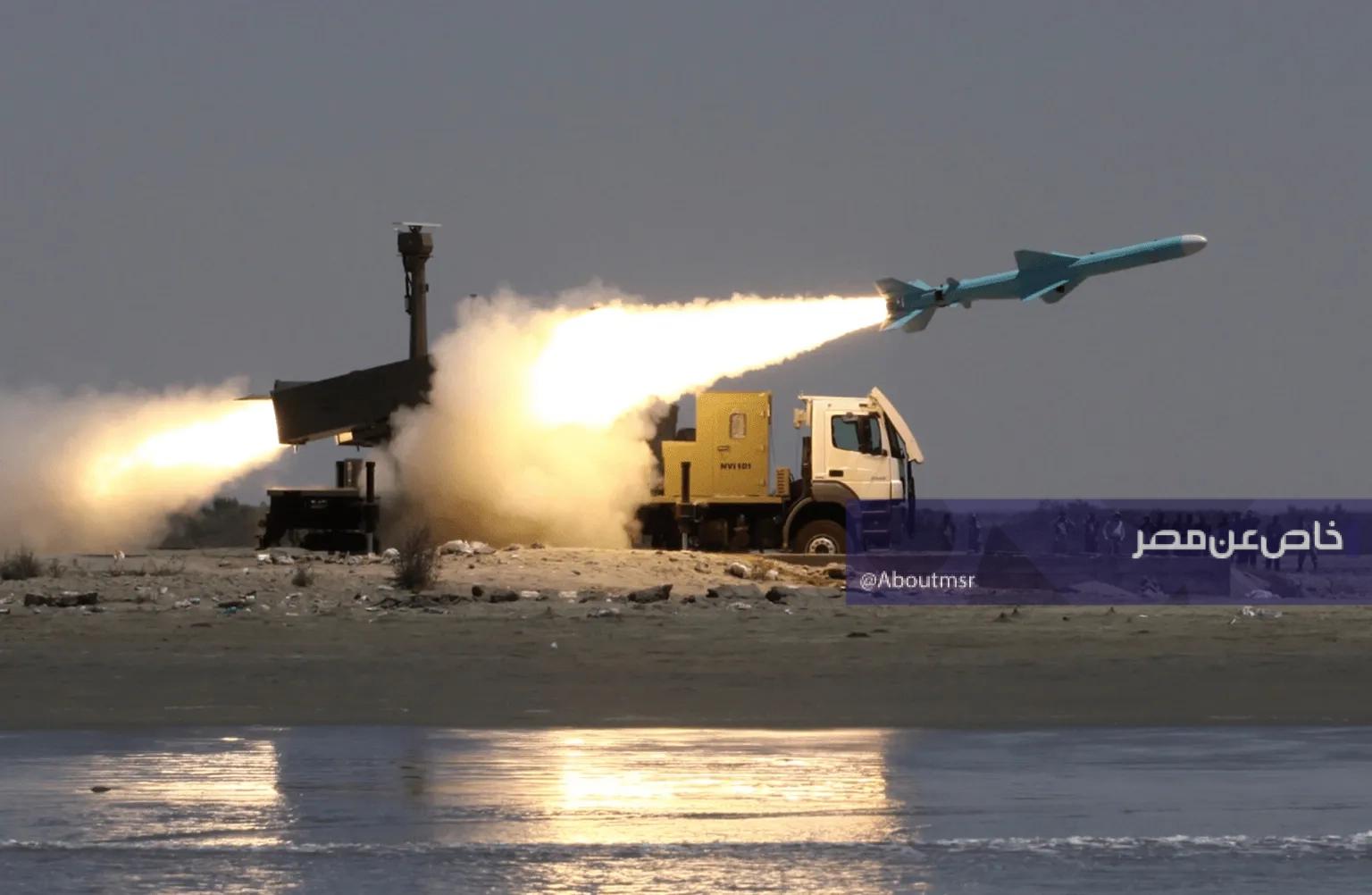
A separate report in خاص مصر frames Iran’s approach as an integrated system rather than a single weapon, describing a “denial of access and denial of the region” concept that makes enemy operations “costly and dangerous” enough to prevent free operation.
“The Strait of Hormuz forms one of the world’s most important sea passages, through which a large share of global oil trade from the Gulf to international markets passes”
The خاص مصر article says Iran’s strategy relies on “a broad mix of relatively low-cost yet high-impact means,” and it argues that this can raise risks so that “insurers” could “suspend coverage of maritime transport, effectively stopping tanker traffic even before any direct attacks occur.”
It also emphasizes the Strait of Hormuz’s geography, saying the strait lies between the Arabian Gulf and the Arabian Sea and that its “narrowest width” is “about 21 miles.”
The report states that reopening the strait after closure “is not easy,” requiring “extensive mine-clearing operations, securing ships, and countering submarines and unmanned aircraft,” and it says these operations “may take weeks or months in ongoing fighting.”
The خاص مصر article also argues that “a single incident such as a mine explosion or damage to an oil tanker could push global insurers to suspend war-risk coverage.”
In its weapon inventory, the report describes “Naval mines… the most important weapon for closing the strait,” and it says “Military estimates say Iran possesses thousands of naval mines of various types.”
It further lists contact-model mines, magnetic and acoustic mines, and mines mounted directly on hulls, while warning that detecting even a single mine can impose “broad security measures including inspections and water surveys by divers, underwater robots, and specialized helicopters.”
The report then adds that Iran has “Anti-ship missiles” including the Noor missile with “a range of about 120 kilometers,” and it describes Qader missiles with “between 200 and 300 kilometers,” plus “Abu Mahdi naval missiles” with “claimed ranges exceeding 1,000 kilometers.”
Telegraph framing and critique
Mehr News Agency and the Student News Agency both cite The Telegraph’s analysis to argue that Iran’s control of the Strait of Hormuz is more effective than nuclear deterrence, while also describing the strait as a tool for economic pressure.
Mehr News Agency says The Telegraph explicitly stated that “the Strait of Hormuz is now a weapon for Iran more deadly than an atomic bomb,” and it repeats that Western analysts describe Iran’s control as “an offensive and active tool.”
The Mehr account claims that with “about 20 million barrels of crude oil and oil products passing daily,” disruption or targeted control would trigger “a global economic shock,” and it says Iran can influence energy markets “without broad-scale firing.”
It also asserts that Western experts concluded Iran has implemented “a smart deterrence formula that does not require unconventional weapons,” and it describes the shift as an “end of the era of maximum pressure.”
The Student News Agency similarly reports that The Telegraph warned in an analysis that the strait has become “an offensive and far more effective weapon for Iran than nuclear weapons,” and it says Iran can “seriously cripple the global economy” by raising oil prices through disrupting energy flows.
In the ABC account, Adrian Blomfield, a senior foreign correspondent at The Telegraph, says the mosquito fleet enables Iran to control the strait with “a weapon of mass disruption,” and he describes how speedboats can hide in plain sight for “scouting operations, mining operations, or boarding operations.”
The y alibnan video transcript reinforces that framing by quoting Blomfield directly: “Forget about weapons of mass destruction… Iran now has a weapon of mass disruption.”
Mines, numbers, and future instability
The y alibnan video transcript adds a quantitative sense of the maritime environment, describing “about 300 small speedboats… bouncing along the water” and saying they form a “dense and ambiguous maritime ecosystem.”
“Mehr News Agency - Politics Desk: Amid the recent regional upheavals and as Western efforts to pressure Iran continue, reports and analyses in international media, especially British outlets, indicate a significant shift in Tehran's deterrence power”
It also quotes Blomfield on the mine threat, saying, “You hide the mines… lift the tarpaulins, chuck the mines in.”
The transcript claims “five to six thousand mines” could be “potentially in play,” and it says “There’s no obvious easy solution,” with “no clear path to elimination.”
In the ABC account, the discussion of hiding and swarming is tied to the IRGCN’s use of sea caves, and it quotes Iran’s judiciary chief, Gholamhossein Mohseni-Ejei, posting on X that the IRGC’s mosquito fleet “lies in wait from the sea caves of Faror Island for the American aggressor warships.”
The ABC also reports that the US has been “beefing up air power over the strait,” and it frames the confrontation as a contest over surveillance and defense saturation.
The خاص مصر report similarly stresses that mine-clearing and counter-submarine and counter-unmanned-aircraft operations “may take weeks or months,” and it warns that a mine explosion or tanker damage could push insurers to suspend war-risk coverage.
Taken together, the sources portray a scenario where disruption could persist through layered denial tools, not just direct engagements.
The Mehr News Agency account argues that Tehran’s “smart deterrence formula” is designed to avoid crossing “the nuclear red line,” and it says the strait’s reopening “without coordination and respect for Iran's will would be costly and even impossible.”
More on Iran

Donald Trump Pauses Project Freedom To Guide Ships Out Of Strait Of Hormuz
26 sources compared
Trump Pauses Project Freedom Escort Through Strait of Hormuz While Keeping U.S. Blockade
19 sources compared
War Powers Act Deadline Expires as Congress Returns Without Authorizing Trump’s Iran War
12 sources compared

Trump Pauses Project Freedom as U.S. Maintains Blockade in Strait of Hormuz
28 sources compared