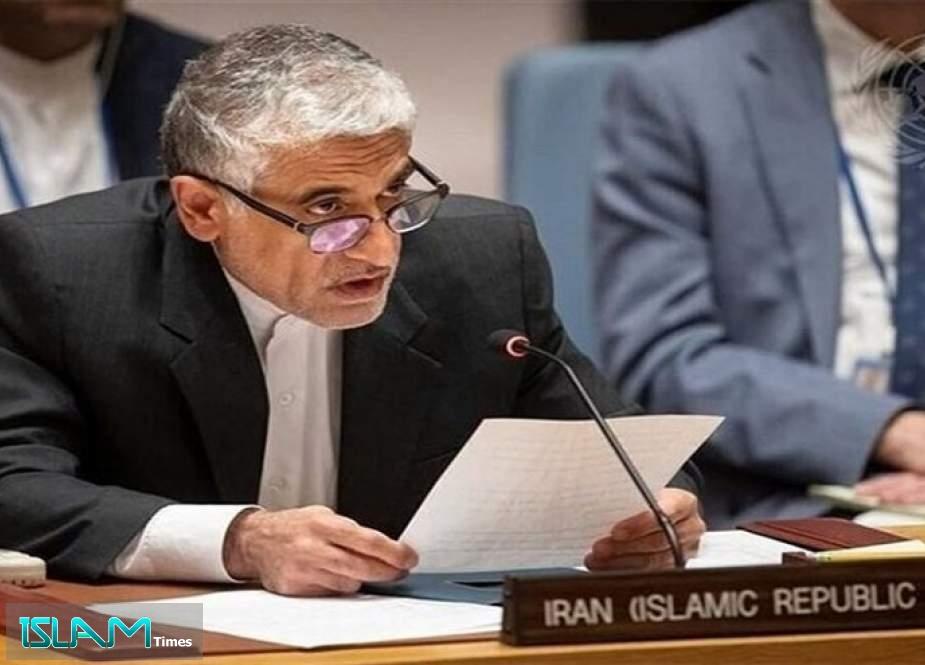
Iran’s UN Ambassador Amir Saeid Iravani Rejects Arab League Resolution in Cairo
Key Takeaways
- Iran rejects Arab League Resolution 9245 as unfounded and politically motivated.
- Shielding aggressors from accountability will not change legal realities.
- Letter to the UN Security Council reiterates accountability and international obligations.
Iran rejects Arab League resolution
Iran’s UN ambassador Amir Saeid Iravani rejected an anti-Iran resolution adopted by the Arab League foreign ministers’ meeting in Cairo, and he told the United Nations that “Shielding aggressors from accountability will not change legal realities.”
“In a letter addressed to the United Nations Security Council, Iran’s permanent representative to the United Nations dismissed Resolution 9245, transmitted by Bahrain as chair of the 165th session of the Council of the Arab League”
In a letter addressed to the UN Secretary-General António Guterres and the current president of the Security Council, Iravani said: “Any attempt to distort realities or to shield the perpetrators of aggression from accountability will neither change legal realities nor absolve the responsible parties of their commitments and international consequences.”

Pars Today reported that Iravani emphasized the Islamic Republic of Iran “categorically and unequivocally rejects the mentioned resolution,” describing it as “overtly biased, devoid of any real or legal basis, and reflects a deliberate effort to advance a pre-designed political narrative.”
PressTV likewise said Iran “categorically rejected a recent resolution adopted by the Arab League,” adding that “no attempt to shield the perpetrators of aggression” will absolve those responsible of their international obligations.
Mehr News Agency described the same rejection in a letter to the United Nations Security Council, stating that Iravani dismissed Resolution 9245 transmitted by Bahrain as chair of the 165th session of the Council of the Arab League.
Across the accounts, Iravani framed the resolution as a document that “willfully disregards the ‘undeniable root causes’ of the current situation in the region,” while also asserting that it “distort[s] both the factual record and the applicable legal framework” by falsely attributing responsibility to Iran.
Root causes and alleged aggression
In Iravani’s account, the Arab League resolution omits what he called “a central and undeniable fact,” namely that the United States and the Israeli regime committed acts of aggression against Iran’s sovereignty and territorial integrity in violation of international law and the UN Charter.
Pars Today said Iravani argued that the resolution “clearly omitted a central and undeniable fact; that the United States and the Israeli regime, in gross violation of international law and the UN Charter, have committed acts of aggression and carried out unlawful and unprovoked armed attacks against the sovereignty and territorial integrity of the Islamic Republic of Iran.”
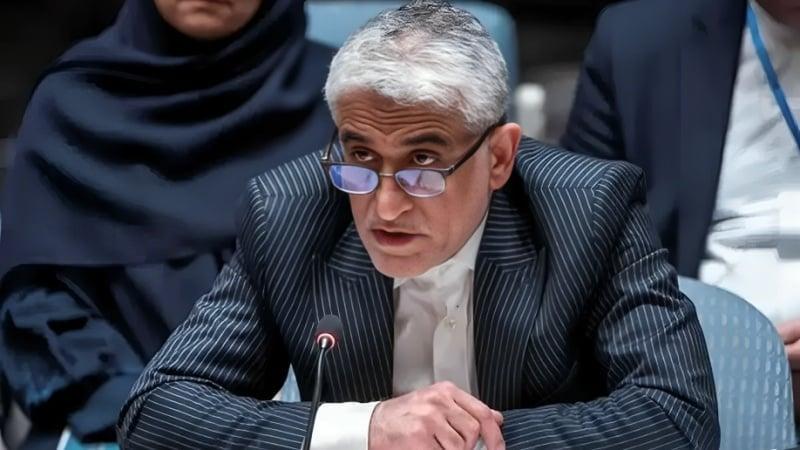
PressTV similarly asserted that the document omits a central fact, “namely that the United States and Israel have perpetrated acts of aggression against Iran’s sovereignty and territorial integrity in violation of international law and the UN Charter.”
Mehr News Agency added a timeline element, saying “The US-Israeli aggression against Iran began on February 28 with airstrikes that assassinated senior Iranian officials and commanders, including Leader of the Islamic Republic Ayatollah Seyyed Ali Khamenei.”
In the same narrative, PressTV reported that “The Iranian armed forces responded by launching daily missile and drone operations targeting locations in the Israeli-occupied territories as well as US military bases and assets across the region.”
Iravani also tied the legal dispute to Iran’s stated right of self-defense, reiterating “its right to self-defense under international law, including measures taken in the Persian Gulf and the Strait of Hormuz.”
Self-defense and named states
Alongside the allegations of aggression, Iravani’s letters emphasized Iran’s legal position on self-defense and also recalled prior communications to UN bodies about what he described as the role of multiple Arab states.
“Iran has categorically rejected a recent resolution adopted by the Arab League, saying “no attempt to shield the perpetrators of aggression” will absolve those responsible of their international obligations”
PressTV said Iravani “further reiterated the country’s legal position regarding its right to self-defense under international law, including measures taken in the Persian Gulf and the Strait of Hormuz.”
It also stated that Iravani “recalled Iran’s prior communications to the Secretary-General and the Security Council concerning the internationally wrongful acts and complicity of several Arab states,” listing “Qatar, Bahrain, Kuwait, Saudi Arabia, the United Arab Emirates, and Jordan.”
Mehr News Agency repeated that Iravani recalled those communications and described the Arab states’ role as “aiding and abetting the aggressor,” naming “Qatar, Bahrain, Kuwait, Saudi Arabia, the United Arab Emirates, and Jordan.”
Islam Times provided additional legal framing, saying the letter referenced “UNS Resolution 2817 (2026)” and Iran’s “lawful exercise of its inherent right of self-defense under international law — including measures taken in the Persian Gulf and the Strait of Hormuz.”
Across the different reports, Iravani’s central refrain remained that shielding perpetrators would not change legal facts, with PressTV quoting him as saying: “Any attempt to misrepresent realities or to shield the perpetrators of aggression from accountability will neither alter the legal facts nor absolve those responsible of their international obligations and consequences.”
Different outlets, same message
While all four reports describe Iravani’s rejection of the Arab League resolution and his insistence that accountability cannot be avoided, they differ in how they present the resolution’s provenance and the letter’s framing.
Pars Today described the response as coming “in response to the anti-Iranian resolution at the Arab League foreign ministers’ meeting in Cairo,” and it said Iravani sent a letter to “UN Secretary-General António Guterres and the current president of the Security Council.”
PressTV, by contrast, emphasized that the resolution was “transmitted by Bahrain as chair of the 165th session of the Council of the Arab League,” and it focused on the letter addressed to the United Nations Security Council.
Mehr News Agency also centered on Resolution 9245 and Bahrain’s chairmanship of the 165th session, stating that Iravani dismissed “Resolution 9245, transmitted by Bahrain as chair of the 165th session of the Council of the Arab League.”
Islam Times presented the letter’s full text and anchored it to a prior communication, stating it was “in response to the letter dated 23 April 2026 issued by the Permanent Representative of the Kingdom of Bahrain to the United Nations.”
Despite these differences, the core content remained consistent across the reports: Iravani said the resolution was “unfounded, misleading, and politically motivated,” and he argued it “distort[s] both the factual record and the applicable legal framework” by falsely attributing responsibility to Iran.
Implications for UN process
The reports portray Iravani’s letter as an attempt to shape how the UN Security Council and UN leadership interpret the Arab League resolution and the legal record surrounding Iran.
“In a letter addressed to the United Nations Security Council, Iran’s permanent representative to the United Nations dismissed Resolution 9245, transmitted by Bahrain as chair of the 165th session of the Council of the Arab League”
Pars Today said Iravani sent his response to UN Secretary-General António Guterres and “the current president of the Security Council,” and it quoted him warning that “Any attempt to distort realities or to shield the perpetrators of aggression from accountability will neither change legal realities nor absolve the responsible parties of their commitments and international consequences.”
PressTV similarly described the letter as being addressed to the United Nations Security Council and said Iravani dismissed Resolution 9245 while asserting that the resolution seeks to “distort both the factual record and the applicable legal framework” by falsely attributing responsibility to Iran.
Islam Times added that the letter was “Pursuant to instructions from my government,” and it stated that Iran’s legal position had “been previously communicated on several occasions to the Secretary-General and the President of the Security Council.”
Mehr News Agency echoed the same UN-facing posture, describing Iravani’s dismissal of Resolution 9245 and his insistence that any attempt to misrepresent realities would not alter legal facts.
The stakes in the accounts are framed in legal and accountability terms, with Iravani repeatedly saying shielding would not “absolve those responsible of their international obligations and consequences.”
More on Iran
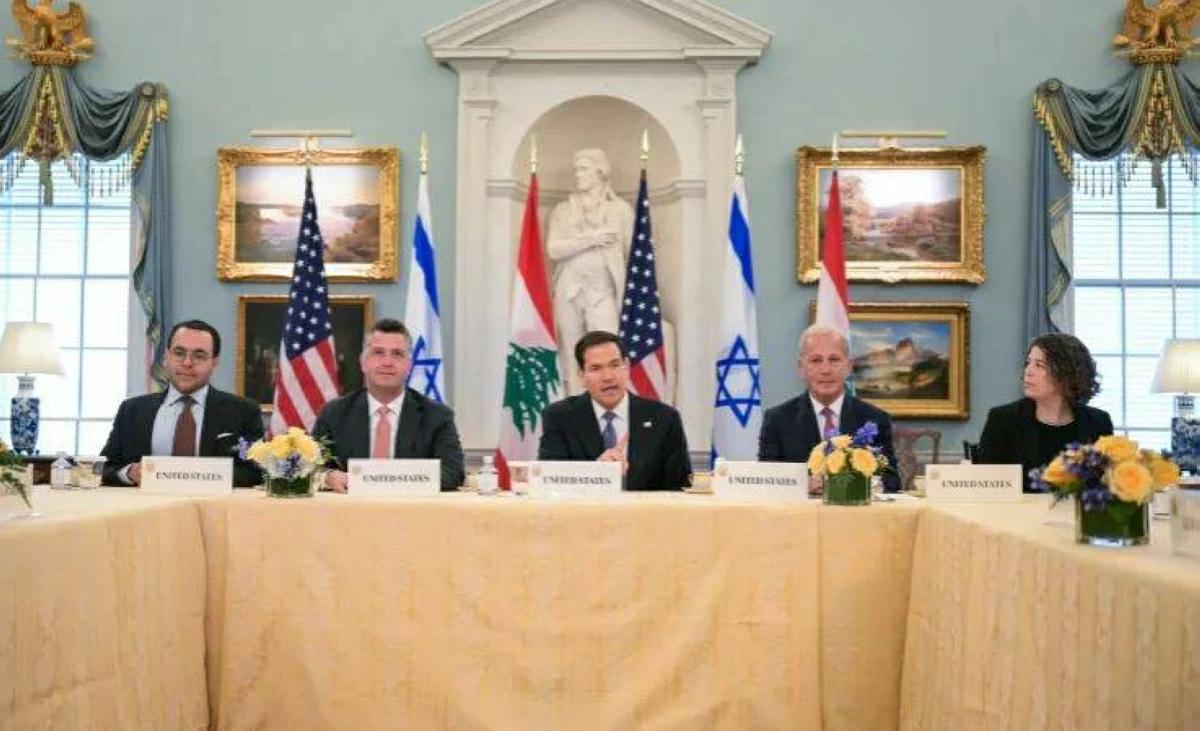
Israel and Hezbollah Agree Ceasefire After Lebanon Airstrikes Killed 47
12 sources compared

Israel And Hezbollah Ceasefire Delays U.S.-Iran Talks In Switzerland, Swiss Foreign Ministry Confirms
12 sources compared

Congress Could Block Donald Trump’s Iran MOU Sanctions Waivers Under INARA
12 sources compared

Iran’s Leaders Back US-Iran Memorandum Red Lines as Switzerland Talks Postponed
21 sources compared