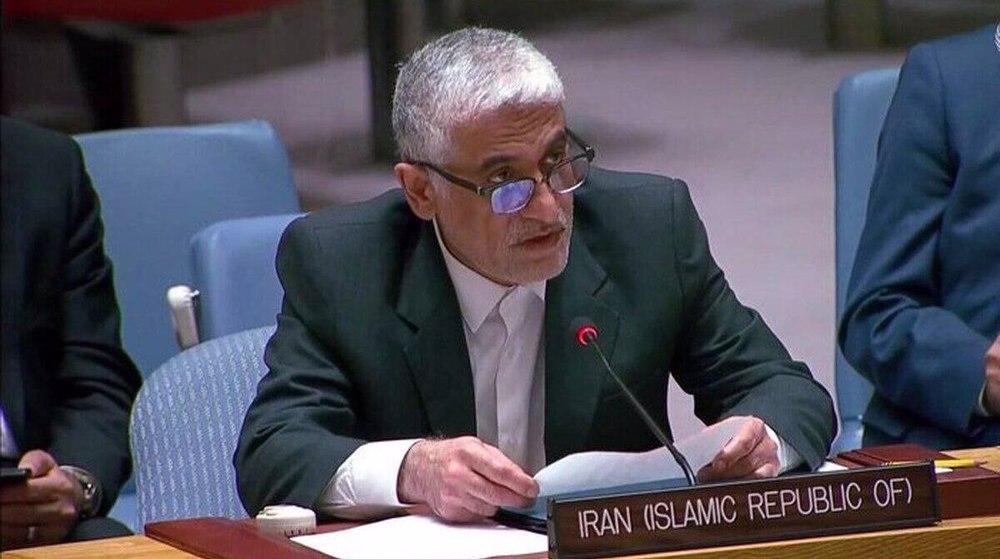
Iran’s UN Envoy Amir Saeid Iravani Says Iran Can Counter U.S. Piracy-Style Seizures
Key Takeaways
- Iran's UN envoy calls U.S. seizures of two Iranian tankers state-sponsored piracy.
- Iran reserves the right to counter these actions under international law.
- Iran sent letters to UN Secretary-General and UNSC president protesting the seizures.
UN letter and seized tankers
Iran’s UN envoy Amir Saeid Iravani told the UN Security Council that the Islamic Republic “has every right, in accordance with international law, to counter these insolent actions” after the United States seized Iranian commercial vessels.
In a letter dated Wednesday, Iravani said he was writing “to bring to the urgent attention” the “continuing internationally wrongful acts of the United States through yet another piracy-style seizure and deliberate targeting of commercial vessels, namely the M/T Majestic and M/T Tifani.”
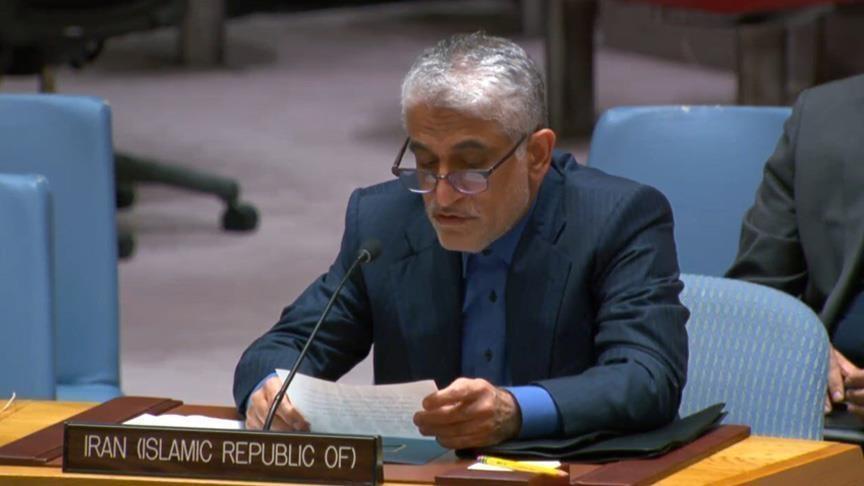
PressTV and IRNA English both reproduce Iravani’s framing that the US attorney’s public statement amounted to “an explicit and deliberate admission of internationally wrongful conduct.”
In that same letter text, Iravani said the US attorney “boasted of the pirate-style seizure” of the two vessels and “the subsequent stealing of 3.8 million barrels of Iranian oil.”
The Iranian envoy argued that the US “armed forces have interdicted, boarded, and forcibly seized Iran’s commercial vessels on the high seas” and that such conduct is “a flagrant violation of the Charter of the United Nations, in particular Article 2(4).”
He further asserted that the actions “fall squarely within the definition of an act of aggression” under UN General Assembly Resolution 3314 of 1974, and he linked the seizures to risks for “maritime safety and security” and escalation in the region.
Escalation, blockade, and Hormuz
The Iranian UN complaint is presented in the sources as part of a broader dispute over a US naval blockade and Iran’s countermeasures affecting the Strait of Hormuz.
PressTV says the United States began taking measures against Iranian vessels “despite President Donald Trump’s announcement on April 7 of a two-week lull in unprovoked American aggression against the Islamic Republic,” and it adds that Tehran condemned the blockade as “a violation of the terms of the ceasefire.”

In the same PressTV account, Iran “reciprocated by closing down the strategic Strait of Hormuz to all traffic with the exception of the vessels that manage to obtain permission from relevant Iranian authorities for transit through the chokepoint.”
The PressTV text also states that “The country has, in addition, categorically rejected the notion of returning to talks with Washington as long as the blockade stays in place.”
IranWire similarly describes the dispute as escalating maritime tensions and quotes Amir Saeed Iravani’s UN remarks about “the militarization of international shipping” by the United States.
It quotes Iravani saying “The Strait of Hormuz has been increasingly used to support military operations in the region,” and it adds that this “militarization has exposed international shipping to higher and unprecedented risks in the Persian Gulf and the Strait of Hormuz.”
In the same IranWire piece, Iravani is also quoted rejecting criticism of Iran’s closure of the strait, saying “As the primary coastal state where the Strait of Hormuz is located within its territorial waters, Iran has taken necessary and practical measures, consistent with international law.”
Military footing and warnings
Alongside the diplomatic letter, the sources include Iranian military messaging that frames the maritime dispute as an ongoing conflict posture.
“Speaking during a White House state dinner for the British monarch’s state visit to Washington on Tuesday, President Donald Trump said that t”
AnewZ reports that Iran’s UN ambassador Amir-Saeid Iravani asserted Tehran’s right to respond after accusing the U.S. of “state-sponsored piracy” following the seizure of two oil tankers, and it quotes the letter’s language about “yet another the piracy-style seizure and deliberate targeting of commercial vessels, namely the M/T Majestic and M/T Tifani.”
AnewZ also includes a warning from Iran’s Army spokesman Brigadier General Mohammad Akraminia, carried by state-owned IRNA, saying: “Let the enemies know that if they commit another act of aggression and threaten the security of this land, they will face an even more crushing response than before.”
In the same AnewZ account, Akraminia says, “We have updated our target bank, maintained training, and applied the lessons learned from the war,” and he adds, “Additionally, we have both produced and upgraded our equipment.”
AnewZ then quotes Akraminia’s conclusion: “Therefore, for us, the situation remains one of war,” and it says he added that Iran has “plenty of winning cards” that it has yet to deploy.
The PressTV text similarly describes the Iranian envoy’s call for the Security Council to condemn the seizures and demand “the immediate and unconditional release of all seized vessels, cargo, and property,” while also insisting the Islamic Republic can counter.
In Iran International’s account, the UN nuclear chief Rafael Grossi says consensus on Iran at the UN Security Council “has broken down and may not return for ‘a long, long time,’” and it places this within a wider environment of heightened tensions.
Competing characterizations and legal framing
The sources diverge in how they characterize the same maritime events, with Iranian outlets emphasizing “piracy-style” and “terrorism,” while other reporting includes US legal language and counters with different accusations.
IranWire quotes Esmaeil Baghaei, spokesperson for Iran’s Ministry of Foreign Affairs, describing the US Navy’s seizure as “legitimizing piracy and armed robbery at sea,” and it quotes Baghaei: “Welcome to the age of the return of pirates. With the difference that this time, they operate under official flags and government orders, calling their actions ‘law enforcement and implementation’.”

IranWire also reproduces a US attorney statement through the same narrative, quoting that “U.S. forces intercepted and seized the ‘dark fleet’ tanker ‘MT Majestic’ (formerly known as ‘MT Phoenix’), which was carrying approximately 1.9 million barrels of Iranian oil, in the Indian Ocean,” and it says “earlier this week” US forces seized “the tanker ‘MT Tiffany,’” carrying “approximately 1.9 million barrels of Iranian oil.”
By contrast, PressTV and IRNA English focus on Iravani’s letter that calls the US attorney’s statement “an explicit and deliberate admission of internationally wrongful conduct” and that says the US “armed forces have interdicted, boarded, and forcibly seized” the vessels “on the high seas.”
Iran International adds a different set of accusations at the UN, quoting US envoy Dorothy Shea saying the strait was “not Iran’s hostage, not Iran’s bargaining chip, not Iran’s toll road,” and it says Shea accused Tehran of laying sea mines, firing on civilian ships, threatening to charge tolls and launching missiles at Gulf capitals.
Iran International also quotes Iravani saying the US was “acting like pirates and terrorists” by targeting commercial vessels through “coercion and intimidation,” terrorizing crews, seizing ships and “taking crew members hostage.”
These competing framings appear alongside the Iranian claim that the actions violate “international law” and the UN Charter, while the US legal posture is presented in IranWire via the seizure warrant and judge-signed warrant language.
What comes next and risks
The sources portray immediate next steps as centered on UN condemnation and release demands, while also describing broader consequences for navigation, sanctions, and de-escalation proposals.
“Tehran called Washington’s seizure of Iranian oil tankers “outright piracy”
In the Iranian letters reproduced by PressTV and IRNA English, Iravani calls on the Security Council to “condemn the seizures, demand the immediate and unconditional release of all seized vessels, cargo, and property, and take measures to prevent their recurrence,” and he frames the seizures as threatening “maritime safety and security” and escalating the “volatile situation in the region.”
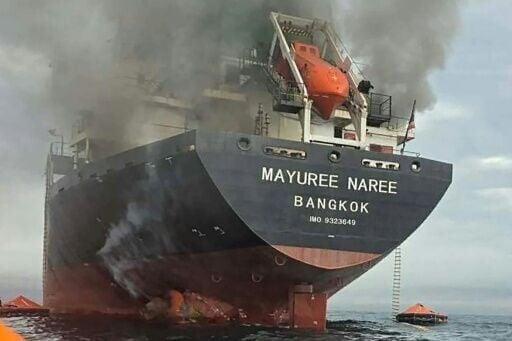
Tasnim’s version of the letter adds a more detailed set of demands, including urging the Security Council to “Condemn in the strongest possible terms these acts of aggression” and to “Demand the United States immediately cease such illegal actions and the immediate and unconditional release of all seized vessels, cargo, and property.”
The same Tasnim text says the measures pose “a direct threat to international peace and security, freedom of navigation, and the integrity of the international legal order.”
Beyond the UN process, Iran International reports that US Treasury Secretary Scott Bessent warned businesses and governments risk sanctions if they engage with Iranian airlines designated by Washington, quoting: “Doing business with sanctioned Iranian airlines risks exposure to US sanctions.”
It also quotes Bessent saying, “The Treasury will impose maximum pressure on Iran and will not hesitate to act against any third parties that facilitate or conduct business with Iranian entities,” tying the maritime dispute environment to a wider pressure campaign.
ANI’s report adds that Iran lodged a formal complaint with the UN, and it quotes Iravani warning that “such behaviour constitutes illegal coercion, interference in lawful international trade, and the unlawful seizure of property.”
More on Iran
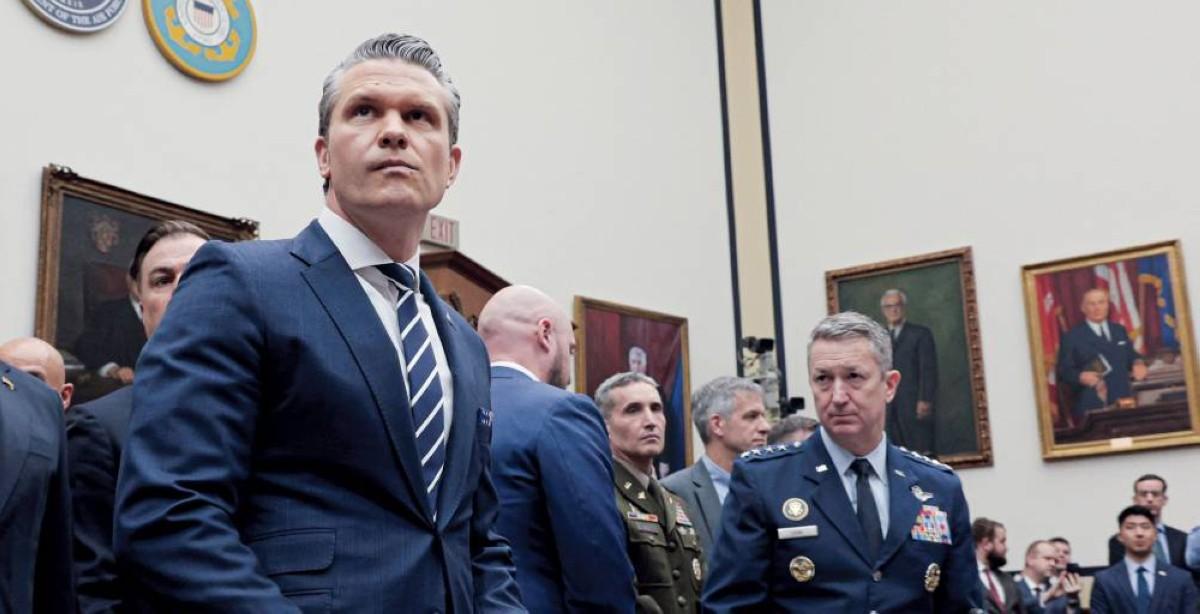
Donald Trump Posts AI Image With Rifle, Threatens Iran With “No More Mr. Nice Guy”
13 sources compared
Oil Prices Climb as Iran Proposes Reopening Strait of Hormuz With U.S. Nuclear Talks Deferred
13 sources compared

Sir Christian Turner Says U.S. Only Special Relationship Is Probably Israel
14 sources compared
U.S. Intelligence Agencies Assess How Iran Would Respond If Trump Declares Victory
13 sources compared