
IRGC Commander Ahmad Vahidi Takes Control of Iran’s Military and Diplomatic Decision-Making
Key Takeaways
- Tehran's power structure has undergone a decisive shift amid regional crisis.
- Traditional authority is challenged as security and diplomacy realign.
- Regional tensions threaten U.S. engagement with Iran.
Power shifts in Tehran
Iran’s internal power structure is being reshaped as the Islamic Revolutionary Guard Corps (IRGC) moves to take control of both military operations and diplomatic engagements, according to a report cited by The Statesman.
“Washington — In less than 48 hours this weekend, President Trump went from saying Iran has "warning that if Iran doesn't sign a U”
The Statesman says the shift comes as tensions in the Strait of Hormuz intensify and as “already fragile backchannel efforts between Tehran and Washington show signs of collapsing.”
At the center of the transition, The Statesman identifies IRGC Commander Major General Ahmad Vahidi, saying he “is said to have assumed effective control of the Islamic Republic’s decision-making apparatus.”
The same report links the change to Tehran stepping away from planned negotiations with the United States, while it also says the IRGC blocked a move to reopen the Strait of Hormuz after Foreign Affairs Minister Abbas Araghchi indicated willingness to do so.
In parallel, News.az, citing The Conversation, frames the question of who “truly wields power in Tehran” as central to global security amid regional escalation.
News.az says Mojtaba Khamenei, the son of the late Supreme Leader, was “swiftly positioned as the successor,” while his lack of public appearances since “the recent strikes” has fueled speculation about his actual level of control.
News.az further argues that the IRGC has moved from being the regime’s “praetorian guard” to its primary decision-making body, with key figures “calling the shots” including Parliamentary Speaker Mohammad-Bagher Ghalibaf, IRGC Commander Ahmad Vahidi, and intelligence chief Majid Khadami.
Strait of Hormuz and proxies
The emerging Tehran hierarchy is being tested through actions around the Strait of Hormuz and through how Iran conducts both military and diplomatic signaling.
The Statesman says tensions escalated over the weekend when Iran reportedly targeted at least three ships attempting to pass through the Strait of Hormuz, leaving “hundreds of vessels stranded in the Persian Gulf.”
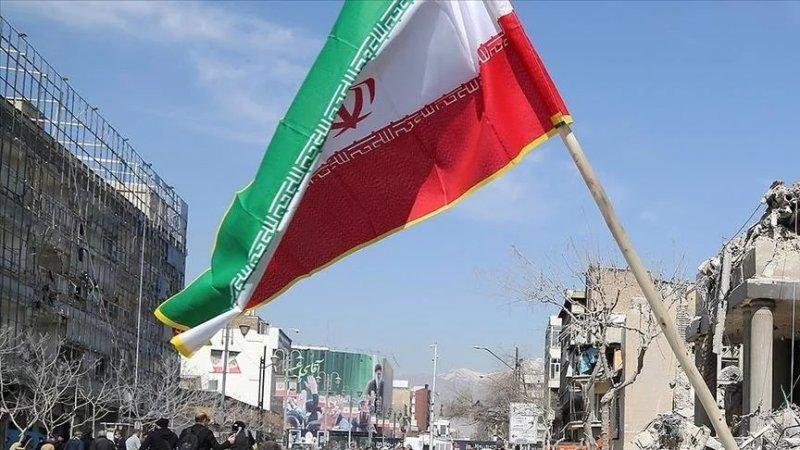
It also describes a naval deployment shift, saying “fast attack vessels now dominating operations after conventional forces reportedly suffered heavy setbacks in recent confrontations.”
News.az similarly describes the IRGC as managing Iran’s nuclear strategy and its response to the U.S. naval blockade, often bypassing traditional clerical oversight, and it says the IRGC has deployed foreign proxies, including “Iraqi and Afghan units,” to maintain domestic order.
In the diplomatic sphere, The Statesman says earlier this month Zolghadr was included in Iran’s negotiation team to ensure alignment with directives from the IRGC and Supreme Leader Mojtaba Khamenei, and it links that to friction within the delegation.
The Statesman quotes the Institute for the Study of War (ISW) describing how “Zolghadr sent a complaint to senior IRGC leaders, almost certainly including Vahidi, that Araghchi had surpassed his mandate during the negotiations by expressing flexibility regarding Iran’s support for the Axis of Resistance.”
The same report says the fallout was swift, with “Zolghadr’s anger caused senior leaders in Tehran, including former IRGC Intelligence Organization Chief and long-time member of Mojtaba’s inner circle, Hossein Taeb, to call the negotiating delegation back to Tehran.”
Trump’s shifting Iran messaging
While Tehran’s internal decision-making is described as moving toward IRGC dominance, CBS News details how President Trump’s public messaging on Iran shifted rapidly within days, complicating the picture of what negotiations actually require.
“Professor Rogers Smith is a retired professor of political science at the University of Pennsylvania”
CBS News says that on Friday afternoon, April 17, Trump told CBS News senior White House correspondent Weijia Jiang that Iran has “agreed to everything,” and that the U.S. would “take” the uranium while working with the U.S. to remove its enriched uranium.
CBS News also says Trump told CBS News that Tehran agreed to stop backing proxy groups, including “Hezbollah and Hamas,” which the U.S. considers terrorist organizations.
Within “a couple of hours,” CBS News reports that a spokesperson for Iran’s foreign ministry released a statement saying, in translation, “Enriched uranium is as sacred to us as Iranian soil and will not be transferred anywhere under any circumstances.”
The comment added that “transferring uranium to the United States has not been an option,” directly contradicting Trump’s earlier framing.
CBS News then describes Trump’s Friday evening position, saying he told reporters upon his arrival in Phoenix that he didn’t think there are “too many significant differences” with Iran, while also acknowledging “Well, there could be.”
On Sunday morning, April 19, CBS News reports Trump told Fox News’ Trey Yingst that “If Iran does not sign this deal, the whole country is getting blown up,” and it says he warned the talks in Pakistan would be Iran’s “last chance.”
Negotiation uncertainty and denial
CBS News portrays the negotiation process as uncertain and contested, with Iran saying it has to return to peace talks even as Trump’s statements about delegation travel differ.
CBS News says the president’s rapid shifts in messaging come “as the two-week in the war with Iran enters its final days,” and it adds that “the state of negotiations with Iran is uncertain.”
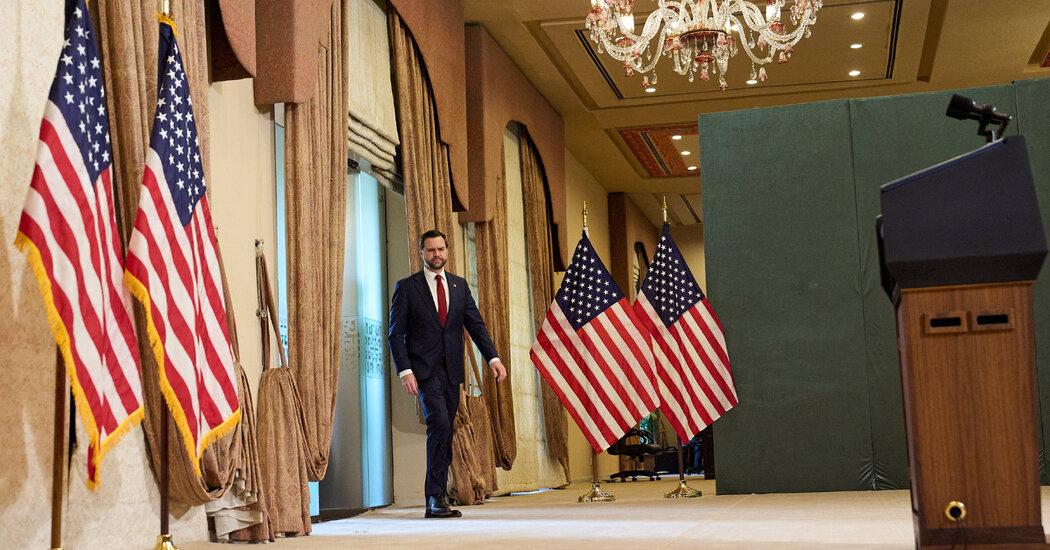
It reports that Trump shared contradictory statements about negotiations, telling the New York Post on Monday morning that the U.S. delegation, including Vice President JD Vance, would arrive in Islamabad Monday night.
CBS News then says that after Trump said that, a White House official said the U.S. delegation had not left yet, but rather, “plans to travel to Islamabad soon,” without a date given.
CBS News also says Iran said Monday that it has to return to peace talks, placing the burden of resuming talks on Iran’s side even as the U.S. describes its own movement.
The Statesman similarly frames backchannel diplomacy as fragile, saying “already fragile backchannel efforts between Tehran and Washington show signs of collapsing” and that “With no clarity yet on when talks might resume, and a ceasefire deadline approaching on Tuesday, the region remains on edge.”
It also says Tehran denies Islamabad talks even as Pakistan mediation continues and ceasefire tensions deepen.
What comes next for dialogue
The sources converge on the idea that the next phase hinges on whether diplomacy can survive a tightening security environment, with multiple accounts pointing to a ceasefire deadline and to the dominance of IRGC-aligned decision-making.
“Washington — In less than 48 hours this weekend, President Trump went from saying Iran has "warning that if Iran doesn't sign a U”
The Statesman says “The ceasefire in Iran is likely to end shortly, resulting in either renewed attacks or a peace deal, details of which could emerge soon,” and it ties that uncertainty to the collapsing backchannel and intensifying Strait of Hormuz tensions.
It also warns that the current power dynamics “significantly reduce the prospects of meaningful dialogue with the West,” noting that Araghchi and Ghalibaf lack the “leverage or formal executive authority to shape decision-making.”
News.az similarly depicts a system where the IRGC is “the dominant force in Iranian policymaking,” and it says the IRGC has deployed foreign proxies to maintain domestic order.
CBS News adds that Trump’s messaging escalated from “agreed to everything” to warnings that without a deal “the whole country is getting blown up,” and it reports that he threatened to “attack all of its power plants and bridges” if Iran does not take the deal.
In that same CBS News account, Iran’s foreign ministry statement insists “Enriched uranium is as sacred to us as Iranian soil and will not be transferred anywhere under any circumstances,” and that “transferring uranium to the United States has not been an option.”
Sharghdaily quotes Professor Rogers Smith saying “Both broader military confrontations and diplomatic agreements are plausible scenarios,” and he adds that “The likelihood that this situation will remain stable is less than 50 percent.”
More on Iran
Trump Warns U.S. Will Resume Bombing If Iran Talks Fail Before Ceasefire Deadline
11 sources compared

Reuters/Ipsos Poll Finds 36% Approve Trump’s Job Performance Amid Iran War And Pope Feud
10 sources compared

Iran’s Judiciary Chief Mohseni-Eje’i Warns US-Israeli War Coalition May Strike Again
11 sources compared

Trump Says U.S. Expects a Great Deal With Iran, Won’t Extend Ceasefire Deadline
25 sources compared