IRGC: USS Gerald Ford retreat exposes hollowness of American military power
Key Takeaways
- IRGC says USS Gerald Ford's withdrawal exposes hollowness of American military power.
- Withdrawal amid ongoing conflict failed to provide support to tired American forces in the region.
- IRGC claims the retreat demonstrates arrogant powers' material strength is hollow.
IRGC Criticism
The Islamic Revolution Guards Corps (IRGC) has sharply criticized the sudden withdrawal of the USS Gerald R. Ford from West Asia.
“IRGC: USS Gerald Ford Retreat Shows Weakness of US Military The Islamic Revolution Guards Corps (IRGC) has criticized the sudden withdrawal of the USS Gerald R”
The IRGC declared that the carrier's abrupt departure exposes the 'hollowness of American military power.'
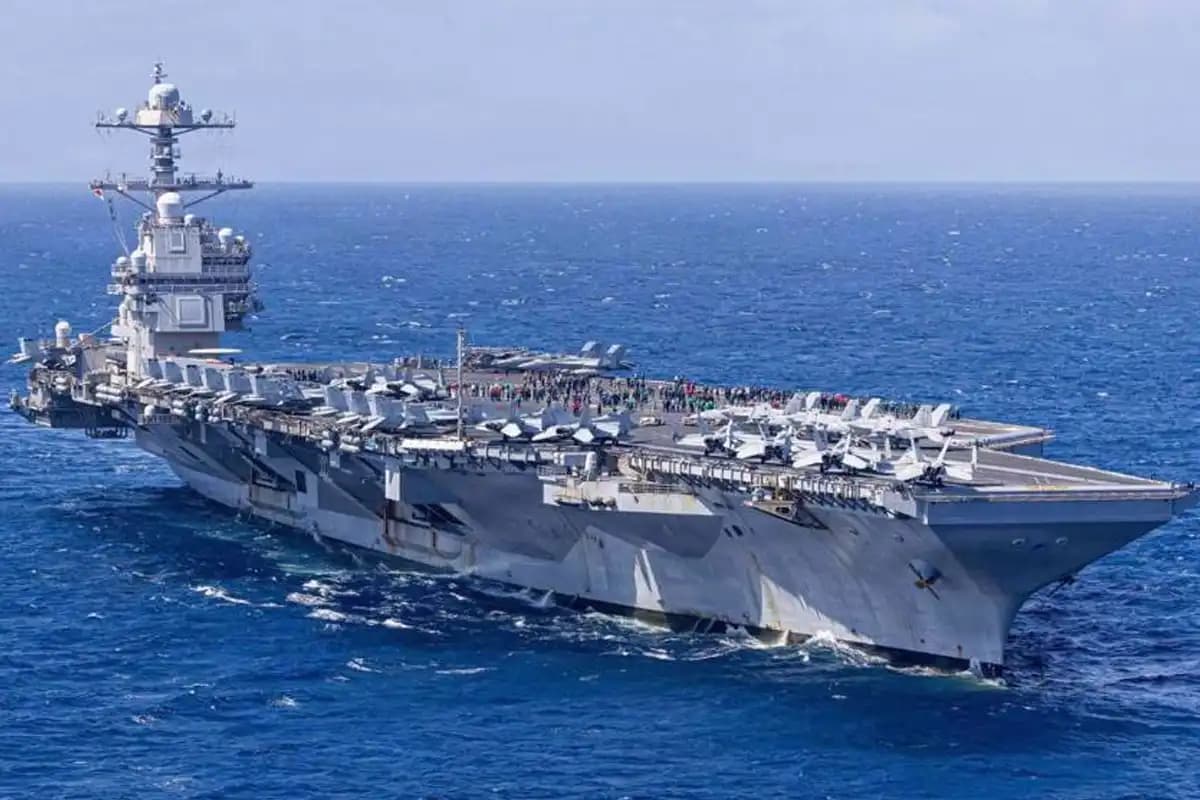
They released a statement on Friday highlighting the aircraft carrier's exit at a critical stage of the ongoing conflict.
The IRGC stated this demonstrates the failure of US military support for regional operations.
The contrast between the ship's high-profile arrival and its quiet retreat reflects what they described as the 'desperate and humiliating state' of American and Israeli forces.
This criticism comes amid heightened tensions in West Asia as regional dynamics continue to evolve.
US Explanation
The US military has attempted to justify the USS Gerald Ford's retreat by claiming it resulted from a non-combat-related fire in the ship's laundry facilities.
This fire damaged over 100 beds and affected more than 200 crew members according to US claims.
The IRGC has strongly mocked and cast doubt on this official narrative, questioning the credibility of Washington's explanations.
The IRGC statement posed a rhetorical question about the strength of a military giant that would leave the battlefield due to a laundry fire.
This highlights what they see as absurdity in the US explanation.
Despite US officials claiming the ship remains fully operational, the incident has raised significant questions about the reliability and readiness of American naval assets in the region.
Technical Failures
The IRGC statement also highlighted the USS Gerald Ford's long history of technical and structural failures.
“IRGC: USS Gerald Ford Retreat Shows Weakness of US Military The Islamic Revolution Guards Corps (IRGC) has criticized the sudden withdrawal of the USS Gerald R”
These issues include widespread plumbing problems, clogged toilets, and significant morale issues among the crew.
The expensive $13 billion warship has reportedly experienced persistent technical difficulties.
These difficulties have undermined its operational effectiveness and crew readiness during the nine-month deployment.
This pattern of mechanical failures adds to the embarrassment of the current situation.
The IRGC emphasized that these recurring problems indicate fundamental weaknesses rather than isolated incidents.
Resistance Fear
The IRGC suggested that the true reason for the USS Gerald Ford's retreat lies in fear of regional resistance forces.
The carrier reportedly diverted to avoid navigating the Bab al-Mandab Strait.
This strait is effectively controlled by Yemeni resistance groups.
This strategic maneuver raises questions about American naval vulnerability in the region.
The IRGC posed a provocative question about the $13 billion warship being terrified of 'thousand-dollar speedboats.'
This comment highlights the dramatic asymmetry between sophisticated US naval assets and resistance capabilities.
The IRGC also noted similar difficulties faced by the USS Abraham Lincoln in the Indian Ocean.
Iranian Warning
The IRGC issued a stern warning that Iranian forces remain entirely dominant and vigilant in regional waters.
“IRGC: USS Gerald Ford Retreat Shows Weakness of US Military The Islamic Revolution Guards Corps (IRGC) has criticized the sudden withdrawal of the USS Gerald R”
They suggested the USS Gerald Ford incident is part of a broader pattern of American military weakness.
The statement challenged what it called the 'lying US President' who claims to have destroyed Iran's Navy.
The IRGC questioned why American warships don't move toward the Sea of Oman and Red Sea.
They issued a direct threat about Iranian soldiers being 'eager to land and deliver a hard slap to the American warship.'
This reflects heightened tensions from the conflict that began when Iran launched an 'unprovoked war of aggression' on February 28.
More on Iran
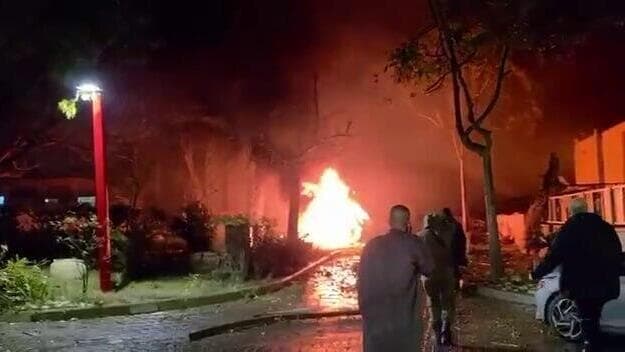
Iranian missiles strike Dimona and Arad, injuring over 100.
47 sources compared
Iran Attacks Dimona in Retaliation for Natanz Strike
44 sources compared

Iran Attacks Diego Garcia with Long-Range Missiles, Targeting U.S.-UK Base
82 sources compared

Trump Defends Iran War by Citing Pearl Harbor
12 sources compared