
IRNA Says US Demands, Maritime Blockade, Threatening Rhetoric Block US-Iran Negotiations
Key Takeaways
- A second round of US-Iran ceasefire talks is planned in Islamabad, with possible Tehran delegation.
- Maritime blockade continues and is described as a breach of ceasefire, with naval reinforcement reported.
- Tehran delegation arrival remains unconfirmed amid reports of Pakistan-backed talks and multi-site negotiations.
Negotiations Stall in Islamabad
Negotiations between the United States and Iran have not progressed, with IRNA saying “Excessive, unreasonable, and unrealistic US demands” and “the continuation of so-called maritime blockade—considered a violation of the ceasefire understanding—along with threatening rhetoric” have prevented any progress.
“IRNA: Excessive, unreasonable, and unrealistic US demands, alongside repeated shifts in positions, persistent contradictions, and the continuation of so-called maritime blockade—considered a violation of the ceasefire understanding—along with threatening rhetoric, have all prevented any progress in the negotiations so far IRNA: Reports published about a second round of negotiations in Islamabad are false; US-sourced reports are part of a media game of “blame shifting” aimed at exerting pressure on Iran Watch: Hezbollah Drone and Missile Strikes on Israeli Infrastructure, Merkava Tank IRNA: Excessive, unreasonable, and unrealistic US demands, alongside repeated shifts in positions, persistent contradictions, and the continuation of so-called maritime blockade—considered a violation of the ceasefire understanding—along with threatening rhetoric, have all prevented any progress in the negotiations so far IRNA: Reports published about a second round of negotiations in Islamabad are false; US-sourced reports are part of a media game of “blame shifting” aimed at exerting pressure on Iran Watch: Hezbollah Drone and Missile Strikes on Israeli Infrastructure, Merkava Tank”
IRNA also asserted that “Reports published about a second round of negotiations in Islamabad are false,” describing US-sourced reporting as part of a “media game of ‘blame shifting’ aimed at exerting pressure on Iran.”
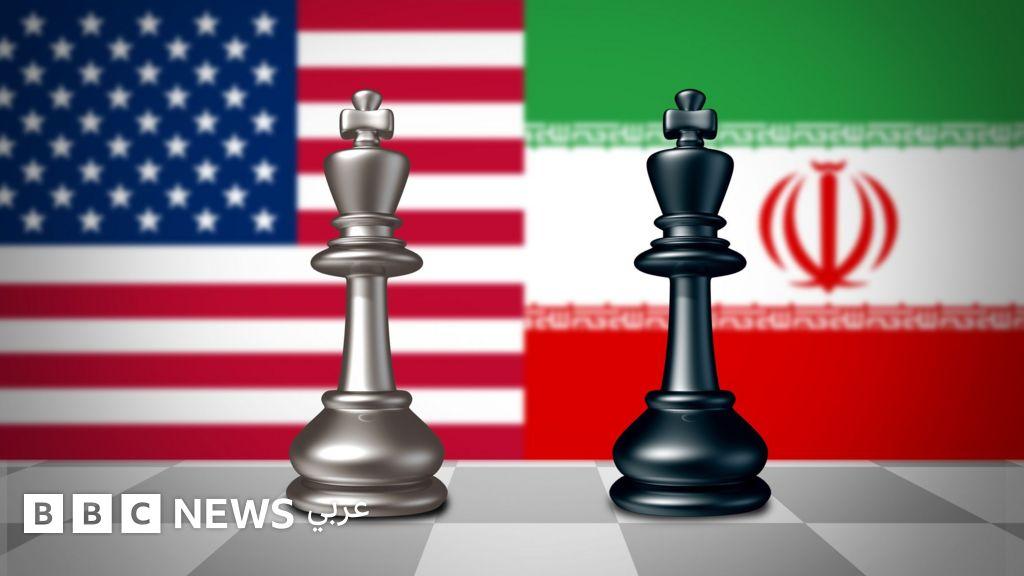
In parallel, روزنامه دنیای اقتصاد reported that Pakistani sources said a U.S. negotiating team arrived in Islamabad, while Cyanan News Network, citing Iranian sources, claimed “a Tehran delegation would arrive in Pakistan on Tuesday to negotiate with Washington.”
The same report said the Iranian delegation’s presence “has not been confirmed,” because Tehran still had concerns about “a naval blockade that must be addressed.”
It added that Tasnim News Agency, citing a source, wrote that “as long as Trump’s declaration of a naval blockade of Iran remains in effect, there will be no negotiations in progress.”
The BBC framed the broader backdrop by saying it is “believed that the United States is weighing a second round of ceasefire talks with Iran,” and described the earlier talks as ending “on Sunday without progress.”
Blockade, Ceasefire, and Conditions
A central dispute in the reporting is the status and meaning of a maritime blockade and how it relates to the ceasefire.
روزنامه دنیای اقتصاد said Iran’s position hinges on the naval blockade, writing that Tehran “still has concerns about a naval blockade that must be addressed,” and that Tasnim News Agency cited a source saying “as long as Trump’s declaration of a naval blockade of Iran remains in effect, there will be no negotiations in progress.”

The same report quoted Iran’s Foreign Ministry spokesperson, stating that what the United States calls “a blockade of Iran’s ports and shores is a violation of the ceasefire,” and that “constitutes a war crime and a crime against humanity.”
Al-Manar TV Lebanon echoed the blockade theme, saying “the continuation of so-called maritime blockade—considered a violation of the ceasefire understanding” has prevented progress.
The BBC’s analysis described the ceasefire itself as fragile, noting that “Differences in interpreting the terms of the ceasefire” and “even the definition of ‘ceasefire violation’ led some observers to view the agreement as a tactical pause rather than a sustainable framework.”
It also cited a view from Behnam Ben Taleblu that “The chances of reaching an agreement were almost nil from the outset, once the conflict began.”
In the same BBC framing, Hamid Reza Azizi told BBC Persian that “the publicly announced Trump policy of blocking the Strait of Hormuz increases the risk of confrontation,” even if the parties do not intend it.
Who Goes, Who Talks, Who Threatens
The sources also diverge on who will lead or participate in the next round of talks, and they connect the diplomatic uncertainty to hostile rhetoric.
“Pakistani sources report that a U”
روزنامه دنیای اقتصاد said conflicting reports emerged about the American delegation: “While some American outlets reported that JD Vance, Trump’s deputy in the Islamabad talks, will not participate, Mike Waltz, the U.S. ambassador to the United Nations, said that Vance would lead the American negotiating team.”
It added that Trump, in remarks to ABC News, said “his campaign’s deputy would not go to Pakistan for security reasons,” and that Trump “mentioned only Steve Witkaf and Jared Kushner by name and did not mention Vance.”
The same report said the New York Post claimed “the vice president’s deputy would not be among the negotiating team headed to Islamabad.”
On the Iranian side, Al-Manar TV Lebanon framed the US posture as obstructive, saying “threatening rhetoric” and “persistent contradictions” have prevented progress.
It also asserted that US-sourced reports are part of “blame shifting” aimed at exerting pressure on Iran.
The BBC’s scenario analysis described how mistrust and escalation risk can grow when ceasefire narratives diverge, noting that “contradictory statements from officials on both sides have increased the fragility of the situation.”
It quoted Hamid Reza Azizi saying Israel “may resort to targeted operations, including assassinations of Iranian individuals and figures, including those participating in the negotiations.”
In addition, the BBC described Behnam Ben Taleblu saying “Both sides want to use their options and pressure tactics to influence the other without entering a full-scale war,” linking rhetoric to tactical maneuvering.
Security Tightens in Islamabad
While the talks’ timing and composition remain contested, the sources describe a tightening of security in Islamabad and nearby areas.
روزنامه دنیای اقتصاد said Pakistani media reported “tightening security measures in Islamabad and nearby major cities on the eve of a possible next round of talks between Iran and the United States,” including “the establishment of several checkpoints, deployment of police officers, restrictions on business activity, and limitations on movement in some residential areas.”
It added that officials had not yet “officially confirmed holding these talks,” but that Kamal Haider, a journalist for Al Jazeera from Pakistan, wrote about hotels being told to clear out.
The report said “at least two large hotels— including Serena, where the previous round of negotiations was held—have been told to ask their guests to leave.”
It further stated that “after two U.S. C-17 Globemaster aircraft landed, the road from the airport to the red zone was temporarily closed.”
The BBC’s analysis connected the security and diplomatic uncertainty to the possibility of escalation, describing how a ceasefire could become “a way to gain time, allowing the parties to pause, recover, reassemble, reassess positions, and prepare for the next phase.”
In the same BBC framing, it warned that if negotiations fail, pressure could shift toward “target critical infrastructure such as power plants, bridges, or energy facilities.”
The Fararu report, meanwhile, described a different timeline for renewed hostilities, saying “the end of the war’s pause will occur within about the next 72 hours” if no agreement is reached to extend the ceasefire between Iran, the United States, and Israel.
War Readiness and Regional Fallout
Beyond negotiations, the sources describe military readiness and the risk of a broader conflict, with Fararu laying out a timeline and force posture.
“IRNA: Excessive, unreasonable, and unrealistic US demands, alongside repeated shifts in positions, persistent contradictions, and the continuation of so-called maritime blockade—considered a violation of the ceasefire understanding—along with threatening rhetoric, have all prevented any progress in the negotiations so far IRNA: Reports published about a second round of negotiations in Islamabad are false; US-sourced reports are part of a media game of “blame shifting” aimed at exerting pressure on Iran Watch: Hezbollah Drone and Missile Strikes on Israeli Infrastructure, Merkava Tank IRNA: Excessive, unreasonable, and unrealistic US demands, alongside repeated shifts in positions, persistent contradictions, and the continuation of so-called maritime blockade—considered a violation of the ceasefire understanding—along with threatening rhetoric, have all prevented any progress in the negotiations so far IRNA: Reports published about a second round of negotiations in Islamabad are false; US-sourced reports are part of a media game of “blame shifting” aimed at exerting pressure on Iran Watch: Hezbollah Drone and Missile Strikes on Israeli Infrastructure, Merkava Tank”
Fararu said that if no agreement to extend the ceasefire between Iran, the United States, and Israel is reached, “the end of the war’s pause will occur within about the next 72 hours,” and it asserted that “All three main actors in this conflict have officially and publicly stated that they are prepared for renewed fighting if necessary.”
It described the Strait of Hormuz as “blocked by Iran” and said “The United States has also imposed a naval blockade of Iran and has said that it will not allow ships departing from or destined for Iranian ports to pass.”
The report also cited a Washington Post report that “thousands of American military personnel are on their way to redeploy to the Middle East,” and it claimed “One report states that 10,000 American troops will come to the region for the naval blockade.”
Fararu further said the Chairman of the U.S. Joint Chiefs of Staff — Dan Kin — referred to a plan to counter Iran’s ships, and it described “deploying human forces” as part of it.
It added that “the aircraft carriers Gerald R. Ford and George H. W. Bush are also en route to the region,” with the Ford “stationed in the Red Sea” and Bush “on the way to join the carrier Abraham Lincoln in the Arabian Sea.”
The report also included a Russian warning from TASS, quoting that “The Security Council noted that, according to the U.S. Central Command, more than 50,000 American troops are in the region,” including “2,500 Marines from the 11th Expeditionary Unit” and “more than 1,200 fighters from the 82nd Airborne Division, Delta Force, and the 75th Ranger Regiment.”
In the BBC’s scenario framing, Behnam Ben Taleblu said “Both sides want to use their options and pressure tactics to influence the other without entering a full-scale war,” but it also warned that escalation could carry “broad humanitarian and economic consequences.”
More on Iran
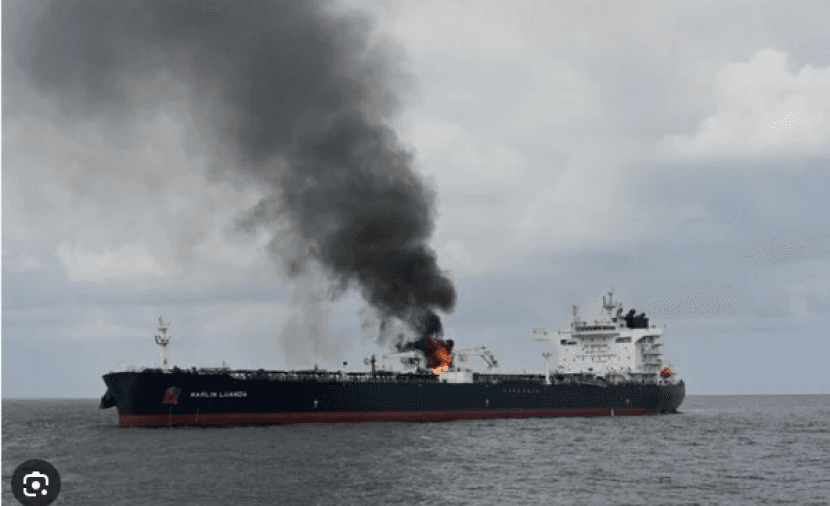
Iran’s IRGC Warns It Will Target Any Ship Approaching Strait of Hormuz
13 sources compared
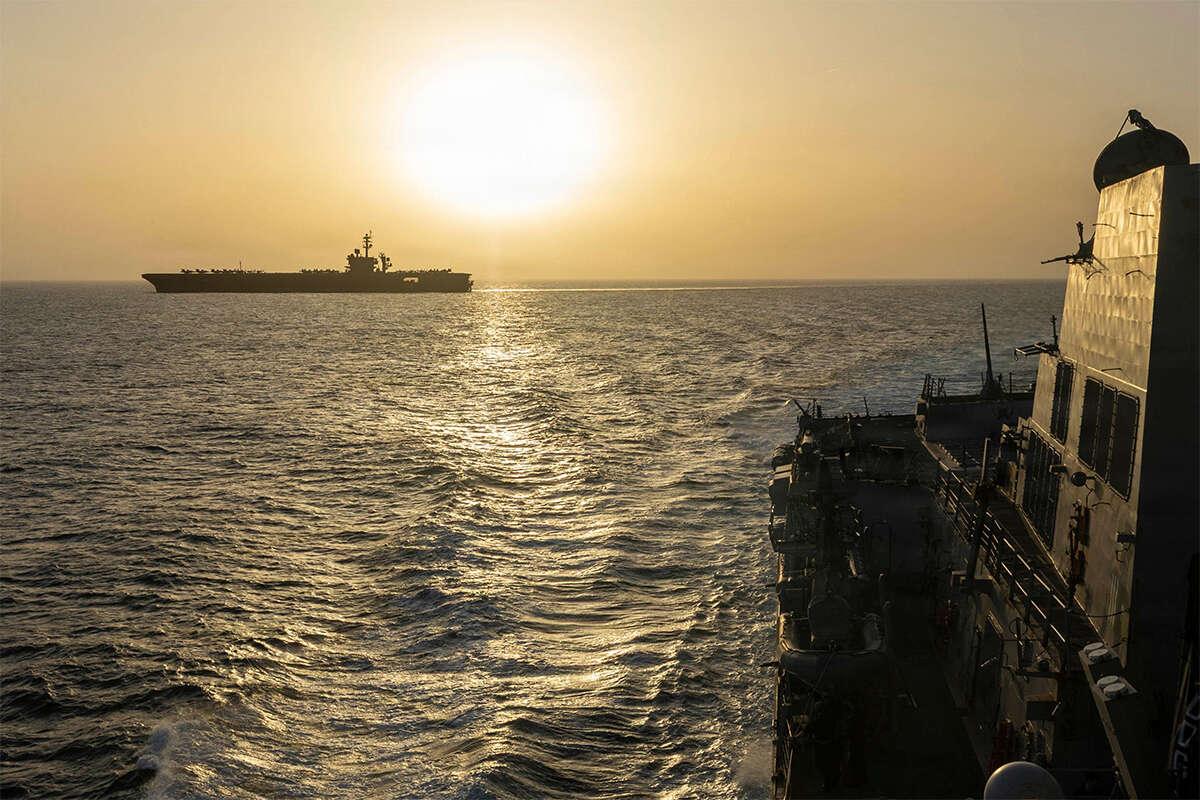
Donald Trump Says U.S. Marines Boarded Iranian-Flagged Touska After USS Spruance Fired
11 sources compared
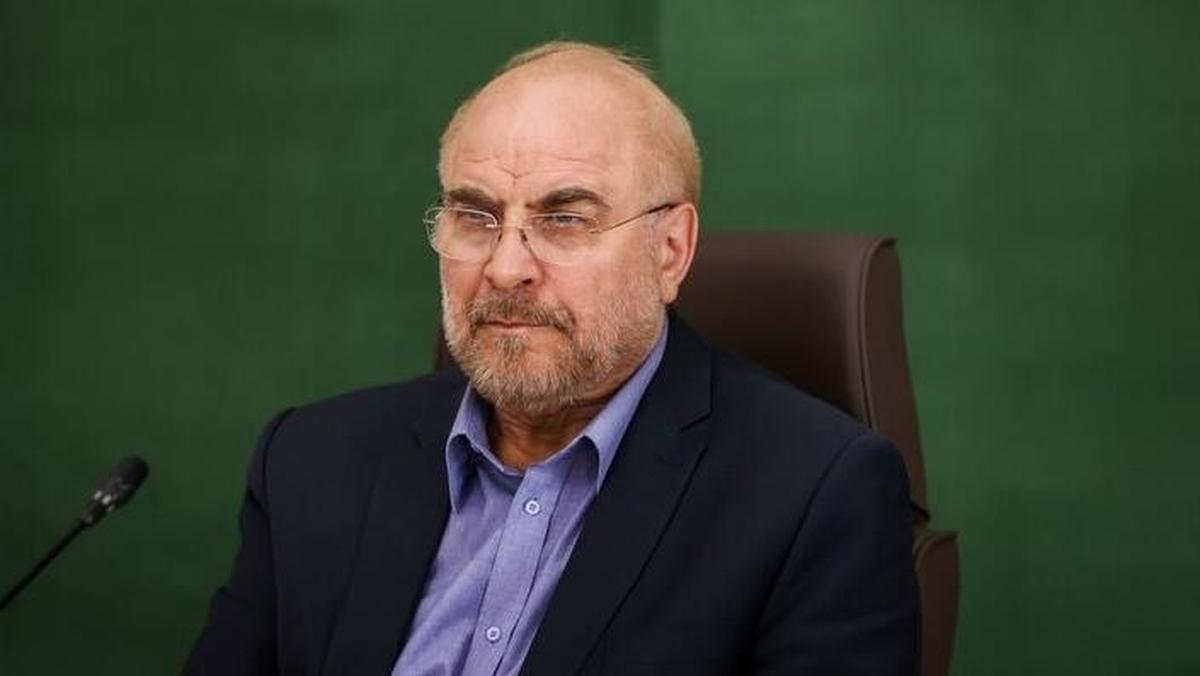
Ebrahim Azizi Says Iran Will Decide Right of Passage Through Strait of Hormuz
12 sources compared
Iranian National Shamim Mafi Arrested at LAX for Arms Trafficking to Sudan for Iranian Government
10 sources compared