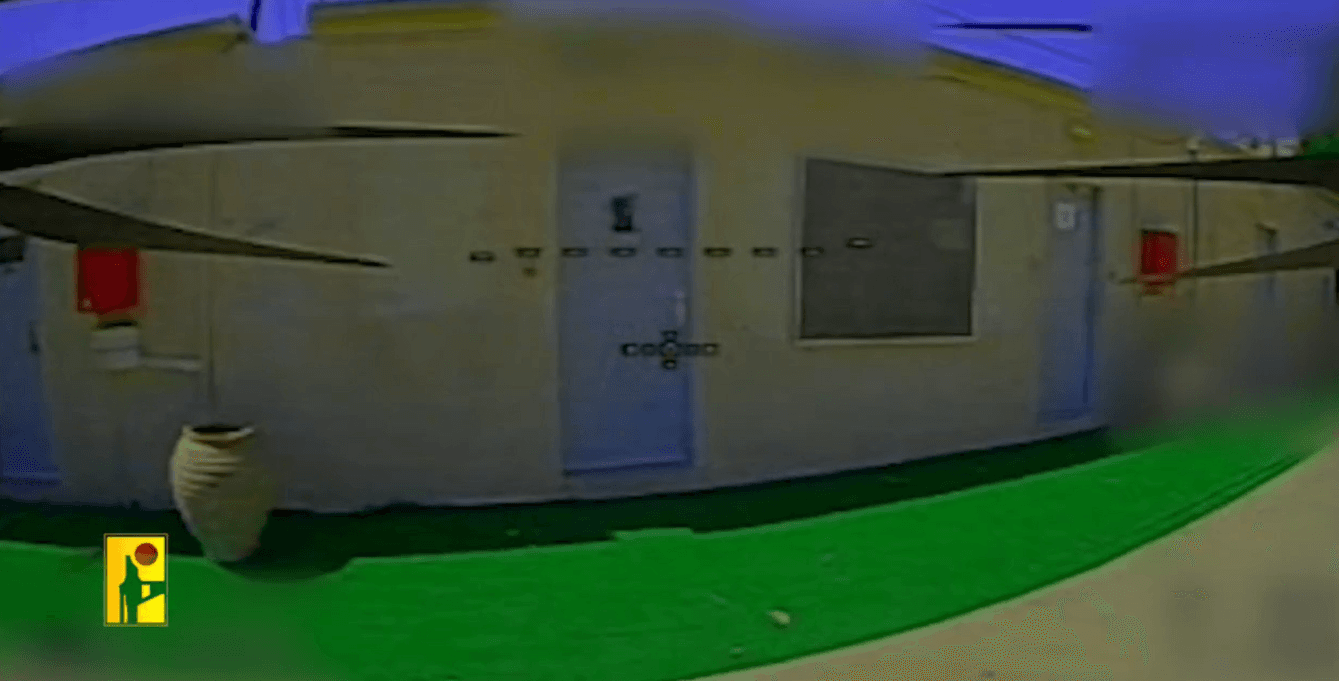
Israel Airstrikes in Southern Lebanon Kill 10 as Hezbollah Drones Wound Two Soldiers
Image: Monte Carlo Doualiya

Israel Airstrikes in Southern Lebanon Kill 10 as Hezbollah Drones Wound Two Soldiers

03 May, 2026.Lebanon.56 sources

Key Takeaways

  • Israeli airstrikes in southern Lebanon killed 10 people.
  • Two Israeli soldiers were injured by Hezbollah drones.
  • Ceasefire remains in place but is fragile amid ongoing clashes.

Airstrikes and casualties

Israel carried out several airstrikes in southern Lebanon that killed at least 10 people, while Hezbollah said it fired rockets and drones at northern Israel where two soldiers were wounded, NBC News reported from Tyre, Lebanon.

The exchanges continued despite a ceasefire in place since April 17, NBC News said, and the Israeli military urged residents of the Lebanese village of Habboush near the southern city of Nabatiyeh to evacuate.

Image from Al Jazeera
Al JazeeraAl Jazeera

NBC News said an airstrike on Habboush occurred around the time of the warning and killed six people, including a woman and a child, and wounded eight, according to Lebanon’s Health Ministry.

The state-run National News Agency reported that four people were killed in strikes on three other southern villages, NBC News added.

By Friday afternoon, Hezbollah had issued six statements saying it launched drones and rockets at Israeli military positions, NBC News reported.

NBC News also said paramedics in southern Lebanon recovered the bodies of five people, including a man and his three sons, from under rubble in the village of Kfar Rumman, also near Nabatiyeh, a day after they were killed.

The National News Agency reported that the five were killed in an airstrike late Thursday on Kfar Rumman, and it identified those whose bodies were recovered as Malek Hamza and his sons, Ali, Fadel and Hamza, NBC News said.

The Lebanese army confirmed that a soldier, Ali Jaber, was killed in the strike, NBC News reported.

Ceasefire violated, drones proliferate

The drone and rocket exchanges described by NBC News unfolded alongside a broader pattern of continued hostilities, with the ceasefire in place since April 17 not stopping attacks.

NBC News said Hezbollah issued six statements by Friday afternoon about launching drones and rockets at Israeli military positions, and it also said the Israeli military confirmed Hezbollah launched an explosive drone that fell in northern Israel near the border with Lebanon.

Image from Al-Bayader
Al-BayaderAl-Bayader

Israeli media reported that a drone strike near Margaliot in northern Israel caused a fire, and that two soldiers were lightly wounded in a separate Hezbollah drone impact in the area, NBC News reported.

In parallel, The Jerusalem Post framed the Israeli Air Force’s assessment of Hezbollah’s first-person-view (FPV) drones, saying on Friday there was "no magic potion" to stop them and that they use technology and manual operators.

The Jerusalem Post said the IAF acknowledged that presently, and even with new tactics, the FPV drone threat would not be easily eliminated all at once, and it pointed to tests carried out around two weeks earlier that could eventually have "major ramifications."

The Jerusalem Post also reported that the IAF said the largest positive change in combating FPV drones would come if the United States released restraints on Israel being able to attack Hezbollah north of the Litani River.

TF1 Info described a different angle on the same battlefield shift, saying that since the resumption of hostilities, the use of fiber-optic drones has multiplied within Hezbollah’s ranks and that they are "almost impossible to detect."

TF1 Info added that the Defense Ministry’s Directorate of Defense Research and Development launched a public tender in mid-April, and it said Netanyahu acknowledged two main threats coming from Hezbollah: the 122-type rockets and the drones.

Officials, soldiers, and Hezbollah

Multiple outlets tied the drone threat to specific battlefield outcomes and to statements by military and political figures.

The National | Western Alternative said Hezbollah is shifting from heavy fire to near-daily precision drone strikes against Israeli troops in southern Lebanon, and it quoted a Hezbollah official saying, "From a military and strategic standpoint, you can consider the first-person drones as the new martyrdom squads."

The National also quoted retired Lebanese Army general Mounir Shehadeh, saying the change is "an evolution within a broader combat system, not a full transformation," and it described Hezbollah’s use of kamikaze and fibre‑optic drones to inflict attrition on infantry.

The Jerusalem Post reported that the Israel Air Force said it was hard at work on new defense tactics specifically against FPV drones, and it said around two weeks ago some new tests had been carried out that could eventually result in "major ramifications."

The Jerusalem Post also reported that IAF sources said removing restraints could help Israel reduce the FPV drone threat by around 80%.

Ynetnews described a new Israeli directive, saying IDF Chief of Staff Lt. Gen. Eyal Zamir instructed Northern Command and the Israel Air Force to strike the production and supply chain of the FPV drones, including deep inside Lebanon.

Ynetnews also quoted an IDF senior official saying, "This is a complex challenge, and there is no generic magic solution," and it added that the same official said, "The Jewish mind is working on solutions that will neutralize 80% of the problem."

JNS.org said the IDF intercepted at least four drones launched by Hezbollah and that it struck more than 40 Hezbollah targets across Southern Lebanon over the past day, including command centers and "military" structures.

How outlets frame the same war

While the core facts of strikes and drone attacks recur across reports, the outlets differ in emphasis and in how they describe the technology and the policy debate.

NBC News foregrounded the immediate human impact of airstrikes and the ceasefire context, stating that Israel’s military urged evacuation in Habboush and that the Health Ministry said six people were killed and eight wounded, while also reporting that Hezbollah issued six statements by Friday afternoon.

Image from Al-Jarida Al-Jazeera
Al-Jarida Al-JazeeraAl-Jarida Al-Jazeera

By contrast, TF1 Info centered on the technology shift, saying fiber-optic drones are "almost impossible to detect" and describing how innovation stemming from the war in Ukraine challenges the Israeli army, including a video from The Sun showing a drone attacking an Israeli helicopter evacuating the wounded.

The Jerusalem Post framed the same threat as an operational constraint, saying there is "no magic potion" to stop FPV drones and that progress could come if the United States released restraints on Israel being able to attack Hezbollah north of the Litani River.

Al Arabiya’s Arabic-language report focused on Israel’s countermeasures, describing "Nylon nets" as Israel’s attempt to counter Hezbollah drones and quoting an Israeli commander saying, 'There is not much that can be done about it,' while also citing Mako’s military correspondent Shai Levi on how the army tries to portray explosive drones as a "new threat."

The National | Western Alternative emphasized strategy and framing, describing a shift to near-daily precision drone strikes and quoting Hezbollah’s official about "martyrdom squads," while also describing the continuous buzzing of Israeli drones as a grim yet common sound for Lebanese.

Ynetnews and JNS.org both discussed Israeli actions, but Ynetnews emphasized a directive to strike the FPV drone supply chain deep inside Lebanon and included the quote about neutralizing 80% of the problem, while JNS.org emphasized interception counts and the number of targets hit, saying the IDF intercepted at least four drones and struck more than 40 targets.

Even within the drone discussion, the outlets differ on what they highlight: The National pointed to kamikaze and fibre‑optic drones and attrition, while The Jerusalem Post stressed tests and the possibility of reducing the threat by around 80% if restraints are removed.

What comes next

The reporting also points to immediate next steps and longer-term consequences tied to drone warfare and to the broader conflict environment.

NBC News said that despite the war, residents have continued to return to homes in southern Lebanon after being displaced for weeks, and it quoted Umm Ali Khodor in Tyre saying, "We were displaced, we rented a house, but as you know the situation is very difficult," and "We could not continue so we returned to our home."

Image from Al-Jazeera Net
Al-Jazeera NetAl-Jazeera Net

NBC News reported that at Jabal Aamel hospital in Tyre, director Wael Mroueh said many of the wounded they are treating are people who initially fled but decided to return and take their chances in areas facing periodic bombardment, and he described the dynamic as "different from all the previous wars."

NBC News added that the hospital has enough food and supplies to last for a month and is relying on international organizations to maintain its supply chain, while also noting that many hospital staff are displaced and the facility is hosting them and their families.

On the policy and operational side, The Jerusalem Post said the IAF emphasized that the largest positive change in combating FPV drones would come if the United States released restraints on Israel being able to attack Hezbollah north of the Litani River, and it reported that removing such restraints could help Israel reduce the FPV drone threat by around 80%.

Ynetnews said IDF Chief of Staff Lt. Gen. Eyal Zamir ordered strikes on the FPV drone production and supply chain deep inside Lebanon, and it quoted the IDF senior official saying that until a solution is found, soldiers should not be ashamed to use simple protective nets if they save lives.

Al Arabiya’s report described Israel’s attempt to counter Hezbollah drones with protective nets on vehicles, and it said the main idea behind the net is that the drone would become entangled and disable it, or that the nets would help keep the aircraft away from occupants before it explodes.

Finally, NBC News reported an IFRC condemnation of targeting Red Cross volunteers, with IFRC Under Secretary General for National Society Development and Coordination Xavier Castellanos Mosquera saying two Lebanese Red Cross volunteers have been killed and 18 others wounded by Israeli strikes, and it quoted him describing volunteers hugging each other before departing on a call "because they don’t know if they will return."

More on Lebanon