
Israel Brings 140-Cow Herd to Guard Golan Border, Officials Say
Key Takeaways
- A 140-cow herd guards the Syrian border in the Golan Heights.
- The program began about six months ago.
- Officials say permanent land control requires animals, not fences, rooted in French occupation.
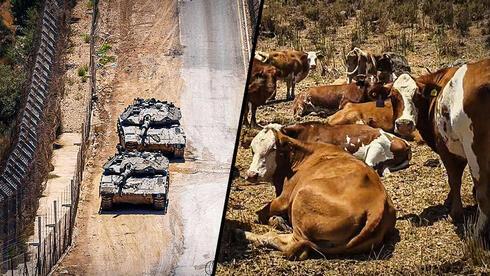
Cow herd on Golan
Israeli forces along the Syrian border in the Golan Heights faced recurring security alerts as Syrian shepherds and cattle approached IDF posts, and officials in the sector say an unusual solution has changed conditions on the ground.
“Experience—since the French occupation of Syria—has shown that anyone who wishes to control the land needs a permanent presence, and that cannot be achieved solely through fences or military positions, but through animals and grazing to exert daily control over the land, according to a report published by the Israeli newspaper Yedioth Ahronoth”
Ynetnews says a 140-cow herd grazing across roughly 10,000 dunams near the Rokad River created a continuous civilian-agricultural presence in an area long considered exposed, and the herd belongs to Yoel Zilberman, founder and CEO of Hashomer Hachadash and a resident of Natur in the Golan Heights.
The report says outgoing Golan Brigade commander Col. Benny Kata led the effort about six months ago under operational secrecy to bring the herd into the area beyond the border fence built roughly a decade ago.
Zilberman told Ynetnews, “Until the end of 2025, only a soldier with a vest, a weapon and a helmet could come out here. A civilian certainly could not walk around here like this,” describing a shift from an enclave he said was “completely empty” to agricultural use.
In the same account, Ynetnews adds that the herd is grazing on the Syrian side opposite the communities of Eliad, Avnei Eitan, Nov and Hispin, after the fence was built west of the actual cease-fire line for topographical and operational reasons.
Recruitment and deterrence
A report carried by آخر خبر frames the “Cow Platoon” as an Israeli army strategy that relies on animals and grazing for daily control rather than fences or military outposts alone, citing a report published by Yedioth Ahronoth.
It says that six months ago Colonel Benny Katta, the outgoing commander of the Golan Division, led in complete secrecy an operation to mobilize a herd belonging to Yoel Zelberman, founder and chairman of the board of the company Hashomer Hadash and a resident of Natour in the occupied Golan.
آخر خبر says the plan was approved in January by the commander of Division 210, Brigadier General Ya’ir Blay, and the former commander of Brigade 474, Colonel Benny Katta, to seize a grazing area using cattle as a deterrent with security and alert capabilities.
The report says Zelberman was told his mission carried a high risk and that no one in the Israeli army could guarantee his safety or the safety of his herd, but it adds that he brought in a herd accompanied by civilian farmers.
آخر خبر concludes with Zelberman’s lesson from October 7, 2023, saying, “The most important and painful lesson we learned is that the concept of ‘the fences’ is wrong.”
After Oct. 7, new rules
Ynetnews says that even more than two years after Hamas terrorists breached the Gaza border fence, Syrians continued to challenge the IDF along the Golan border, and forces were required to respond immediately to every alert under heavy operational pressure with limited regular and reserve troops.
“Experience has shown, since the French occupation of Syria, that anyone who seeks to control the land needs a permanent presence, not achieved solely through a fence or military outposts, but through animals and grazing to exercise daily control over the land, according to a report published by the Israeli newspaper Yedioth Ahronoth”
It adds that in the final quarter of 2025 alone, more than 80 arrivals of Syrian shepherds were documented along different routes into Israeli-controlled territory near military posts, and it describes the herds as a potential infiltration route, cover for surveillance, and a possible channel for smuggling weapons.
From a lookout point, Ynetnews quotes Zilberman saying, “When we arrived, we saw from here 30 to 40 different herds of cows, goats and sheep, with shepherds next to them,” and it says he described some as operating under cover.
Al-Jazeera Net repeats the framing from Yedioth Ahronoth and says that after the herd entered the Syrian side of the Golan, “anyone in the area was considered a real enemy,” while Syrians who approached before could offer excuses because their herds were near the fence.
Al-Jazeera Net also quotes Zilberman saying, “This is exactly how Hizballah and Hamas operate, for they — through the herd — watched and checked military patrols and their schedules, and the troops’ equipment. But this is over, and they can no longer reach here.”
More on Gaza Genocide

Democratic Socialist Melat Kiros Defeats 15-Term Rep. Diana DeGette in Colorado Primary
15 sources compared

Caritas Jerusalem Delivers Potable Water Trucks as 91% of Gaza Households Face Water Insecurity
16 sources compared
Israeli Security Forces Detain Palestinian Women in West Bank Raids Across Hebron, Ramallah, Nablus, Bethlehem
12 sources compared
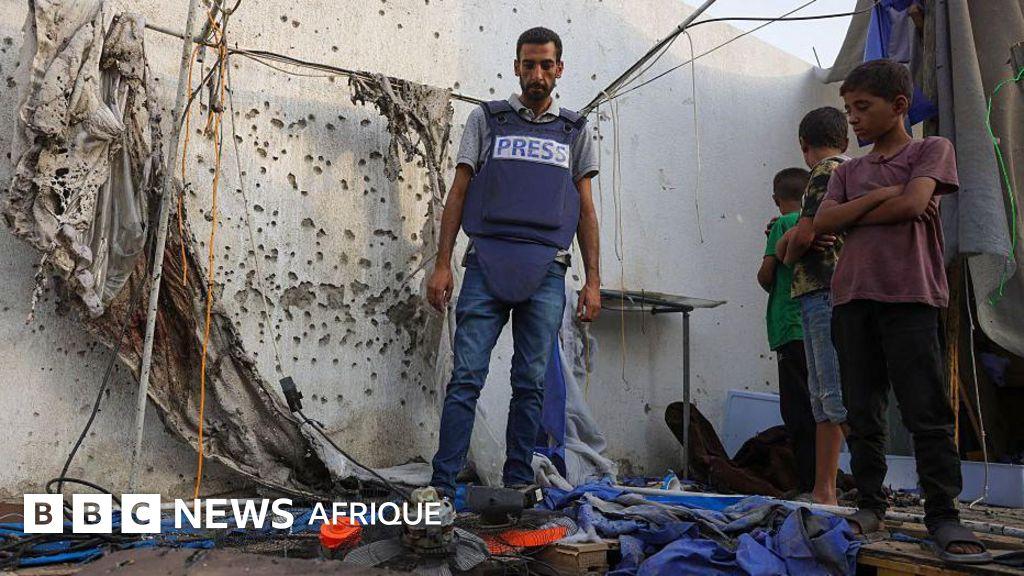
CPJ Launches Review Of Gaza Journalist Death Database After Hamas, PIJ Obituaries
18 sources compared