Gaza Genocide10 October, 20253 min read
Israel Enforces Ceasefire and Begins Partial Withdrawal from Gaza
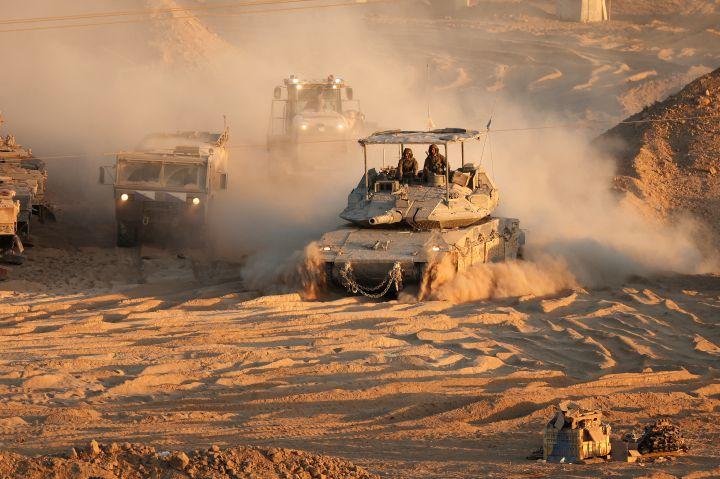
Israel and Hamas agreed to a U.S.-brokered ceasefire effective October 10, 2025, at noon local time. Israeli forces began partial withdrawal from Gaza, maintaining control over approximately 53% of the territory.

79 outlets told this the same way.
Outlets did split on Israel Marks Oct. 7 Anniversary With Strikes on Gaza, Netanyahu Faces Election After Nova Tribute →
Israel National News was read line by line by the Watchdog: 5.9. See the score →
Ceasefire and Aid Coordination in Gaza
Israel enforced a ceasefire at noon Friday and began a partial withdrawal to agreed lines, while still holding more than half of Gaza under military control and warning civilians to avoid restricted zones. An international task force led by the U.S. is standing up a civil-military coordination center in Israel with about 200 personnel to oversee compliance and aid flow, alongside partners from Egypt, Qatar, Turkey and likely the UAE. No U.S. troops will enter Gaza.
“Israel has approved a US-brokered ‘phase one’ framework deal to release all hostages held by Hamas and to withdraw Israeli forces to an agreed Gaza boundary, including a ceasefire and the exchange of 48 hostages for Palestinian prisoners.”
The deal’s first phase sets a 72-hour window for the militant group to release 48 hostages—about 20 believed alive—while Israel permits roughly 600 aid trucks daily and prepares to reopen Rafah with European support. Some outlets stress that the military pullback is limited: Israeli officials and local reporting say Israel is retaining control of roughly 50–53% of the territory even under the ceasefire’s first phase.

Gaza Ceasefire and Aid Efforts
On the ground, Palestinians started moving back toward shattered neighborhoods as aid was slated to surge. Israel continued lethal operations even after the ceasefire started. Al Jazeera reports an Israeli helicopter attack east of Gaza City that killed seven people despite the truce.
Rescue workers and civilians cautiously moved into areas previously sealed by Israeli forces. UNICEF managed limited evacuations of newborns from a northern hospital as Israeli units pulled back.
Agencies prepared to push up to 600 aid trucks a day. Israel and Hamas agreed that the Red Cross would coordinate low-profile hostage handovers within 72 hours, without public ceremonies.
Casualties and Genocide Allegations in Gaza
This ceasefire unfolds amid global documentation of mass Palestinian deaths and allegations of genocide against Israel, which Israel denies. Middle East Eye reports over 67,000 Palestinians killed—mostly civilians—after Israel’s bombardment and invasion, with international observers accusing Israel of genocide. An independent UN commission, cited by Houston Public Media and NPR, has accused or determined that Israel committed genocide in Gaza.
“An independent UN commission recently determined that Israel committed genocide in Gaza, a claim Israel denies.”
NPR and Houston Public Media also note that Israel rejects the charge. DW and BBC tally similar death figures in Gaza while chronicling the war’s scale.
Hostage Exchange Deal Details
The deal’s exchange terms remain contested and inconsistently reported. Outlets agree that Hamas must deliver 48 hostages within 72 hours, but counts and prisoner lists vary. Ici Beyrouth specifies 20 living, 26 presumed dead, and two unknown among the 48 hostages.
The BBC describes Israel releasing about 1,700 prisoners, including roughly 250 serving life sentences. WTOP and The Telegraph report around 2,000 prisoners released and note the exclusion of high-profile Fatah figure Marwan Barghouti.
CBC notes that Hamas demanded Barghouti’s release, which Israel opposes, echoing The Telegraph’s exclusion claim. All of this unfolds as Israel allows roughly 600 aid trucks a day to enter.
Gaza Transition and Oversight Plans
What comes next is contested: U.S.-backed plans propose outside oversight of Gaza’s transition, but critics warn the framework is coercive and leaves Israel room to resume force. Scripps News outlines a Trump-brokered 20-point plan to disarm Hamas, set up a technocratic Palestinian committee under an international “Board of Peace” chaired by Trump, and deploy an International Stabilization Force. Mint adds that Trump and Tony Blair would lead that board.
“Trump’s plan proposes an international ‘Board of Peace,’ led by himself and former UK Prime Minister Tony Blair, to oversee Gaza’s administration.”
The Conversation calls the deal a highly coercive arrangement favoring Israel with vague enforcement that gives Israel flexibility to resume military actions and leaves Gazans vulnerable. Australia’s ABC reports that Hamas rejected a proposed transitional authority for Gaza.

DW says Europe supports a UN-backed stabilization force but rules out German troops. Israel still holds over half of Gaza in this “phase one,” underscoring that withdrawal is partial and force remains the lever.