
Lebanon · 04 September, 2026 · 3 min read
Israel Claims Operational Control of Ali al-Taher Ridge After Strikes on Hezbollah Tunnels
Israel claims operational control of Ali al-Taher ridge in southern Lebanon Israel says Hezbollah fighters cleared from tunnels beneath the ridge
Whether Israel's claimed control matches on-the-ground reality.
2 of 3 outlets skipped it: a UN-style mediator perspective: US wanted Hezbollah to hand hill to Lebanon.
The Jerusalem Post was read line by line by the Watchdog: 5.5. See the score →
147outlets compared
Same story, two versions
tap a side to read it in full
Al Jazeera
“Israel Katz claimed Israeli forces had driven Hezbollah fighters out of what he said was a network of tunnels”Read the original ↗
PBS
“Just before Israel's announcement, its air force was still targeting the hill, according to Lebanese state media.”Read the original ↗
Al Jazeera foregrounds Israel’s control claim but adds rights and war-crime allegations. PBS emphasises uncertainty and ongoing strikes.
Ali al-Taher ridge seized
Israel claimed it had established operational control over the strategically vital Ali al-Taher ridge in southern Lebanon after an extended operation against Hezbollah positions, with Defence Minister Israel Katz saying Israeli forces had driven Hezbollah fighters out of a network of tunnels under the contested highland 15km from the border.
“15km (10 miles) from the border”
Katz said the capture of Ali Taher was “an important step towards achieving this goal,” while the Reuters report cited in Al Jazeera said Iran had warned the United States last month it would respond forcefully if Israeli attacks on the ridge continued.A

The PBS/AP report said that since a ceasefire went into effect between Israel and Hezbollah more than two months ago, fighting stopped in much of Lebanon but not on Ali Taher hill, where Israel’s military carried out daily shelling and airstrikes and Hezbollah attacked Israeli forces with drones.P
PBS/AP also reported that it was unclear how far Israel’s control extends, and that just before Israel’s announcement its air force was still targeting the hill, according to Lebanese state media.P
The Times of Israel later described the IDF’s strikes as following Hezbollah’s launch of two explosive drones at Israeli troops in the Ali Taher Ridge area, with the IDF saying one drone was shot down and no soldiers were injured.
Hezbollah silence, competing frames
Hezbollah had yet to formally comment on Israel’s claims in Al Jazeera’s account, and Nicholas Blanford, a non-resident senior fellow at the Atlantic Council, said the lack of comment raised questions about whether “a deal’s been done” or whether Israel was exaggerating what it means by “operational control.”A
Al Jazeera also quoted Ahron Bregman, an Israeli security analyst and senior teaching fellow at King’s College London, saying Israel’s “operational control” over the ridge was “a tactical, even strategic, gain,” enabling Israel to put pressure on the Lebanese government.A
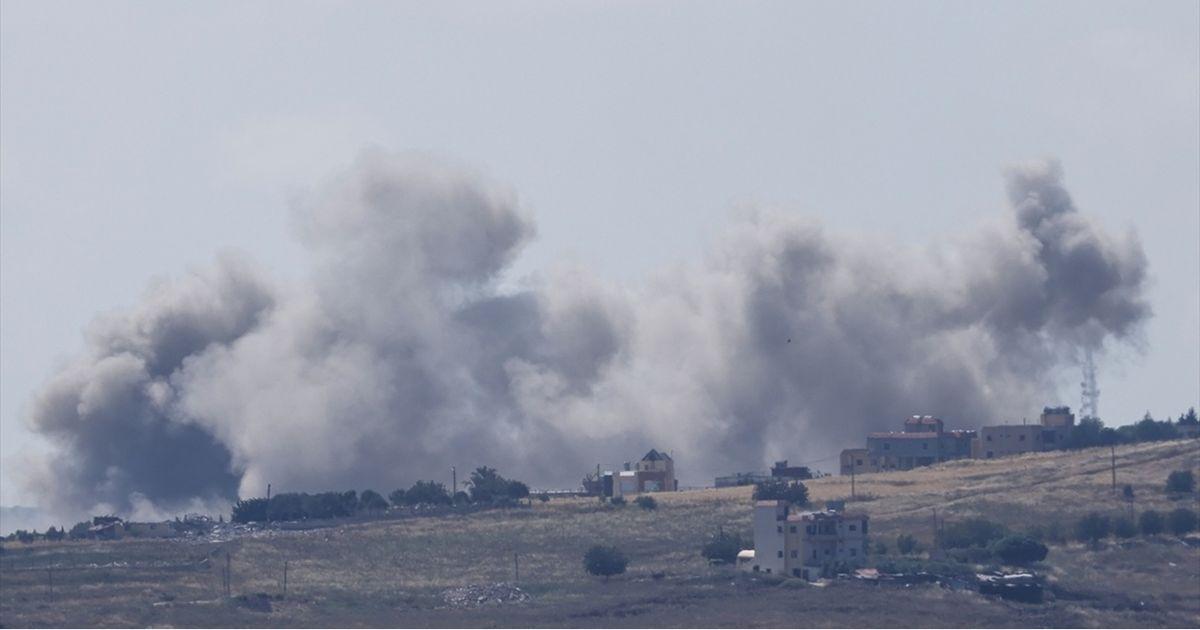
In a separate framing, the Daily Beirut report quoted Israeli army spokesperson Ila Vayou saying, through her account on X, that “the Israeli army attacked elements and infrastructures linked to Hezbollah in southern Lebanon” in response to the launch of two suicide drones toward positions in the security zone.
The Times of Israel described the same drone episode as a “blatant violation” of the ceasefire and said the IDF struck Hezbollah infrastructure and operatives in response, while Lebanon’s Health Ministry reported deaths and injuries in Nabatieh al-Fawqa and Arab Salim.
PBS/AP reported that Hezbollah firmly rejected a proposal from the Lebanese government to hand over Ali Taher to the Lebanese army, fearing Israel would seize control and demand more territory.P
What comes next, what’s at risk
The stakes described by PBS/AP centered on whether a full-on battle over Ali Taher hill could escalate fighting across Lebanon, with the United States mediating talks between Lebanon and Israel and wanting Hezbollah to hand over the hill to the Lebanese army as part of a plan to disarm the militant group and dismantle its infrastructure.P
“could escalate fighting across the country”
PBS/AP said Hezbollah refused to hand over Ali Taher, and it noted that the hill sits north of the Litani river, which has become the de facto boundary of the area captured by Israel since its latest war with Hezbollah began in early March.P
In Al Jazeera’s account, Defence Minister Israel Katz tied the ridge to a broader policy, saying Prime Minister Netanyahu and he were leading a clear and uncompromising policy that Israel would not withdraw from the security zone in Lebanon until Hezbollah was disarmed throughout Lebanon and threats to residents of the Galilee were removed.
Al Jazeera also quoted Mohanad Hage Ali of the Carnegie Middle East Centre saying there “There aren’t any consequences to their actions,” adding that Israel could “demolish entire villages and wipe out whole societies” in a way he said amounted to “It’s ethnic cleansing.”A
Meanwhile, the Times of Israel reported that Israel’s strikes included destroying Ghandour Hospital in Nabatieh al-Fawqa, which it said was empty of patients and staff and had been out of service for years, and that the IDF said Hezbollah had been using the hospital as a command center.