
Israel Launches New Wave of Attacks on Tehran as Iran–US–Israel War Reaches Day 17
Key Takeaways
- Israel launches a new wave of attacks on Tehran
- Drone-related incident near Dubai International Airport disrupts flights
- Escalations continue across Gulf region with strikes and maritime tensions
Conflict Escalation
The Iran-US-Israel conflict has escalated significantly as it enters day 17, with Israel launching a new wave of attacks targeting Iran.
“Israel launched a new wave of attacks on Tehran as the US-Israel war on Iran entered its 17th day on Monday”
The United States and its allies respond with coordinated military actions across the region.

The violence has spread across multiple countries including Israel, Lebanon, Iraq, Jordan, and Gulf nations.
This creates a complex multi-front conflict that threatens regional stability.
Trump administration officials have characterized Iran as militarily weakened.
They claim to have decimated their manufacturing capabilities while dismissing Iranian military displays as disinformation.
The conflict has already resulted in significant casualties, particularly in Lebanon.
The death toll in Lebanon has risen to 850 including over 100 children.
Iranian forces have reportedly launched retaliatory strikes that have hit various targets.
These include military infrastructure across the region.
Israeli Military Offensive
Israeli military operations have intensified across Lebanon.
The Israeli military confirms new waves of raids and limited ground operations against Hezbollah positions.
The casualties in Lebanon have reached alarming levels.
The death toll has reached 850 including more than 100 children.
This highlights the devastating human cost of the escalating conflict.
In Iraq, Iranian-aligned forces have also been targeted.
An air raid struck the headquarters of the pro-Iranian Popular Mobilisation Forces (PMF).
This occurred in the Jurf al-Sakhar area.
Three people were injured in the attack.
The conflict has reached Israel itself.
Air raid sirens were activated in central Israel early on Monday.
A missile was fired from Iran but landed in an open area.
No casualties were reported in Israel.
The United Nations Interim Force in Lebanon (UNIFIL) has reported incidents.
Non-state armed groups fired upon its patrols.
This further complicates the volatile security situation.
US Coalition Strategy
The Trump administration has taken a强硬 stance against Iran.
“Israel launched a new wave of attacks on Tehran as the US-Israel war on Iran entered its 17th day on Monday”
President Trump characterizes Iran as 'Militarily ineffective and weak'.
He uses Truth Social to dismiss Iranian military displays as disinformation.
Trump claims Iran has 'very little firepower left'.
He says the United States has 'decimated their manufacturing capability'.
Trump mocks Iranian military demonstrations as showing 'phony 'Kamikaze Boats'' that 'don't exist.'
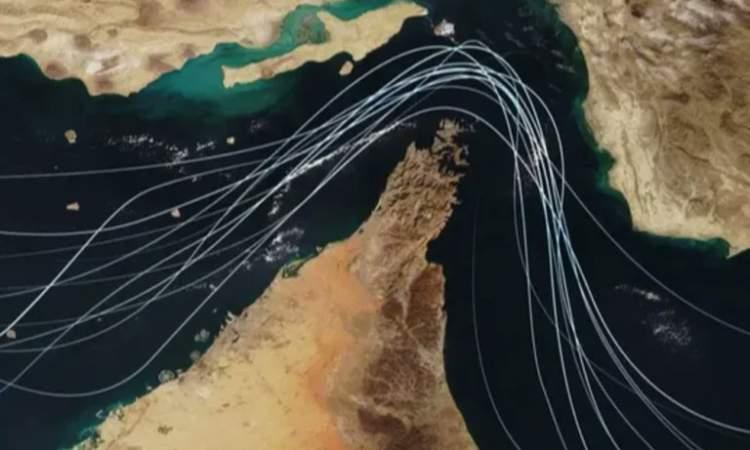
The administration pushes for a multinational naval coalition to secure the Strait of Hormuz.
This strait handles roughly one-fifth of global oil trade normally.
Trump has approached about seven countries to send warships.
He wants help protect the strategic shipping corridor.
Trump argues countries benefiting should help protect it.
He has appealed to China, France, Japan, South Korea and the United Kingdom.
He suggests they could contribute minesweepers and other military assets.
These would counter drones, naval mines and other shipping threats.
Global Reactions
International responses to the escalating conflict have been mixed.
Many countries express caution about direct military involvement.
This reflects the growing regional crisis complexities.
Several governments review Washington's request for naval forces.
They avoid direct military commitments.
This reflects complex geopolitical calculations.
Britain confirmed Prime Minister Keir Starmer discussed reopening the strait with Trump.
The UK was initially reluctant to send aircraft carriers.
Japan stated it is not considering maritime security operations.
Germany signalled it would not become an active participant.
Australia announced it would not send a naval ship to the strait.
France indicated discussions are underway with partners.
These include Europe, India and Asia about a possible escort mission.
China called on all parties to ensure stable energy supply.
It indicated it would maintain communication to ease tensions.
Iran's Position
Iran has maintained a defiant stance in the face of escalating military pressure.
“Israel launched a new wave of attacks on Tehran as the US-Israel war on Iran entered its 17th day on Monday”
It signals controlled access to the Strait of Hormuz while rejecting negotiations with Washington.
Iranian Foreign Minister Abbas Araghchi stated several countries approached Tehran.
They sought safe passage for vessels through the strait.
Iran has allowed ships from different countries to transit the waterway.
Specific details were not disclosed.
Tehran maintains the strait remains open to all except the US and its allies.
This effectively uses the strategic waterway as leverage.
Araghchi emphasized Iran sees no reason to negotiate with Washington.
He blames the US and Israel for coordinated strikes.
These strikes triggered the current conflict.
This reflects Iran's strategy of controlling key strategic assets.
It resists direct diplomatic engagement with Trump.
This creates a stalemate prolonging the regional crisis.
More on Iran
Donald Trump Says US Navy Seized Oil Cargo Like Pirates During Iran Blockade
24 sources compared

Donald Trump Says U.S.-Iran Hostilities Terminated as War Powers Deadline Arrives
20 sources compared
U.S. Rebuilds Logistics Supply Chain After Ceasefire, Boosts CENTCOM Airlift From Ramstein
12 sources compared
Ayatollah Seyyed Mojtaba Khamenei Orders New Legal Rules for Strait of Hormuz Amid US Blockade
18 sources compared