Gaza Genocide23 October, 20253 min read
Israel Leaves Gaza a Deadly Minefield That Kills Dozens and Will Take Decades to Clear
Gaza is heavily contaminated with unexploded ordnance, causing over 53 deaths so far. Clearing Gaza of mines and explosives will take between 20 and 30 years, experts say.

15 outlets told this the same way.
Outlets did split on Israel Marks Oct. 7 Anniversary With Strikes on Gaza, Netanyahu Faces Election After Nova Tribute →
Gaza's Explosive Aftermath
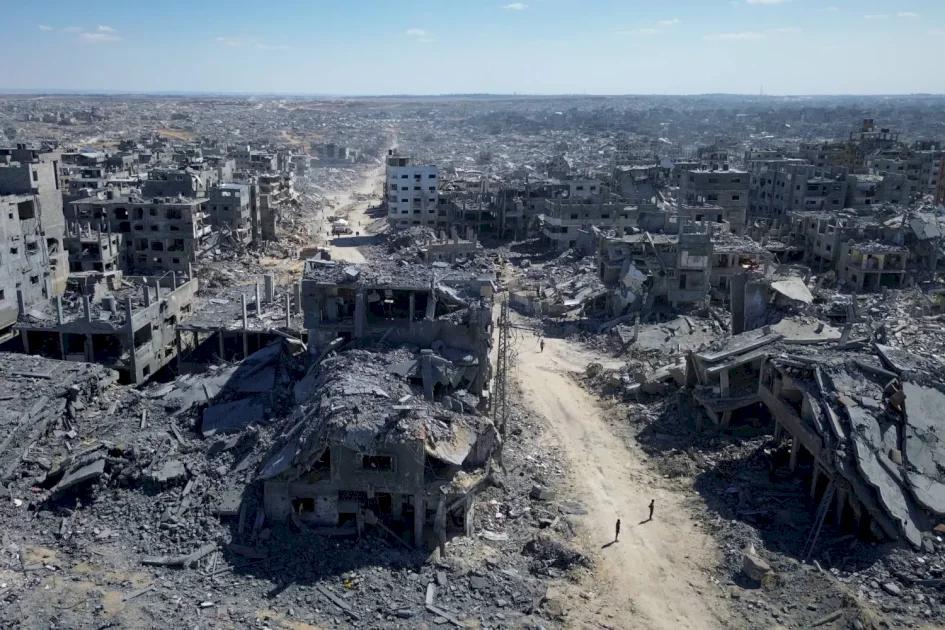
Israel’s bombardment and ground operations have left Gaza saturated with unexploded bombs and landmines. These explosives have turned neighborhoods into a lethal “minefield” that continues to kill Palestinians long after airstrikes have stopped. Humanitarian demining experts report that at least 53 people have already died and hundreds more have been injured by these hidden explosives.
“The Gaza Strip is heavily contaminated with hidden unexploded bombs and landmines, creating a deadly ‘minefield’ that has already killed over 53 people and injured hundreds more.”
Experts warn that the death toll will rise as families return to their shattered homes. Clearance of these explosives is expected to take 20 to 30 years. Specialists compare Gaza’s situation to British cities after World War II and emphasize that full removal is unlikely.

This means that lethal remnants will continue to threaten communities for generations. This man-made hazard exists within a broader catastrophe.
The Guardian reports that over 68,000 Palestinians, mostly women and children, have been killed. The UN accuses Israel of committing genocide, highlighting how the bombing and siege have created conditions for both mass death and a long-term unexploded ordnance crisis.
Humanitarian Crisis in Gaza
The long tail of Israel’s bombing intensifies Gaza’s humanitarian collapse. Israel restricts imports, blocks formal governance, and enforces a blockade that Foreign Affairs says hardened into a “total blockade since March 2025.” Aid remains far below what is needed, hospitals and water systems are shattered, and 94% of hospitals are damaged.
The Guardian reports Israel has rejected some international court rulings as it keeps tight controls. Foreign Affairs says Israel has largely ignored ICJ orders and ICC indictments to ensure aid access. ABC reports the WHO still calls the situation “catastrophic.”
Al Jazeera reports Palestinian health officials attribute at least 68,280 deaths and 170,375 injuries to Israel’s military actions. These policies and destruction make unexploded ordnance clearance slower and deadlier for civilians forced to scavenge through rubble to survive.
Ongoing Conflict and Civilian Impact
Even under a ceasefire described as fragile by multiple sources, Israel continues actions that result in civilian deaths and increased fear. The BBC reports that the IDF fired on a vehicle, killing 11 civilians, including children, after it crossed a poorly marked boundary known as the “Yellow Line.” Experts have questioned the legality of using such force in this incident.
“Experts suggest the line is intentionally marked with some ambiguity... the legal status of the boundary and the use of force has been questioned.”
The Guardian states that recent Israeli airstrikes have killed nearly 100 Palestinians. ABC reports that U.S. officials are actively working to manage the ceasefire while Israel accuses a militant group of holding hostages. The World Health Organization describes the humanitarian situation as catastrophic.
From the ground, dawnmena.org shares Palestinians’ skepticism, highlighting ongoing violations, closed crossings, and the killing of a Palestinian journalist. These reports emphasize that Israeli operations and controls continue to put civilians at risk even when active bombings are not occurring, adding to the dangers posed by unexploded ordnance.
Challenges of Gaza Demining
Demining specialists describe Gaza as a “terrible, unmarked” and “open” minefield where complete clearance is impossible. They estimate that surface clearance alone could take a generation. Humanity & Inclusion teams are trying to start by identifying ordnance around hospitals and bakeries.
However, they say they still lack Israeli permits and approvals to import equipment. The New York Post reports that they are seeking Israeli permission to remove and destroy explosives to prevent their reuse by militant groups. West Asian outlets emphasize that the absence of those permits is what keeps deadly remnants in the streets and rubble.

The UN warns civilians to avoid suspicious devices, and aid groups expect casualty figures to be undercounted. Every step taken to fetch water, food, or salvage belongings risks detonation.
Challenges in Gaza Recovery
What happens next depends on whether Israel stops obstructing recovery and whether outside actors empower the UN-led system to scale up aid and clearance. Foreign Affairs argues only UN agencies and NGOs have the trust and capacity to deliver, stating there is "no alternative system," and that Israel must be pressured to stop interference. The Guardian describes Gaza as an "open graveyard" and says Israel is still imposing strict controls despite international rulings.
“For aid efforts to succeed, the UN must lead relief and recovery... and no alternative system is viable.”
Al Jazeera urges Israel to comply with international humanitarian law and ceasefire terms. ABC highlights Israeli officials and allies conditioning reconstruction on demilitarization, showing how political demands can delay lifesaving clearance even as people die in a landscape seeded with explosives.
