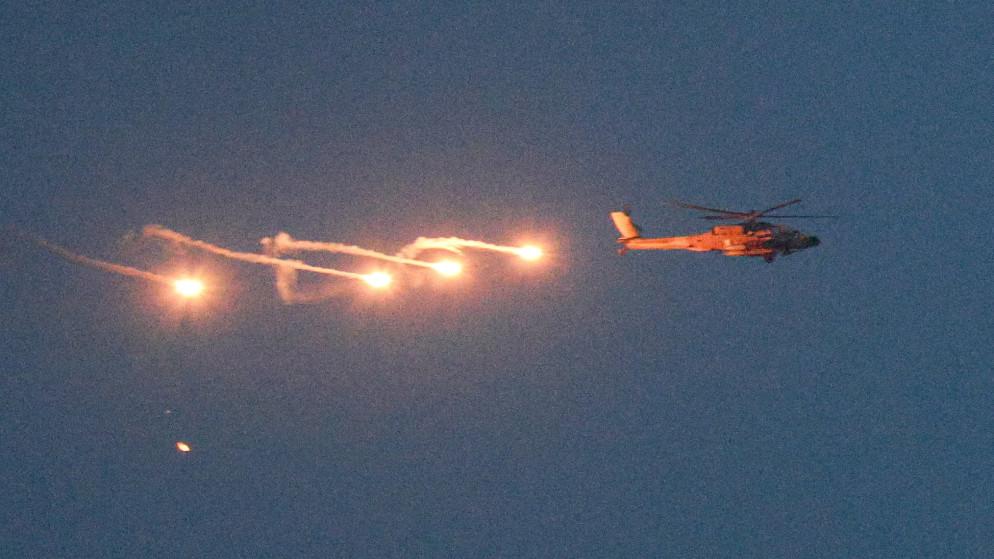
Israel Strikes Last Bridge Linking Southern Lebanon, Cutting Tyre From Sidon
Key Takeaways
- Israeli airstrikes continue in southern Lebanon amid a fragile ceasefire.
- Casualties reported across multiple towns, including Haboush and Yaroun.
- Health ministry reports at least 12 killed in the latest strikes.
Bridge cut, highway hit
Israel struck the last bridge linking southern Lebanon to the rest of the country, a senior Lebanese security official told Reuters on Thursday, saying the raid destroyed the bridge with “no possibility of repair.”
The state-run National News Agency reported that two consecutive airstrikes by hostile warplanes targeted the Qasmiya Bridge, the remaining passage linking the Tyre area to the city of Sidon, resulting in its complete destruction.

The same Reuters-linked reporting said that the main highway in Lebanon linking Beirut and Damascus was closed after an airstrike hit a car, killing one person.
The Reuters account also placed the bridge destruction in a wider pattern, saying that “since March 2, destroyed four major bridges over the Litani River, which divides southern Lebanon into two parts.”
The bridge strike came as Lebanon and Israel’s ambassadors in Washington met at the U.S. State Department to discuss announcing a ceasefire and the start date of negotiations under American sponsorship.
The Lebanese president had launched an initiative on March 9 that centered on a full ceasefire with an end to all Israeli attacks, providing support to the army, giving the army control over tense areas, and confiscating all weapons there, while opening direct negotiations with Israel.
Prime Minister Benjamin Netanyahu said the talks would focus on disarming Hezbollah and establishing peaceful relations between the two neighboring states.
Habboush strikes and evacuations
In southern Lebanon, Israeli strikes hit Habboush and nearby areas despite a ceasefire, with multiple outlets describing casualties and the disruption of rescue work.
NBC News reported that an airstrike on Habboush occurred around the time of an Israeli military warning to evacuate, killing six people including a woman and a child and wounding eight, while the Health Ministry said.

L’Orient-Le Jour said that the Health Ministry reported six dead in strikes on Habbouche (Nabatieh), including a child and a woman, and eight wounded, calling the toll preliminary.
Al Jazeera reported that Israeli forces killed at least eight people in Habboush in the Nabatieh district on Friday and wounded at least eight others, including another child and a woman.
L’Orient-Le Jour added that rescue teams deployed to Habbouche had to evacuate the area because of drone attempts by the Israeli army to target them while they searched rubble.
It also described the Israeli army targeting a residential building, a supermarket and several homes, with a toll “at least six people” provided by deputy mayor Hussein Traboulsi.
Al Jazeera said Israel issued a forced evacuation order to residents of Habboush, with the military’s Arabic-language spokesperson Avichay Adraee telling people to immediately move at least 1,000 metres away before strikes struck the village.
NBC News also described the broader pattern of exchanges, saying Hezbollah fired rockets and drones at northern Israel where two soldiers were wounded, while Israel’s military and Hezbollah kept up their attacks despite a ceasefire in place since April 17.
Ceasefire frays, drones fly
Across the conflict, reporting described a ceasefire that remained in place while both sides continued attacks, including drone strikes and rocket fire.
“At least 12 people have been killed, including a child, in southern Lebanon, as Israel continues its strikes despite a ceasefire”
NBC News said Israel’s military and Hezbollah kept up their attacks despite a ceasefire in place since April 17, and it described Hezbollah launching rockets and drones at northern Israel where two soldiers were wounded.
The Times of Israel reported that an Israeli soldier was killed and three were moderately wounded in two Hezbollah explosive drone attacks in southern Lebanon on Thursday morning, and it said another drone launched by Hezbollah struck an artillery position on the border, wounding twelve other troops.
The Times of Israel also described Hezbollah launching two explosive-laden drones at troops stationed in the village of Qantara, with the IDF saying one drone was intercepted and the second struck near the forces, killing Sgt. Liem Ben Hamo, 19, of the Golani Brigade’s 13th Battalion from Herzliya.
In the same reporting, the IDF said a Hezbollah explosive drone moderately injured a female officer and a male non-commissioned officer in Bint Jbeil, while Hezbollah took responsibility for targeting two tanks in Qantara and two tanks in Bint Jbeil with explosive drones.
The Times of Israel said the IDF later launched a wave of airstrikes against Hezbollah infrastructure sites across southern Lebanon and issued evacuation warnings for 23 villages, including Habboush and Nabatiyeh al-Faouqa.
It quoted Israeli army spokesman Col. Avichay Adraee saying, “Hezbollah activities are forcing the IDF to act against it, as it does not intend to harm you,” while the Lebanese president Joseph Aoun decried “continuing Israeli violations” in south Lebanon.
Le Nouvel Obs framed the ceasefire as fragile, reporting that on Monday April 27 the Israeli army announced it had begun striking positions of Hezbollah in the Bekaa Valley, and it quoted Netanyahu saying, “Hezbollah's violations effectively dismantle the ceasefire.”
Competing death tolls
Death tolls and casualty figures varied across outlets describing strikes in southern Lebanon, reflecting different counting methods and timing.
SANA said that a series of Israeli airstrikes on towns in southern Lebanon killed 13 people and injured others on Friday, specifying that an air raid on Haboush in the Nabatieh killed 9 people including a girl and two women and injured 21, while raids on al-Zarariyah in Sidon killed 4 including two women and wounded four others, and an airstrike on Ain Baal in Tyre killed one woman and injured seven others.

Shelby News, citing Lebanon’s health ministry, said 13 people were killed on Friday in Israeli strikes in the south, and it said strikes in Habboush killed eight people including a child and two women and wounded 21 others, raising an earlier toll.
L’Orient-Le Jour reported that the Health Ministry said strikes on Habbouche left six dead including a child and a woman and eight wounded, while also describing additional strikes on Habbouche and other areas and noting that the toll remained preliminary.
Al Jazeera reported that at least 12 people were killed in the latest Israeli attacks on Lebanon, including a child, and it said Israeli forces killed at least eight people in Habboush and wounded at least eight others, while also reporting another four people killed in other attacks near Tyre and Nabatieh.
NBC News said that an airstrike on Habboush killed six people including a woman and a child and wounded eight, and it described four people killed in strikes on three other southern villages.
The Independent reported that Israeli strikes on Lebanon killed 17 people including two children on Thursday, and it said Lebanon’s health authorities reported 35 people including nine children and eight women were also injured.
Al Jazeera further said that the death toll continued to climb despite the US-brokered ceasefire announced on April 17 and extended to May 17, and it cited Lebanon’s Ministry of Public Health’s Emergency Operations Center reporting 2,618 people killed and 8,094 wounded since hostilities began on March 2.
The Independent tied the wider war timeline to March 2 and said more than 2,500 people had been killed in Lebanon since war broke out on 2 March, shortly after US-Israeli strikes on Iran on 28 February.
What comes next
The reporting also described what could follow as the ceasefire period continued and as negotiations and sanctions moved in parallel.
L’Orient-Le Jour said Aoun called for an end to Israeli attacks on civilians as a “prelude” to new meetings in Washington, with the United States and Israel pressing for a deal within two weeks, and it said Tehran presented Washington with a new proposal within the negotiations framework after Trump was briefed Thursday on new potential attack plans against Iran.

The same L’Orient-Le Jour account said restrictions on gatherings and on teaching would take effect Monday in northern Israeli localities, according to an Israeli media outlet, while Hezbollah attacks continued.
The Independent said Lebanese president Joseph Aoun urged pressure on Israel to ensure it respects international laws and conventions and ceases targeting civilians, paramedics, civil defence and humanitarian organisations, and it reported that a ceasefire agreed between the countries on 16 April was being violated hours into the historic truce.
Le Nouvel Obs described Israel’s position that it reserves the right to continue targeting Hezbollah to prevent “planned, imminent or ongoing” attacks, and it quoted Netanyahu saying Israel acted “in accordance with the agreements reached with the United States and also, by the way, with Lebanon.”
In parallel, the Times of Israel described Israel issuing evacuation warnings for 23 villages ahead of strikes on Hezbollah infrastructure sites, and it said the warning was addressed to residents of a list of communities including Habboush and Nabatiyeh al-Faouqa, calling them to evacuate to at least a kilometer away.
Euronews reported that Amnesty International urged Israel to stop destroying civilian property in southern Lebanon after online footage circulated showing Israeli military excavators destroying solar panels intended for the Lebanese border village of Debel and its water station, and it said the Israeli army was investigating after the video surfaced.
Euronews also said the Israeli army announced troops in Qantara found two Hezbollah tunnels extending over about a decade, with an Israeli military source describing Qantara as a massive underground facility including a tunnel of 800 meters and another of 1.2 kilometers, and it quoted Netanyahu saying, “Today, we destroyed a huge Hezbollah terrorist tunnel,” while promising to continue targeting militants’ infrastructure.
Across the humanitarian front, NBC News reported that a senior official with the International Federation of Red Cross and Red Crescent Societies condemned the targeting of Red Cross volunteers, with IFRC Under Secretary General for National Society Development and Coordination Xavier Castellanos Mosquera saying that two Lebanese Red Cross volunteers have been killed and 18 others wounded by Israeli strikes.
The stakes described in the reporting were therefore both immediate—evacuations, rubble searches, and continued strikes—and longer-term, including negotiations in Washington and the extension of the ceasefire to May 17.
More on Lebanon

Gold Slips as Oil Prices Rise, Keeping Interest Rates Elevated in Lebanon-Linked Tensions
17 sources compared
US Pushes Joseph Aoun To Meet Benjamin Netanyahu As Hezbollah Rejects Israel Talks
18 sources compared

Hezbollah Drone Kills Israeli Contractor Near Aitaroun, Wounds His Son
11 sources compared
Israeli Strikes Kill At Least 13 In Southern Lebanon, Health Ministry Says
34 sources compared