Iran19 March, 20265 min read
Israel Strikes South Pars Gas Field, Iran Vows Retaliation
This article is an automated aggregation of coverage from news outlets. Our editorials offer in-depth analysis curated by the NewsCord team.
Israeli strike on South Pars gas field escalates the Iran-Israel conflict. Iran vows retaliation after strike, intensifying attacks on Gulf energy sites.

Israeli Strike on South Pars
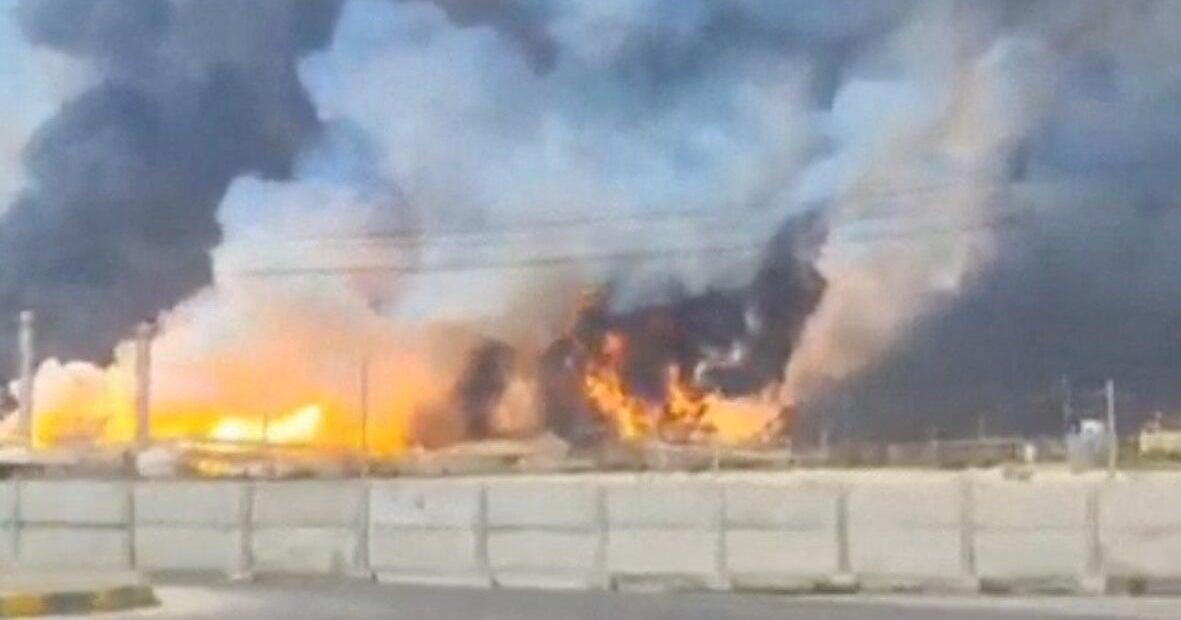
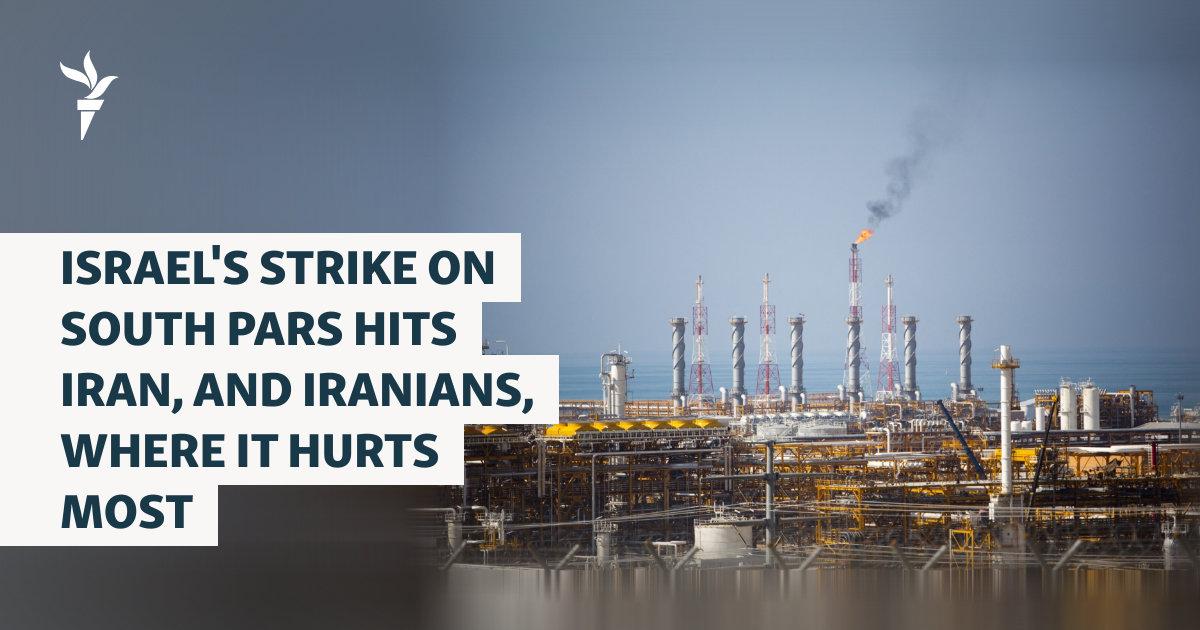
Israel launched a significant strike against Iran's South Pars gas field, the world's largest gas field located in southern Iran's Bushehr province. The attack came amid escalating tensions in the region, with Israeli Prime Minister Benjamin Netanyahu later confirming that his country acted alone in targeting the facility. Qatar, which shares the underwater gas field with Iran, strongly condemned the strike as 'a dangerous and irresponsible escalation that risked global energy security.'
“While saying an angry Israel 'violently lashed out' and attacked the gas field in southern Iran's Bushehr province, the largest in the world, he added that the US had little knowledge about it.”
UAE authorities also expressed concerns as they suspended operations at their Habshan gas facility due to falling debris from intercepted missiles. The Saudi Defense Ministry reported a drone crash at one of the region's leading oil refineries, indicating the broader regional impact of the conflict. The attack on South Pars marked an escalation in the ongoing tensions between Israel and Iran, with both sides trading increasingly aggressive rhetoric and military actions.
Iranian Retaliation
Iran responded forcefully to the Israeli attack, launching retaliatory strikes against energy infrastructure across the Gulf region. Qatar's energy chief Saad Sherida al-Kaabi revealed that the Iranian missile strikes on Ras Laffan Industrial City caused an estimated $20 billion in annual revenue loss and reduced Qatar's liquefied natural gas capacity by 17%. The extensive damage to the LNG facilities is expected to take between three to five years to repair, with major impacts on supply to markets in Europe and Asia.
Meanwhile, the UAE confirmed that their Habshan gas facility and Bab field came under attack from Iranian missiles, though they were intercepted. Kuwait reported drone strikes on two major refineries. Iran's President Masoud Pezeshkian warned that the Israeli strike had created 'uncontrollable consequences' that 'could engulf the entire world,' highlighting the gravity of the situation for regional and global stability.

US Response and Coordination
The Trump administration's response to the escalating conflict has been marked by contradictory statements and an attempt to balance support for Israel with concerns about regional stability. President Trump claimed on his TruthSocial platform that 'The United States knew nothing about this particular attack,' while an Associated Press report cited an informed source confirming that Washington knew about Israel's plans but did not take part in the mission. Trump further stated that Israel would not attack South Pars again while simultaneously threatening Iran with devastating retaliation, warning that if Iran continued striking Qatar's energy infrastructure, the U.S. would 'massively blow up the entirety of the South Pars Gas Field at an amount of strength and power that Iran has never seen or witnessed before.'
“'The United States knew nothing about this particular attack, and the country of Qatar was in no way, shape, or form, involved with it, nor did it have any idea that it was going to happen,' Trump said on his TruthSocial platform on Wednesday.”
Meanwhile, Director of National Intelligence Tulsi Gabbard acknowledged that 'President Trump's objectives are different' than those laid out by the Israeli government, with Israel focused on 'disabling the Iranian leadership and taking out several members.' The Pentagon requested $200 billion in additional funds for the Iran war effort, indicating the rising financial costs of the conflict. Netanyahu addressed claims that Israel dragged the U.S. into the war, asking 'Does anyone really think that someone can tell President Trump what to do?' and stating that Trump 'always makes his decisions on what he thinks is good for America.'
Economic and Strategic Impact
The targeting of energy infrastructure has profound economic and strategic implications for both the region and global markets. Analysts warn that strikes on gas-production facilities like South Pars not only create immediate dangers but also have potentially long-term consequences that could take years to resolve. Saul Kavonic, an analyst at MST Financial, noted that 'Something that takes out a few million barrels of production would have a bigger impact because it means there is no way to refill stocks even after the war ends.'
The damage to LNG facilities could take several years to repair, causing serious disruptions to global energy supply. Oil prices soared after the South Pars center was attacked, driven by fears that disruption to global energy supplies would worsen.

The Trump administration has sought to reassure markets by stating it 'has no plan to implement restrictions on oil and gas exports,' emphasizing that 'the United States is the world's top oil and natural gas producer' and 'also the largest natural gas exporter and a top oil exporter.' However, the attacks threaten global climate commitments as they disrupt natural energy production sources that contribute to the global plan to move away from polluting fuels.
Iran's Domestic Impact
The conflict has also caused significant disruption to Iran's domestic energy situation and created uncertainty about the country's leadership structure.
“With some 80% of all power generated in Iran coming from natural gas, according to the International Energy Agency, the attack directly threatens the country's electricity supplies. Natural gas is also used to supply household heating and cooking across the Islamic Republic.”
With some 80% of all power generated in Iran coming from natural gas according to the International Energy Agency, the attack on South Pars directly threatens the country's electricity supplies, which are also used for household heating and cooking across the Islamic Republic.
Israeli Prime Minister Benjamin Netanyahu stated that Iran's current leadership structure is 'not clear' after a series of targeted missile strikes killed several prominent clerics and leaders during the war.
Netanyahu specifically mentioned that Ayatollah Mojtaba Khamenei, the new supreme leader and son of the late Supreme Leader Ayatollah Ali Khamenei, 'has not shown his face,' and speculated that the new supreme leader would not have the same influence as his father.
'I think the authority and the hold that Khamenei has had is not going to be translated to anyone,' Netanyahu said. 'Not to Mojtaba, if he's there, and not to anyone else.'
Meanwhile, Iran announced the execution of three men detained in January's nationwide protests, the first such sentences known to have been carried out, further indicating the internal turmoil within the country.