Lebanon · 03 May, 2026 · 8 min read
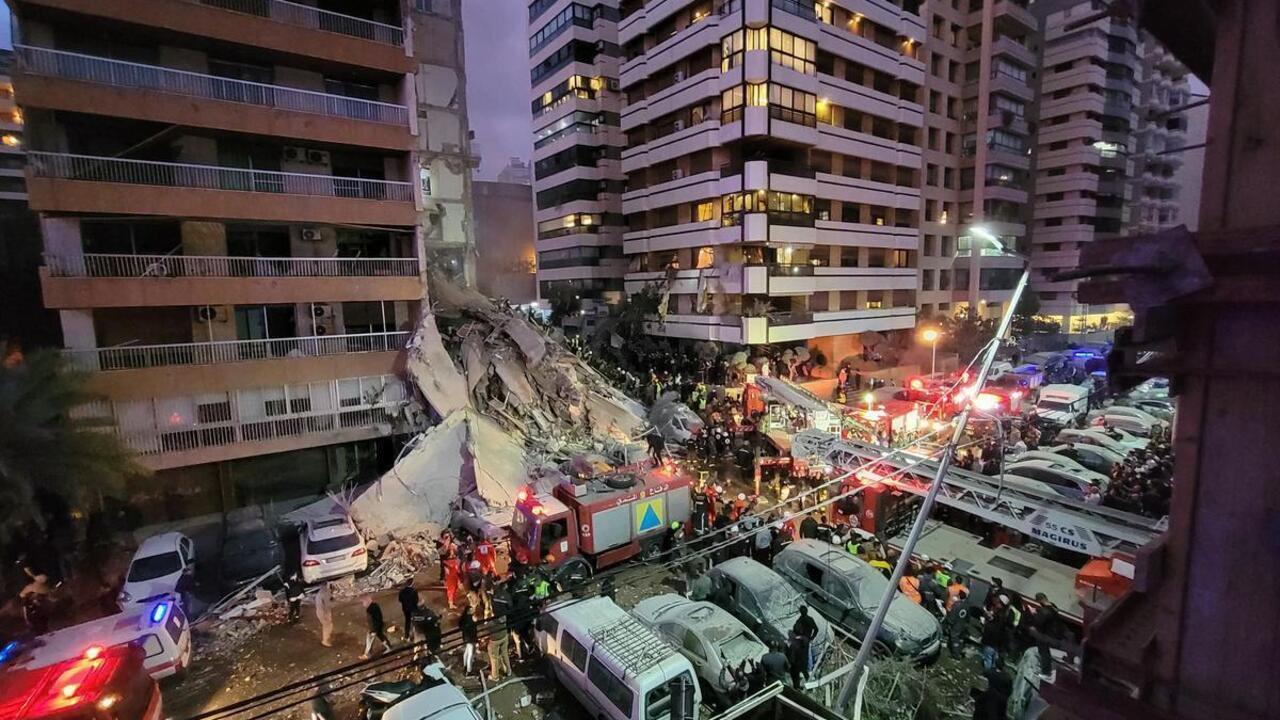
Israeli Army Kills Three Lebanese Civil Defense Volunteers at Majdal Zoun Funeral in Sour
Three Lebanese Civil Defense volunteers were killed at Majdal Zoun funeral in Sour. Israeli strikes persisted in southern Lebanon despite the ceasefire.
Attribution of the rationale for Israeli strikes (Hezbollah infrastructure vs. Hezbollah saboteurs/operations).
9 of 10 outlets skipped it: damage to a Lebanese-Italian hospital is reported due to strikes near Tyre’s al-Hosh neighborhood..
A live campaign is complaining about BBC. Take action →
BBC was read line by line by the Watchdog: 2.3. See the score →
10outlets compared
Same story, two versions
tap a side to read it in full
L'Orient Today
““These Civil Defense members had coordinated their intervention in Majdal Zoun under the cease-fire monitoring ‘mechanism.’ But Israel killed them.””Read the original ↗
BBC
““Pressure must be exerted on Israel to ensure it respects international laws and conventions, and ceases targeting civilians, paramedics, civil defence and humanitarian organisations,” he said.”Read the original ↗
One account frames the deaths as occurring despite a specific ceasefire monitoring arrangement for Civil Defense activity, while the other emphasizes political/legal condemnation of targeting without specifying such a mechanism—changing how readers assess responsibility and causality.
Funeral in Sour
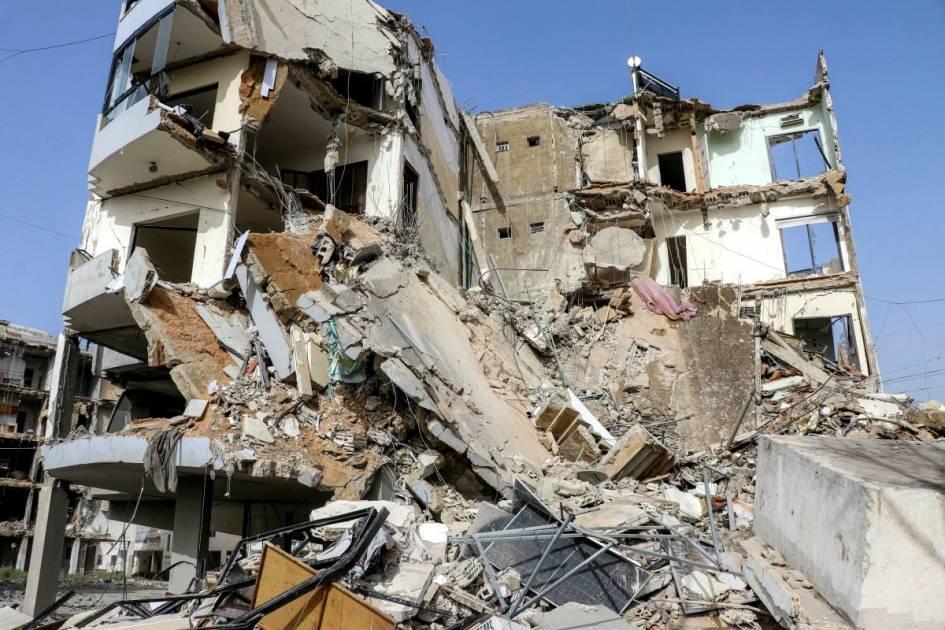
In Sour, families and mourners gathered for the funeral of three Lebanese Civil Defense volunteers killed by the Israeli army in southern Lebanon, with the L'Orient Today report describing “grief and anger” as the coffins were carried into the Civil Defense center courtyard on April 30.L
“In Sour, grief and anger at three rescue workers’ funeral”
The article says the three Civil Defense members had coordinated their intervention in Majdal Zoun under the cease-fire monitoring “mechanism,” but “Israel killed them.”
Large portraits of Hussein Dati, Hadi Daher, and Hussein Ghadbouni were displayed across the façade as families arrived from across the Sour area to bid farewell to their colleagues.
The report places the killings in a sequence of dates, stating the volunteers were “killed on April 28 in an Israeli strike in Majdal Zoun,” and that the funeral took place “on this hot morning of April 30.”
L'Orient Today also frames the deaths as part of a broader toll, stating that “Three more victims among medical personnel — who are supposed to be protected under international conventions — bringing the death toll to 103.”L
The BBC, meanwhile, described a separate pattern of fatalities continuing “despite a ceasefire now in its second week,” reporting that “Seventeen people, including two children, were killed in Israeli strikes in southern Lebanon on Thursday.”B
Together, the accounts depict a Lebanon where mourning and new strikes unfold in parallel, with the Civil Defense funerals occurring as the ceasefire’s second week continues.
Ceasefire, strikes, and evacuation
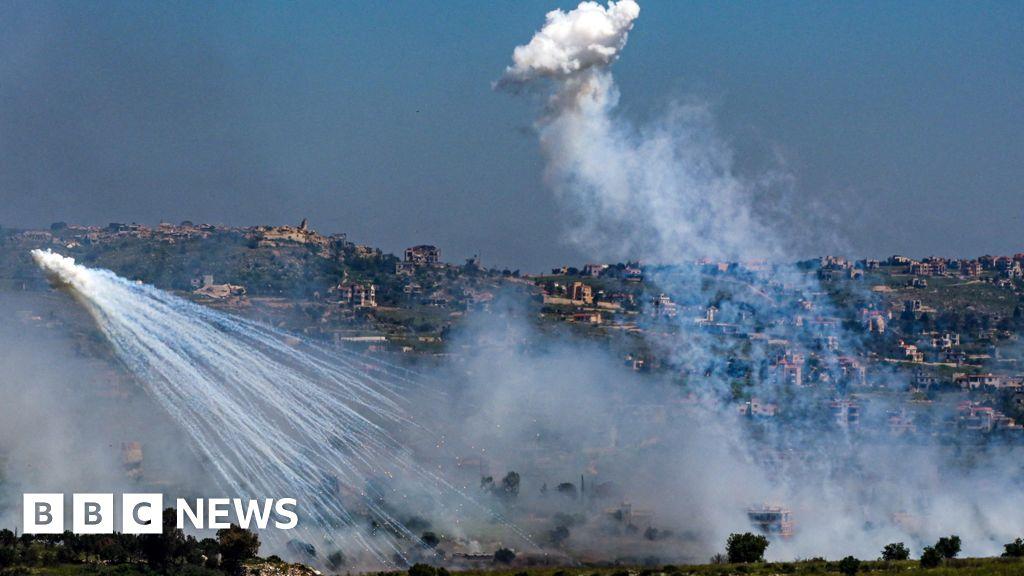
The BBC reported that deadly Israeli strikes continued in southern Lebanon even as a ceasefire entered its second week, describing “Deadly Israeli strikes on southern Lebanon despite ceasefire.”B
It said “Seventeen people, including two children, were killed in Israeli strikes in southern Lebanon on Thursday,” and that the strikes “also wounded 35 people, among them nine children and eight women.”
The BBC added that Israel said it was targeting “Hezbollah infrastructure,” while Hezbollah said it carried out attacks on Israeli forces, including “a drone strike targeting soldiers in the Bint Jbeil district.”B
The BBC also reported that Lebanese President Joseph Aoun criticised what he described as “continuing Israeli violations” of the truce, saying strikes and demolitions of homes and places of worship were ongoing “despite the ceasefire.”B
In the same report, the BBC said the Israeli military issued evacuation warnings for “15 villages in southern Lebanon,” noting that “Many of the villages were outside what Israel has designated as the ‘Yellow Line’.”B
The BBC’s account tied the ceasefire to US-mediated terms, saying “The US-mediated ceasefire permits Israel to respond to what it describes as ‘planned, imminent or ongoing attacks’,” while Hezbollah “rejects this part of the agreement.”B
The Independent Arabic report added a different set of strike details, saying “Two girls were killed and 40 people were wounded in Israeli airstrikes on southern Lebanon on Saturday,” and describing additional tolls from strikes in Haboush in the Nabatieh District and in the al-Hosh neighborhood in Tyre (Sour) District.
Taken together, the sources show a ceasefire environment marked by continued strikes, casualties, and evacuation orders, with both sides describing their actions through the lens of the truce’s terms.
Journalist killed and rescue blocked
Multiple outlets described the death of Lebanese journalist Amal Khalil in southern Lebanon and the circumstances surrounding rescue attempts, with Euronews focusing on what Lebanese officials condemned as deliberate targeting.
“what they described as the deliberate targeting of journalists by Tel Aviv, deeming it a war crime”
Euronews said Lebanese officials condemned “what they described as the deliberate targeting of journalists by Tel Aviv, deeming it a war crime,” and it described the incident as occurring “a day after a female journalist was killed by Israeli fire in southern Lebanon” while “the Israeli forces blocked ambulance teams from reaching the scene to rescue her.”
It reported that Amal Khalil, “a journalist and a reporter for the newspaper Al-Akhbar,” was killed in an Israeli airstrike on “the town of Tayrī in southern Lebanon,” and that she had said she received a text message “containing a direct threat of killing, beheading, and demolishing her home.”
Euronews also described the sequence of strikes and rescue interference, saying “Medical sources said ambulance crews reached the scene but could not initially extract Khaleel because the Israeli army fired a sonic blast at the ambulance and targeted it with bullets.”
The المدن and Euronews accounts aligned on the broader pattern of rescue obstruction and repeated targeting, with The المدن writing that “Israel killed her twice: once in the first bombardment, and again when it deliberately blocked the arrival of rescue teams.”
The المدن further stated that after a strike on a car, Khalil and colleague Zainab Faraj “had taken shelter in a house in Tayrī,” and that “At 4:27 PM the Israeli warplanes attacked the house, causing the communication to be cut off.”
The المدن also described the moment rescue was attempted, saying “When the Lebanese Red Cross arrived to transport the injured, the enemy fired a sound grenade at the ambulance and also shot at it, preventing the rescue of Amal Khalil.”
Euronews added that Tayrī lies within the Israeli “Yellow Line” and that the ministry condemned what it described as “a blatant double violation” involving hindering rescue and targeting an ambulance with the Red Cross emblem.
Officials and condemnations
The BBC’s ceasefire report and Euronews’ account of Amal Khalil’s death both include direct statements from Lebanese leaders and officials, while The المدن adds further Lebanese institutional responses.B
In the BBC report, Lebanese President Joseph Aoun criticised “continuing Israeli violations” of the truce and said strikes and demolitions of homes and places of worship were ongoing “despite the ceasefire,” adding that “Pressure must be exerted on Israel to ensure it respects international laws and conventions, and ceases targeting civilians, paramedics, civil defence and humanitarian organisations.”B
The BBC also reported that Aoun backed “direct, face-to-face talks” and said the ceasefire should evolve into a more “permanent agreement,” while Parliament Speaker Nabih Berri opposed direct talks and warned they carry risks.B
Euronews reported that President Michel Aoun said Israel’s deliberate targeting of journalists is aimed at “concealing the truth of its aggressions against Lebanon,” and that it should prompt “international intervention to put an end to them.”
Euronews also quoted Prime Minister Nawaf Salam, writing that “targeting journalists, hindering relief teams from reaching them, and even targeting their sites again after those teams arrived, constitute war crimes,” and that “Lebanon will spare no effort to pursue these crimes before the relevant international forums.”
Hezbollah condemned the journalist’s killing “in the strongest terms,” describing it as “a war crime in all its elements,” and said the party’s “terrorism and the roar of its missiles will not succeed in silencing this voice that speaks truth and freedom.”
The المدن adds additional Lebanese institutional involvement, stating that President Michel Aoun “asked the Lebanese Red Cross to work on saving the two journalists and their colleagues and to coordinate with the army and international forces to complete the rescue operation as quickly as possible,” and it says Information Minister Paul Morcos and Joseph Al-Qasifi followed the incident “holding the Israeli enemy responsible for their safety.”
Across these accounts, Lebanese political leaders and media-linked institutions frame the violence as violations of international law and as deliberate targeting of civilians, paramedics, civil defence, and journalists.
Negotiations and continued fighting
While the BBC described a ceasefire with ongoing violations and evacuation warnings, other sources described diplomatic efforts and continued military activity in parallel.B
“Lebanon, which has become a point of contention between Washington and Tehran”
The المدن and Euronews accounts focus on specific incidents, but مونت كارلو الدولية frames the broader political dispute over whether Lebanon is covered by a ceasefire reached between the United States and Iran, saying Lebanon has become “a point of contention between Washington and Tehran.”
It reports that Washington and Tel Aviv say “Lebanon is not covered by the ceasefire agreement,” while Tehran asserts otherwise and “threatens to respond if the escalation does not stop.”
In that same account, Macron is described as telling both Donald Trump and Masoud Bezhkian that their decision to accept the ceasefire was “the best possible decision at this stage” and that it “should include Lebanon to be sustainable.”
The report says the Lebanese General Directorate of Civil Defense stated that synchronized Israeli airstrikes killed “at least 254 people” and injured “1,165 others,” with “92 dead and 742 wounded” counted in Beirut, and it describes a national day of mourning announced by the Lebanese Prime Minister Nawaf Salam.
It also states that the Revolutionary Guard warned Israel of a response that would make it “regret its aggression if it continues its strikes on Lebanon,” and it quotes that Masoud Bezhkian said the “Lebanon ceasefire is one of the 'essential conditions' of Iran’s ten-point plan.”
The BBC’s ceasefire framing also included the US-mediated terms that allow Israel to respond to “planned, imminent or ongoing attacks,” while Hezbollah rejects that part of the agreement, highlighting why negotiations remain fragile.
The اليـوم السابع report adds a concrete diplomatic timeline, saying Israeli and Lebanese officials are expected to meet in Washington “next Tuesday,” and naming the Israeli ambassador “Yehiel Leiter” and the Lebanese counterpart “Nada Hamade Maoud.”
It says the Lebanese presidency stated the two ambassadors spoke by phone “yesterday, Friday,” agreeing to discuss a ceasefire declaration and set a date to begin bilateral talks mediated by the United States, while the Israeli embassy in Washington said the talks would mark the start of official peace negotiations and that “Israel refused to discuss a ceasefire with Hezbollah.”
In the same report, Israel’s ground escalation and Hezbollah’s responses are described through specific attacks, including “a Merkava tank in the Sayh al-Hawa area in the city of Bint Jbeil” and “a diving attack and achieved a confirmed hit,” and it lists additional drone and rocket attacks.