
Israeli Strikes Kill At Least 15 In Southern Lebanon Despite Ceasefire
Key Takeaways
- Death toll in southern Lebanon ranges from 15 to 28.
- A US-mediated ceasefire was in place during the strikes.
- Strikes hit civilian areas, including Jebchit and Yaroun.
Bombardment Despite Ceasefire
Israeli airstrikes and artillery bombardment continued across southern Lebanon on Friday, with the Palestine Chronicle describing “one of the heaviest waves of attacks in recent months” after Hezbollah “steps up operations.”
“Israeli attacks on southern Lebanon have killed at least 28 people, according to the country’s National News Agency (NNA), despite a temporary United States-mediated “ceasefire””
The outlet said Israeli drones targeted the city of Tyre, while additional airstrikes struck Barashit and Yater in the Bint Jbeil district, and a drone strike also reportedly targeted a motorcycle in al-Mansouri in the Tyre district.

Heavy artillery shelling hit the outskirts of Kfarshouba, Mansouri, Majdal Zoun, Kounine, Bani Hayyan, Tallousa, Wadi al-Hujair, Frun, al-Ghandouriya, and Tulin, with Lebanese media saying “155 mm artillery shells were used in several of the attacks.”
The Palestine Chronicle added that, according to Al-Jazeera, Israeli attacks over the past two days killed at least 29 people and wounded dozens more in 84 separate strikes involving air raids, artillery shelling, and attacks on residential buildings, with the heaviest bombardment concentrated in the Nabatieh district.
In Zebdine, the outlet said “six civilians were killed after a drone strike targeted a gathering near a cemetery,” while in Jebchit “four members of the same family were killed in an Israeli raid,” and separate attacks on Toul, Harouf, and Jebchit killed nine more people, including women and children.
The BBC, covering Thursday’s fighting, reported that “Seventeen people, including two children, were killed in Israeli strikes in southern Lebanon on Thursday,” and said the strikes wounded 35 people, including nine children and eight women, while Israel said it was targeting Hezbollah infrastructure.
France 24 similarly reported that on Thursday “Israeli strikes reportedly killed at least 15 people,” while local media suggested the toll could exceed 30, though “that figure remains unconfirmed.”
Escalation Timeline and Claims
The reporting ties the latest bombardment to a ceasefire described as “nearly two-week-old” and “now in its second week,” while also detailing how Israel and Hezbollah frame the violence.
The BBC said the strikes came as “violence continues despite a ceasefire now in its second week,” adding that Israel said it was targeting Hezbollah infrastructure and that the US-mediated ceasefire permits Israel to respond to what it describes as “planned, imminent or ongoing attacks.”

The BBC also reported that Israel issued evacuation warnings for 15 villages in southern Lebanon, noting that many were outside what Israel has designated as the “Yellow Line,” described as “a strip of territory extending roughly 10km (6 miles) from the border.”
Arab News said the Lebanese president decried “ongoing Israeli violations of a nearly two-week ceasefire,” and it quoted Joseph Aoun telling the International Federation of Red Cross and Red Crescent Societies that violations were occurring “despite the ceasefire, as do demolitions of homes and places of worship, while the number of killed and wounded rises day after day.”
The Palestine Chronicle described Hezbollah’s response as stepping up operations, saying Hezbollah “announced that it carried out 12 operations against Israeli occupation forces in response to ongoing Israeli attacks and ceasefire violations,” including targeting “four Merkava tanks, a Hummer vehicle, and a self-propelled artillery unit.”
Al Jazeera’s account of Thursday said Israeli attacks killed “at least 28 people” despite a temporary US-mediated “ceasefire,” and it listed attacks across Jebchit, Toul, Harouf, Qana, Zebdine, and other towns.
In parallel, the Anadolu Ajansı report said an Israeli airstrike killed “one person” and wounded “three others” on Friday “hours after U.S. President Donald Trump announced that Tel Aviv would not bomb Lebanon after the ceasefire agreement took effect,” and it described the strike as targeting “a motorcycle and a car” on the road linking Kunin and Beit Yahoun in the Bint Jbeil District.
The Al Araby TV fact-check on Al Araby TV also reflected the information environment around the ceasefire, saying a widely circulated photo of an Israeli checkpoint was misleading and that the image dated to “December 25, 2015” and was from the occupied West Bank near the entrance to the Ariel settlement, not southern Lebanon.
Aoun, Berri, and Hezbollah Voices
Lebanon’s political leadership and Hezbollah’s statements were presented as central to the dispute over what the ceasefire allows and what comes next.
“BEIRUT: Israeli strikes on south Lebanon killed at least 15 people, the health ministry said Thursday, as the country’s president decried what he described as ongoing Israeli violations of a nearly two-week ceasefire”
The BBC quoted Lebanese President Joseph Aoun criticizing “continuing Israeli violations” of the truce, saying strikes and demolitions of homes and places of worship were ongoing “despite the ceasefire,” and it included Aoun’s call that “Pressure must be exerted on Israel to ensure it respects international laws and conventions, and ceases targeting civilians, paramedics, civil defence and humanitarian organisations.”
Arab News likewise reported Aoun’s condemnation, quoting him as telling the Red Cross delegation that violations were occurring “despite the ceasefire, as do demolitions of homes and places of worship, while the number of killed and wounded rises day after day.”
The Palestine Chronicle said political tensions intensified over the wording of the ceasefire agreement published by the US State Department, focusing on a clause granting Israel “the freedom to take the necessary measures to defend itself,” and it reported that Aoun claimed the wording matched an earlier agreement approved in November 2024 while Parliament Speaker Nabih Berri disputed that characterization.
The same Palestine Chronicle account said Hezbollah rejected the clause entirely, describing it as a “dangerous precedent” and opposing any direct negotiations between Lebanon and Israel.
France 24 reported that the US embassy in Beirut called for a meeting between Joseph Aoun and Benjamin Netanyahu, even as it described the situation as fragile and not a “true ceasefire.”
In the field, Hezbollah’s voice appeared in the Palestine Chronicle’s description of its operations, including that it “announced that it had shot down an Israeli Hermes 450 drone over Nabatieh,” while the Israeli military acknowledged a soldier from the Golani Brigade was killed in Qantara.
The BBC also included Hezbollah’s claim of attacks in the south, saying Hezbollah said it carried out attacks on Israeli forces including a drone strike targeting soldiers in the Bint Jbeil district.
Arab News added a civilian voice from the protest line, quoting Hanaa Ibrahim, 48, from Ainata saying “we will not surrender and will not normalize” relations with Israel and “We will not accept shaking hands with them. We will continue until the last drop of blood,” as residents gathered in Beirut to protest destruction of villages.
Competing Death Tolls and Details
Across the sources, the same day’s strikes were described with different casualty totals and different emphases, showing how the narrative shifts depending on the outlet’s figures and framing.
Naharnet reported that Lebanon’s health ministry said six people were killed in an Israeli strike on Zebdine, raising the number of people killed in raids on the country’s south on Thursday to at least 15, and it cited the National News Agency saying an Israeli drone targeted a group in Zebdine “while they were gathered near the village's cemetery.”
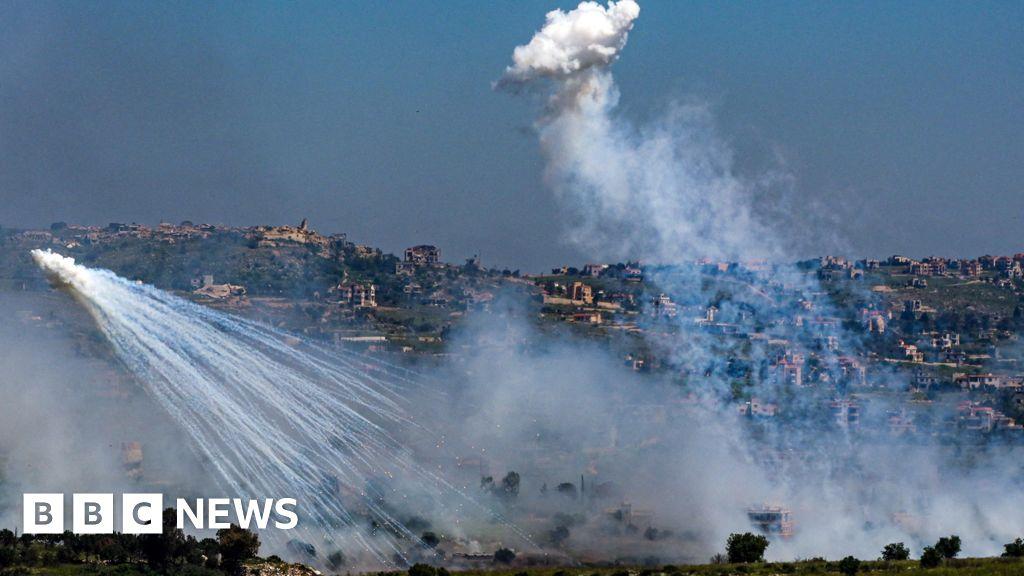
The BBC, by contrast, said “Seventeen people, including two children, were killed” in strikes on Thursday and that the strikes wounded 35 people, including nine children and eight women, while Israel said it was targeting Hezbollah infrastructure.
France 24 said “Israeli strikes reportedly killed at least 15 people,” while local media suggested the toll could exceed 30, though “that figure remains unconfirmed.”
Al Jazeera’s account of Thursday said Israeli attacks “have killed at least 28 people, according to the country’s National News Agency (NNA),” and it broke down deaths across Jebchit, Toul, Harouf, Qana, Zebdine, and other locations, including that “In the town of Zebdine, an Israeli drone attack killed six people near the town’s cemetery.”
The Palestine Chronicle also described Zebdine as a six-civilian death site, but it placed the broader two-day total at “at least 29 people” killed in “84 separate strikes,” and it described the heaviest bombardment as concentrated in the Nabatieh district.
Middle East Eye similarly reported that “Israeli strikes have killed 16 people in Lebanon so far on Thursday,” while also saying the Israeli army released threats for 15 southern Lebanese towns, according to Al Jazeera.
Arab News offered another breakdown, saying the health ministry said Israeli strikes on four south Lebanon locations killed “a total of 15 people,” including at least five women and two children, and it quoted the NNA describing one strike killing “four people from the same family” and another killing “six people who were gathered near their village’s cemetery.”
These differences appear alongside diverging descriptions of the ceasefire’s status, with the BBC saying the ceasefire was “now in its second week,” while Al Jazeera described a temporary US-mediated “ceasefire” and the Palestine Chronicle described “ceasefire violations” as part of Hezbollah’s stated rationale for its response.
Humanitarian and Political Stakes
The sources describe humanitarian consequences alongside political disputes over negotiations and enforcement of the ceasefire, with displacement and health-sector losses repeatedly cited.
“Israel intensifies its attacks against Lebanon despite the extension of the so-called ceasefire: civilians are being killed and the strikes are multiplying”
The Palestine Chronicle said Israeli attacks have continued to trigger displacement across southern Lebanon, and it quoted the Lebanese Ministry of Health saying the cumulative toll since March 2 has reached “2,586 killed and 8,020 wounded,” while “more than 1.6 million people have been affected by displacement.”
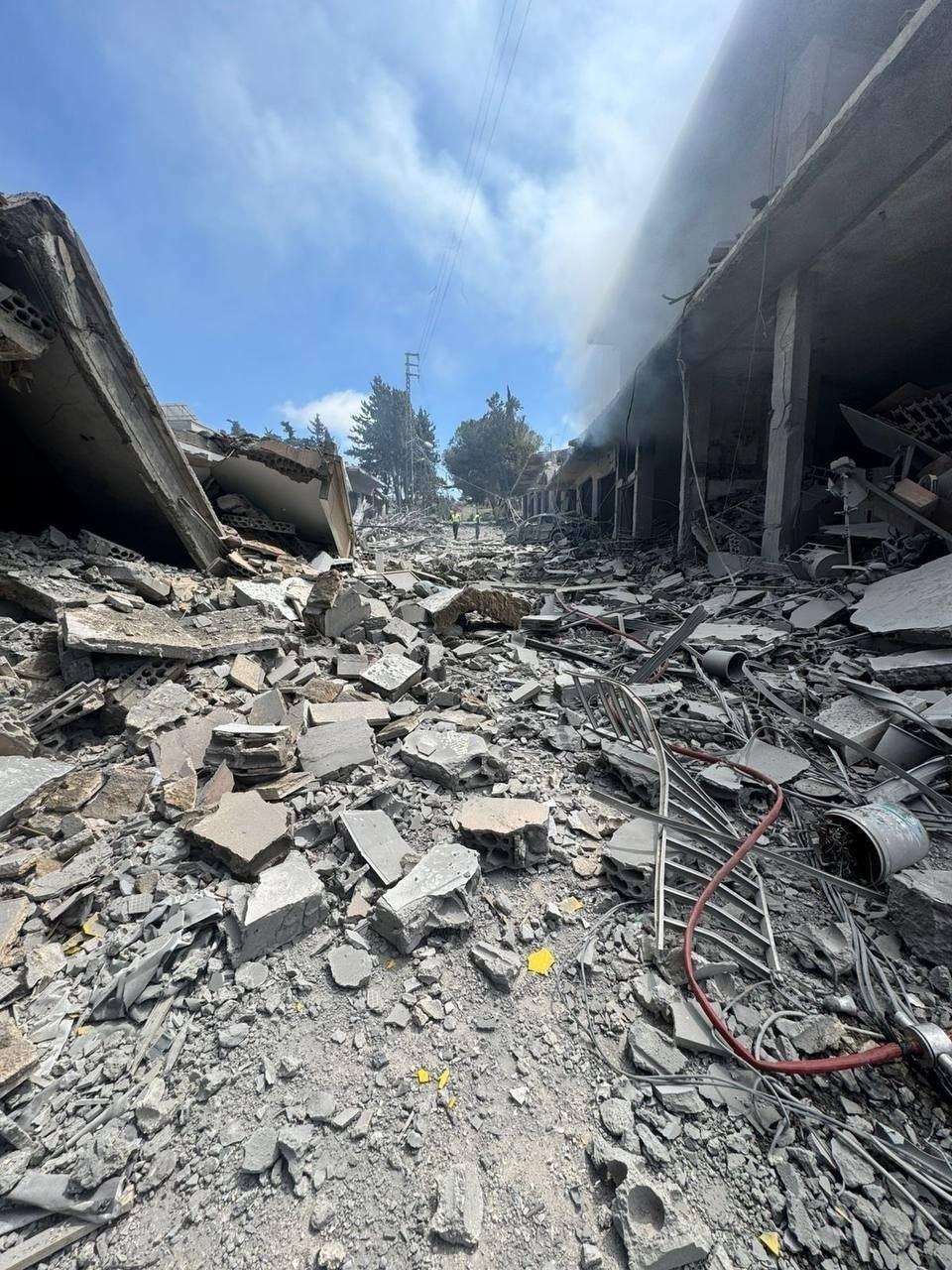
Al Jazeera also cited the Lebanese Ministry of Public Health, saying attacks since March 2 have killed “at least 2,586 people in Lebanon, with 8,020 wounded,” and it described the temporary US-mediated ceasefire as taking effect on April 17.
The BBC similarly said since the conflict began on 2 March, “more than 2,500 people have been killed in Lebanon,” including “103 health professionals,” and it said the Lebanese health ministry does not distinguish between combatants and civilians but includes “at least 270 women and more than 170 children.”
In the field, the Al Jazeera report described forced displacement threats for 15 southern towns and villages, listing Jebchit, Toul, al-Samanieh, Sahel al-Hnieh, Qlailah, Wadi Jilo, al-Kanisa, Kafr Jouz, Majdal Zoun, and Seddiqine, while also reporting that “the Israeli army has also issued more forced displacement threats for 15 southern Lebanese towns and villages.”
The Anadolu Ajansı report described the ceasefire’s fragility in terms of continued strikes, saying the airstrike came “hours after U.S. President Donald Trump announced that Tel Aviv would not bomb Lebanon after the ceasefire agreement took effect,” and it placed the broader toll during “45 days of the Israeli aggression on Lebanon” at “more than 2,294 people were killed and 7,544 others were injured,” alongside displacement of “more than one million people.”
On the political side, the BBC said the fragile truce exposed “political divisions in Beirut over what comes next,” with Aoun backing direct face-to-face talks and Parliament Speaker Nabih Berri opposing direct talks and warning they carry risks.
France 24 reported that the US embassy in Beirut called for a meeting between Joseph Aoun and Benjamin Netanyahu despite a “fragile situation” that many Lebanese would find hard to describe as a true ceasefire.
Al Jazeera’s Malcolm Webb said Lebanon’s President Aoun asked the US for a date for negotiations to restart but also said Israel must fully implement the ceasefire, adding that “it seems the only thing that would slow it down is further pressure from Trump on Israel to stop.”
More on Lebanon
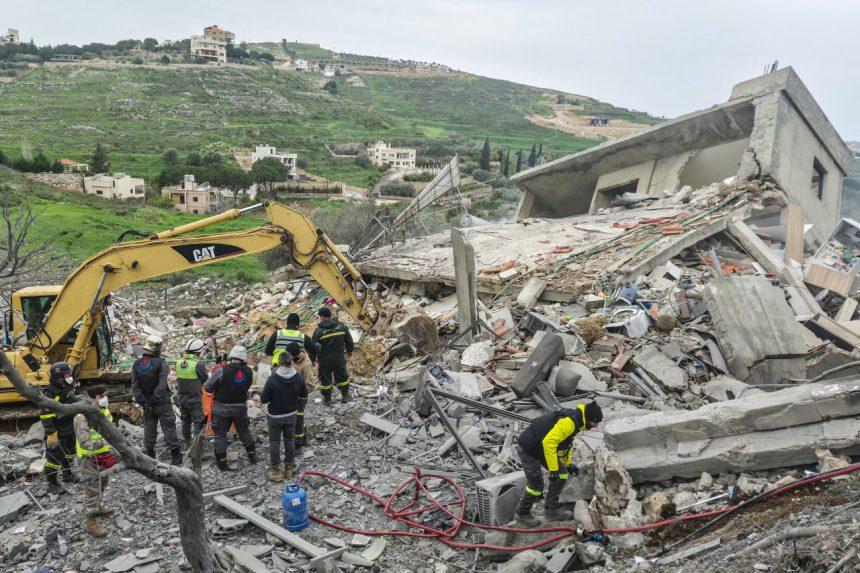
Israeli Strikes Kill At Least 12 In Southern Lebanon Despite Ceasefire
19 sources compared

Israeli Airstrikes Kill Nine in Tyre and Ain Baal as Lebanon Toll Reaches 1,368
14 sources compared
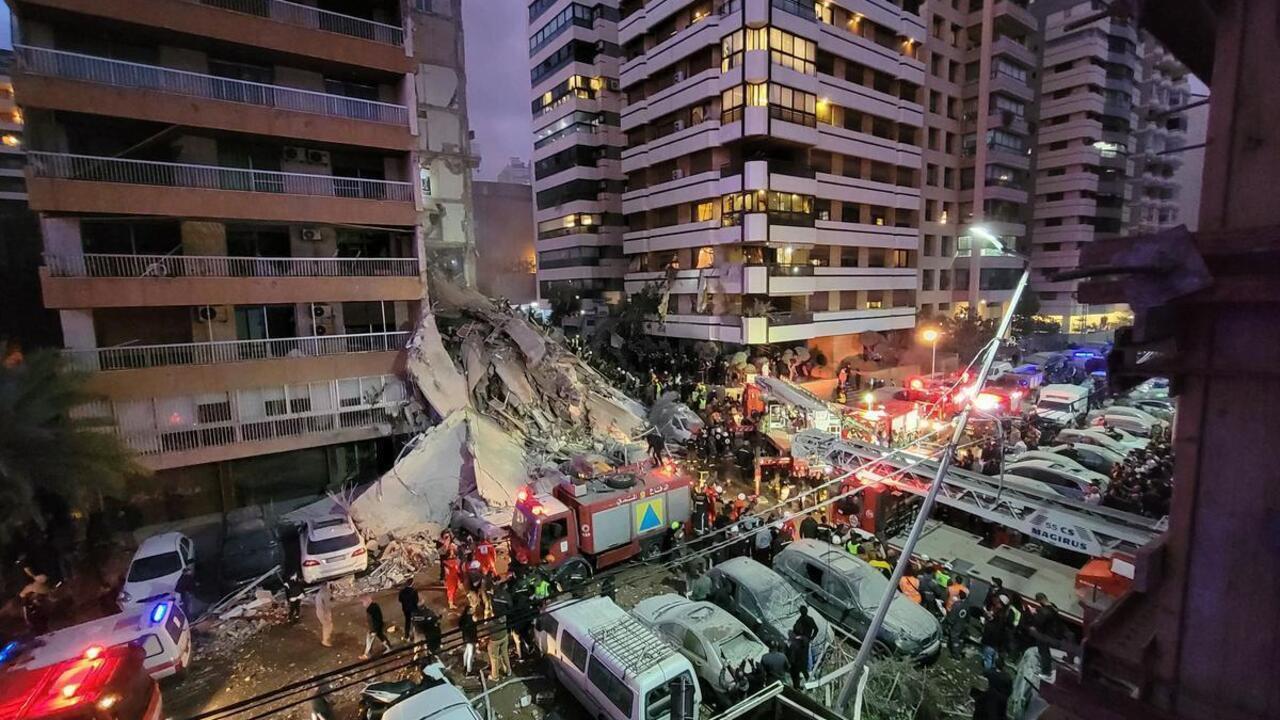
Israeli Army Kills Three Lebanese Civil Defense Volunteers at Majdal Zoun Funeral in Sour
10 sources compared

Islamic Resistance In Lebanon Targets Israeli Military Vehicle And Three Army Positions In Bayada And Bint Jbeil
15 sources compared